DF/CDMX TEST

Collection Gallery

c1916 Mexico City "El Universal" Automobile Tournament

c1916 Mexico City "El Universal"

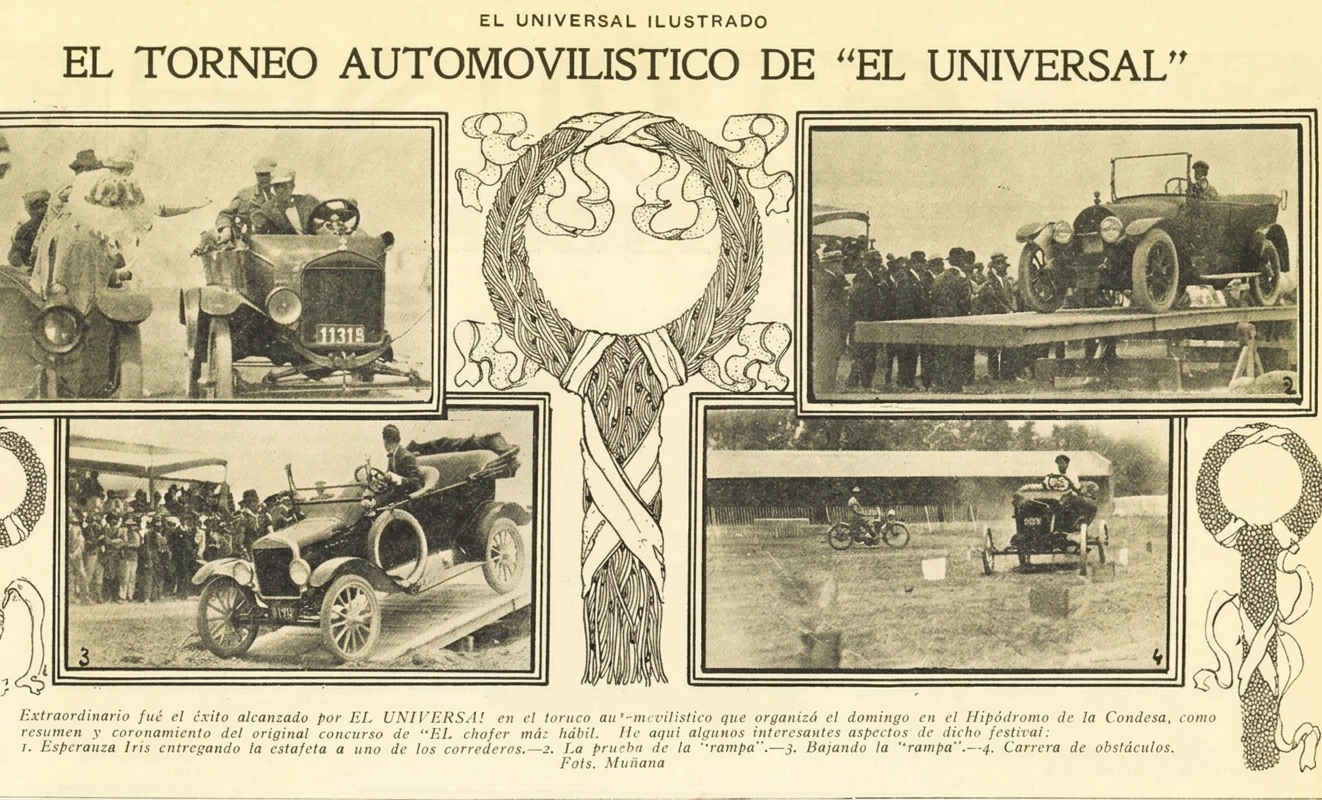
EL Universal is one of Mexico’s longest running newspapers.  Founded in Queretaro in 1916 to cover the end of the Mexican Revoluation and the creation of the Mexican constitution.  This late 1910s article covered a race car event, including an obstacle course challenge, held at the Condesa racetrack in Mexico City.

You can clearly see that each of the four cars had front license plates.  The first photo at the top left has undated plate #1131 with what looks like a stacked DF on the right. 

The caption at the bottom translates to: “Extraordinary was the success achieved by Universa in the car race held on Sunday at the Condesa racetrack, as a summary and crowning of the original contest for the most skilled driver. Here are some interesting aspects of this event. Left to right: 1) Esperanza Iris is handing the baton to one of the racers. 3) Car doing the ramp test. Going down the ramp. 4) Obstacle race.

1918 Mexico City 

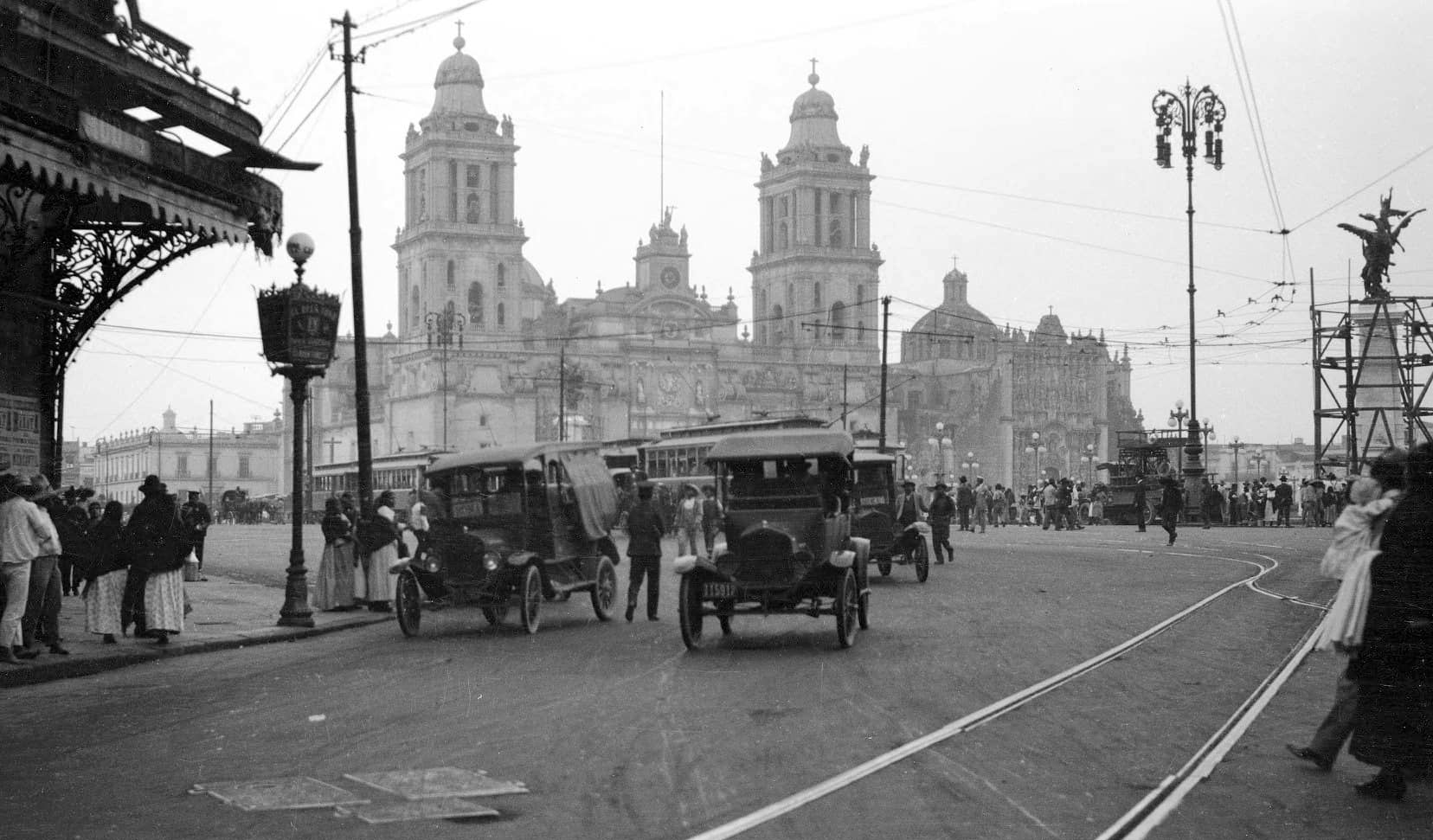
This extraordinary surviving film shows the busy streets of Cuauhtémoc neighborhood in Mexico City.  While the footage is grainy and any license plates are heard to see much less identify.  But the variety of transport on the streets is fascinating: horse drawn carriages, automobiles, trucks and even a street car.   (YouTube Credit: Traveler73)

Circa 1920s Distrito Federal.

1919 Mexican Automotive Facts & Figures

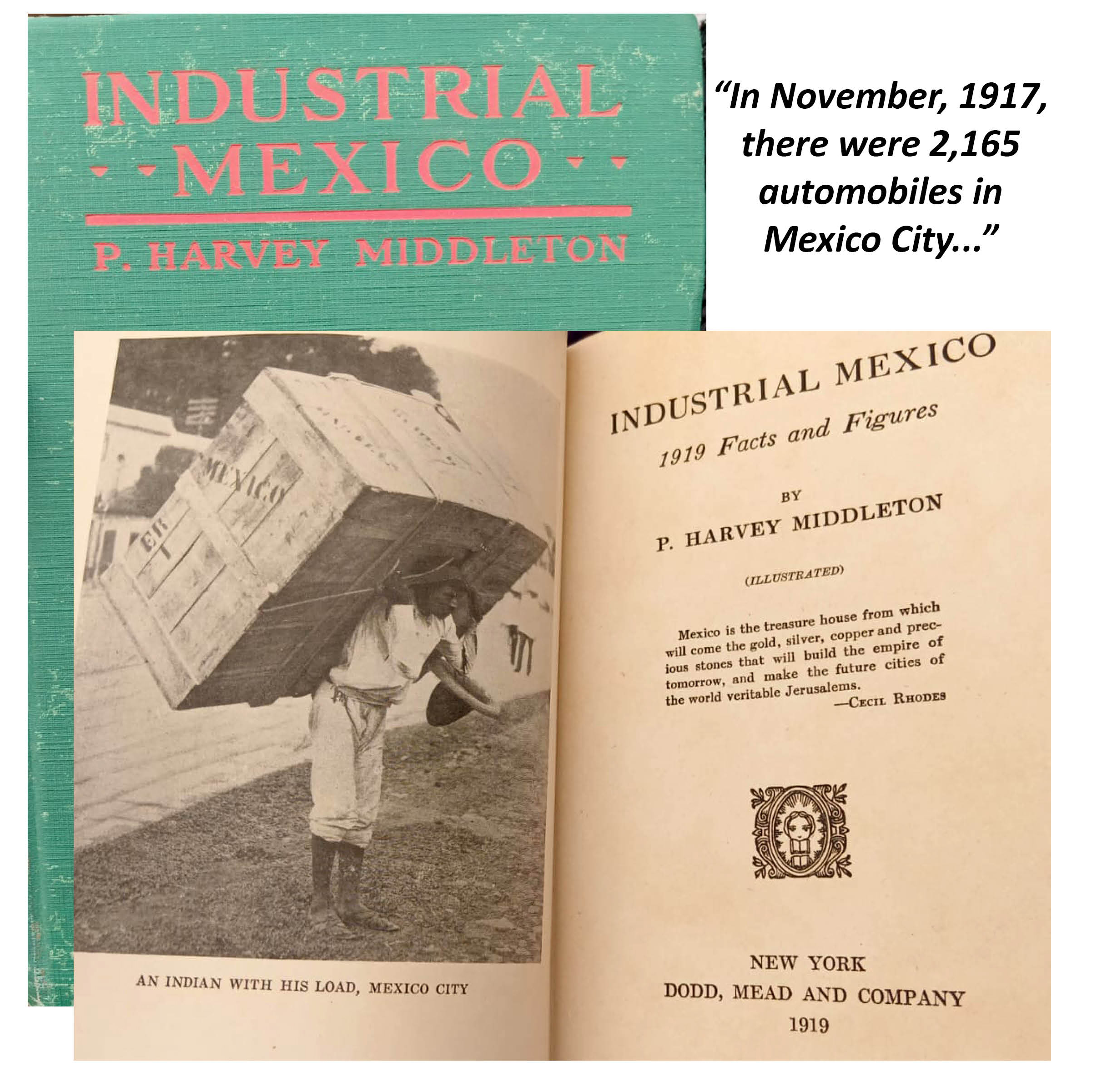
1919 book of facts and figures about industrial Mexico, including a census of motor vehicles in 1917.

From “Industrial Mexico” by P. Harvey Middleton (1919)

Pages 133-136:

American automobiles in Mexico”

“During my recent trip to Mexico from the Texas border to Vera Cruz, one of the things which surprised me the most was the quantity and variety of American automobiles to be seen everywhere. In Mexico City, there is a greater display of machines than one confined in many American city.  On Sunday morning in Chapultepec Park, there is a parade of automobiles past the band-stand four lines deep, two lines going in each every direction, the cars being so numerous that they can only go at a walking rate.

1919 book published in New York City in English includes photos and statistics about early automobile industry in Mexico.

Every make and type of American, French and British cars is represented in the business districts, in addition to all kinds of pleasure cars and motor trucks, there are hundreds of jitneys  which carry passengers for short distances for 10 centavos or five cents.

During the year 1918, 365 commercial automobiles valued at $525,664 and 2,578 passenger automobiles, valued $1,653,545, were exported from the United States to Mexico by American manufacturers. In November 1917, there were in operation in Mexico City 2165 automobiles, 1,329 of which were for private use and 836 for higher. Among the latter were 150 jitneys and 33 taxis. There were also 2,457 coaches or carriages in Mexico City, ofwhich 900 were for private use and the remainder were for hire.

There has been an especially heavy demand for popular priced touring cars and trucks—a demand which is traceable to the practical disappearance of Mexico‘s most popular beast of burden, the ox.  During the [1917 Mexican] revolution, large number of oxen were destroyed by the rebels for their hides, and this, together with the destruction of thousands of [rail] freight cars and the general rundown condition of Mexican railroads has created a large and constant growing market for automobiles.  One American salesman sold 800 cars in Mexico in six months, and during his travels throughout the country was keenly impressed with the demand for motor trucks throughout Mexico, both in the mining districts and for passenger service. A type of car in great demand is the five-passenger touring car painted black, with leather upholstery and nickel trimmings. The type of motor preferred is six cylinder with selective clutch, gear box back of the engine, full floating rear axle and twelve-inch suspension.  The straight side tire equipment with 60-inch tread is preferred.   And commercial vehicles the 3-ton type with 3 to 4 speed and rear wheel worm drive is given the preference. Big cooling capacity is essential, owing to the extreme heat in some parts of the country. There is a good demand for trailers and towing hooks.”

Source: Written by P. Harvey Middleton, and published by Dodd, Mead & Company (New York)

The Undated DF Mystery

This plate is a mystery. Until now, the earliest known issue from Distrito Federal is a dated 1923/24 base plate, and subsequently there are known dated issues for every year after. So this undated DF plate must have been issued in 1922 or earlier. If so, is this the first issue? And how does this undated DF issue relate to the 1922 M de M plate? It seems unlikely, but not improbable, that Mexico City would issue an undated DF plate in 1921 or earlier, then use the M de M for just one year and then revert to DF designation for the 1923/24 plate. What do you think?

Is this DF's first issue? 1922 or even earlier?
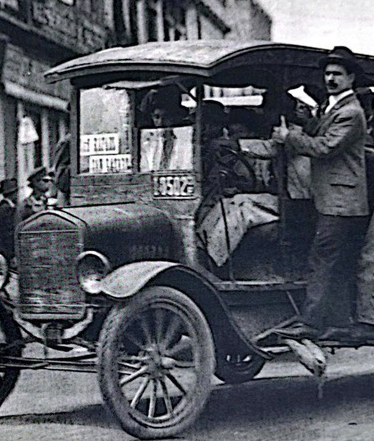
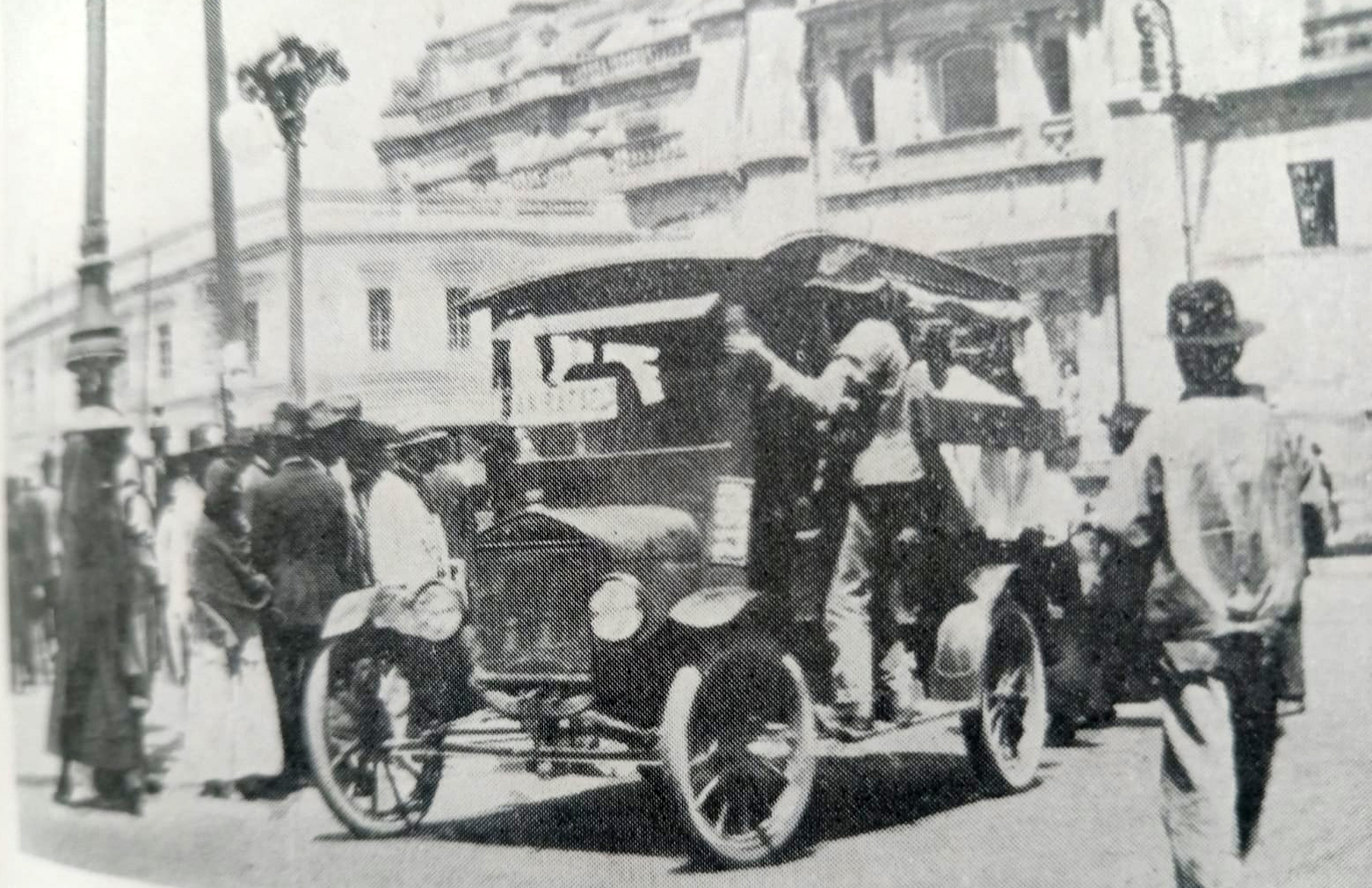
Circa 1919 Distrito Federal (DF) plate #2190 on jitney.

The book “Industrial México” published in 1919 show this photo of another Mexico City crowded jitney with the license plate affixed vertically just below the windshield.  The plate appears to read #2190 DF, and the jitney sign appears to read San Rafael as the destination for this crowded hauler.   This is the first confirmation we’ve seen that the undated DF plate was in use as early as 1919 and maybe even earlier.  This book also includes a 1917 automobile census.  Now the question to investigate further is how much further back was the undated DF plate used, and when was it first issued?  And was this the first issue in Distrito Federal, or were there other local ayuntamiento or municipal plates as we have seen in nearly Estado de México and Puebla states?

1922 M de M Mystery

1922 Mexico City

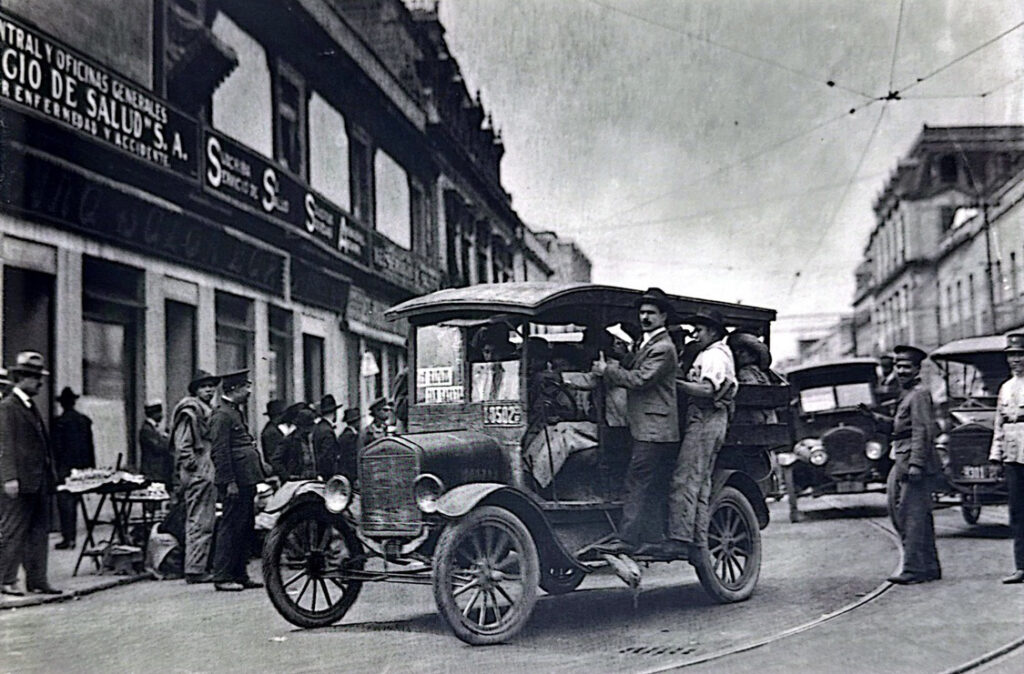
Where is this 1922 plate from?  Collectors have long been curious and debated its origin.  With these historical photos, we can confirm it is indeed from Mexico, and they were used in Mexico City, as long believed. 

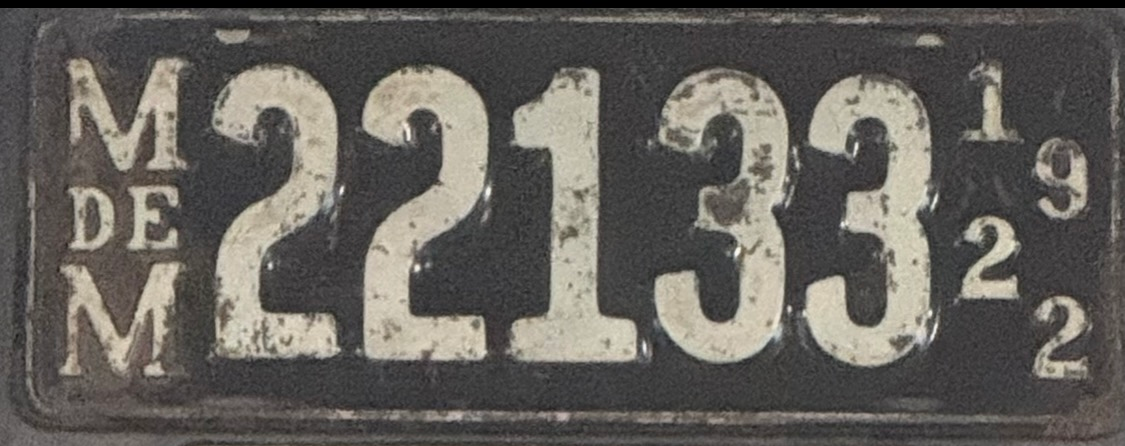
The surviving M de M examples (at least two are known) are five digits, which seems very high.  Both survivors start with “22”, indicated 22,XXX.  Or could the the 22 be the year as prefix, but that seems unnecessary with the year already stamped vertically on the right.   A century ago, there was no likely no other jurisdiction in Mexico with more than 22,000 registrations except Distrito Federal.   The vertical “19” and “22” at the right could be theorized as a multi-year plate for 1919-1922.   The other leading theory says the M de M designation is for “Muncipalidad de Mexico”, as in the government of Mexico City. 

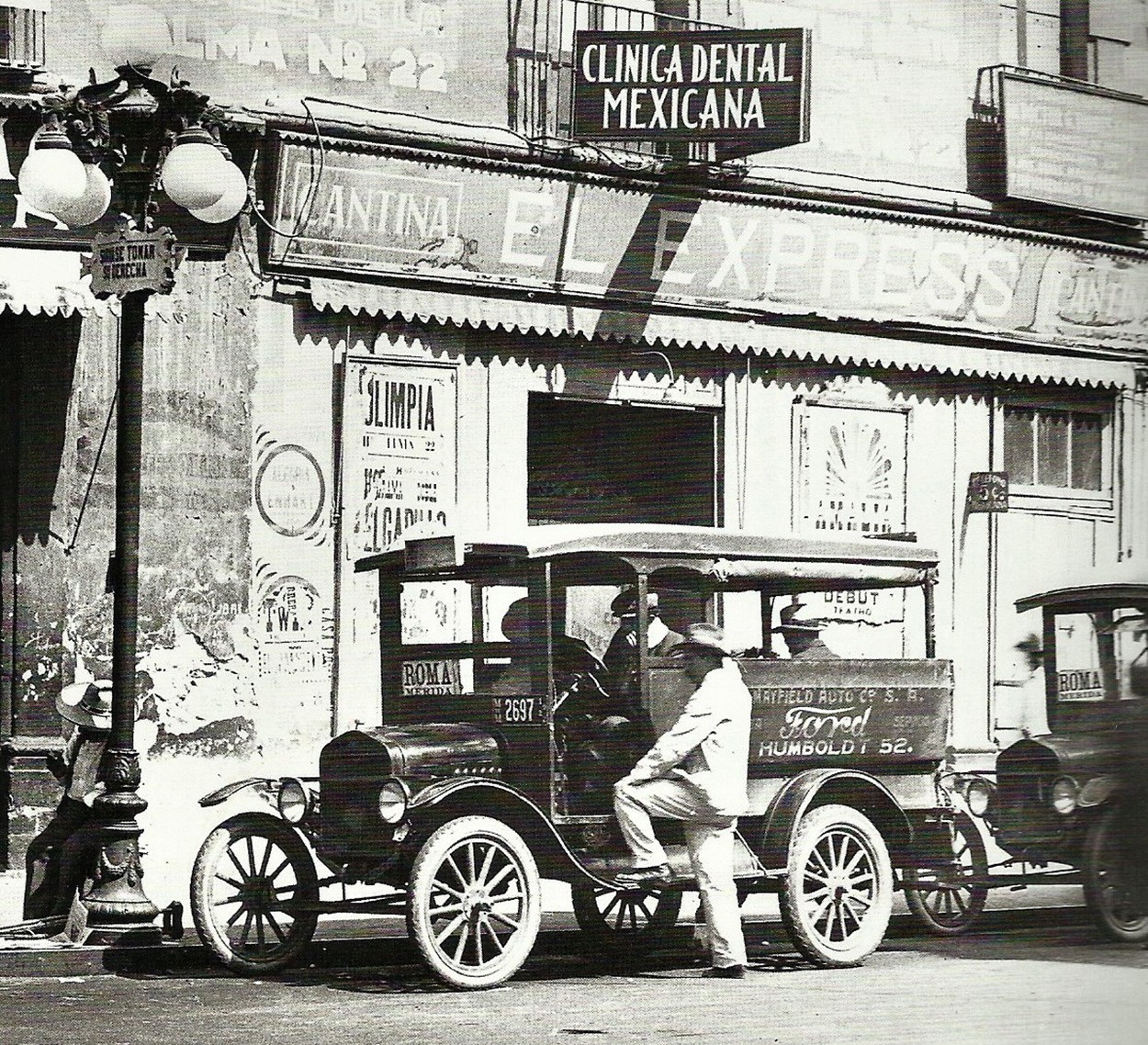
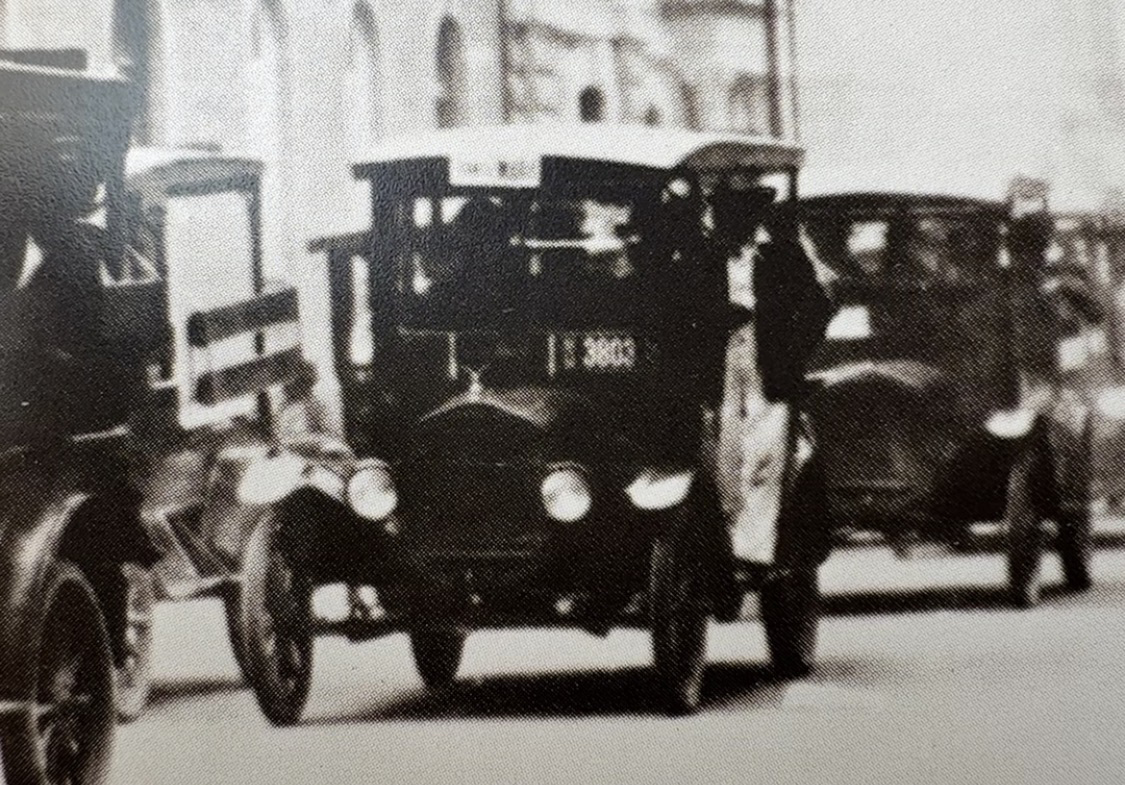
The newly discovered photos seem to solve one mystery and raise another.  There are now at least three photographs showing 5 examples of 1922 M de M plates on the roads of Mexico City seemingly solving the long-standing question of its origin:

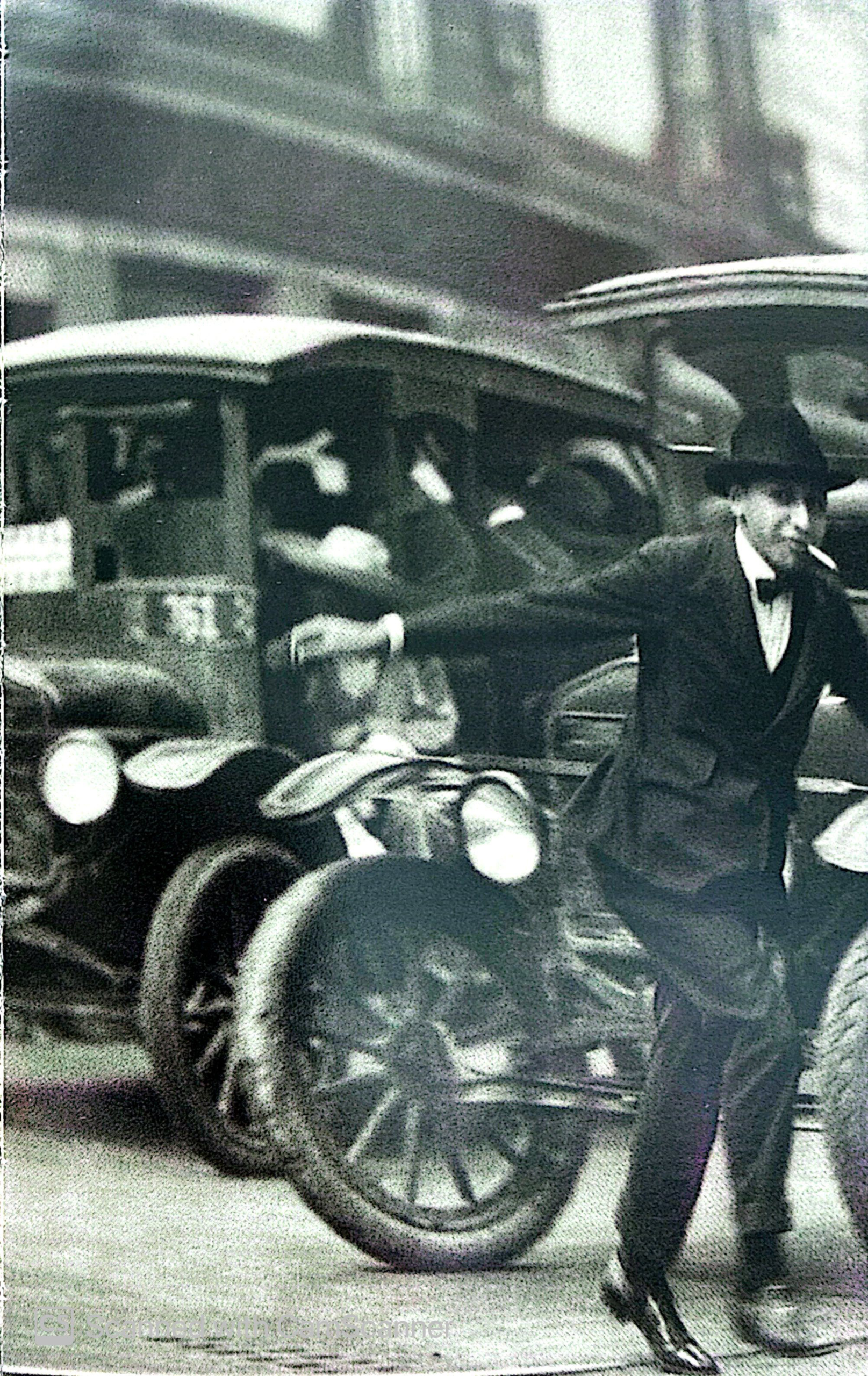
  • #361 on a crowded Jitney, with a cigarette smoking pedestrian in front
  • #2697 on a Ford Model T Jitney, likely a Roma (for Roma Norte neighborhood) public colectivo bus/taxi parked in front of El Express Cantina.
  • #3803 on a Mexico City jitney.
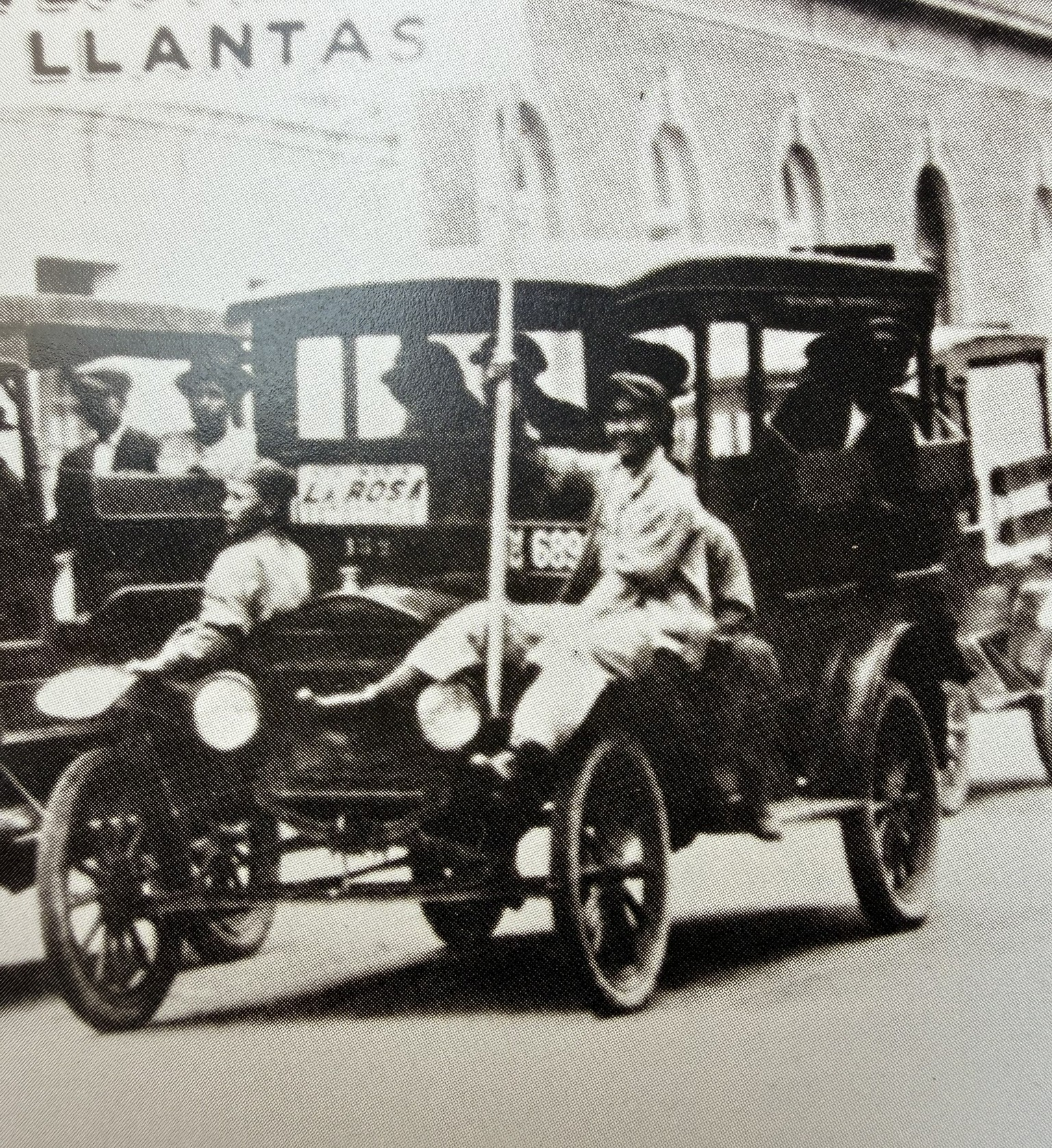
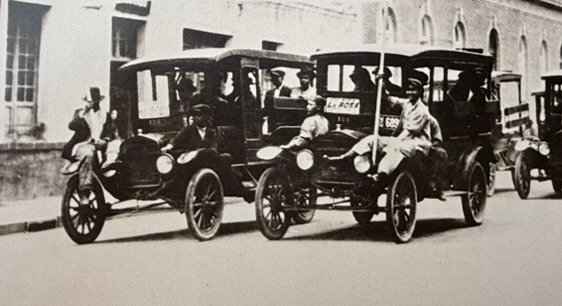
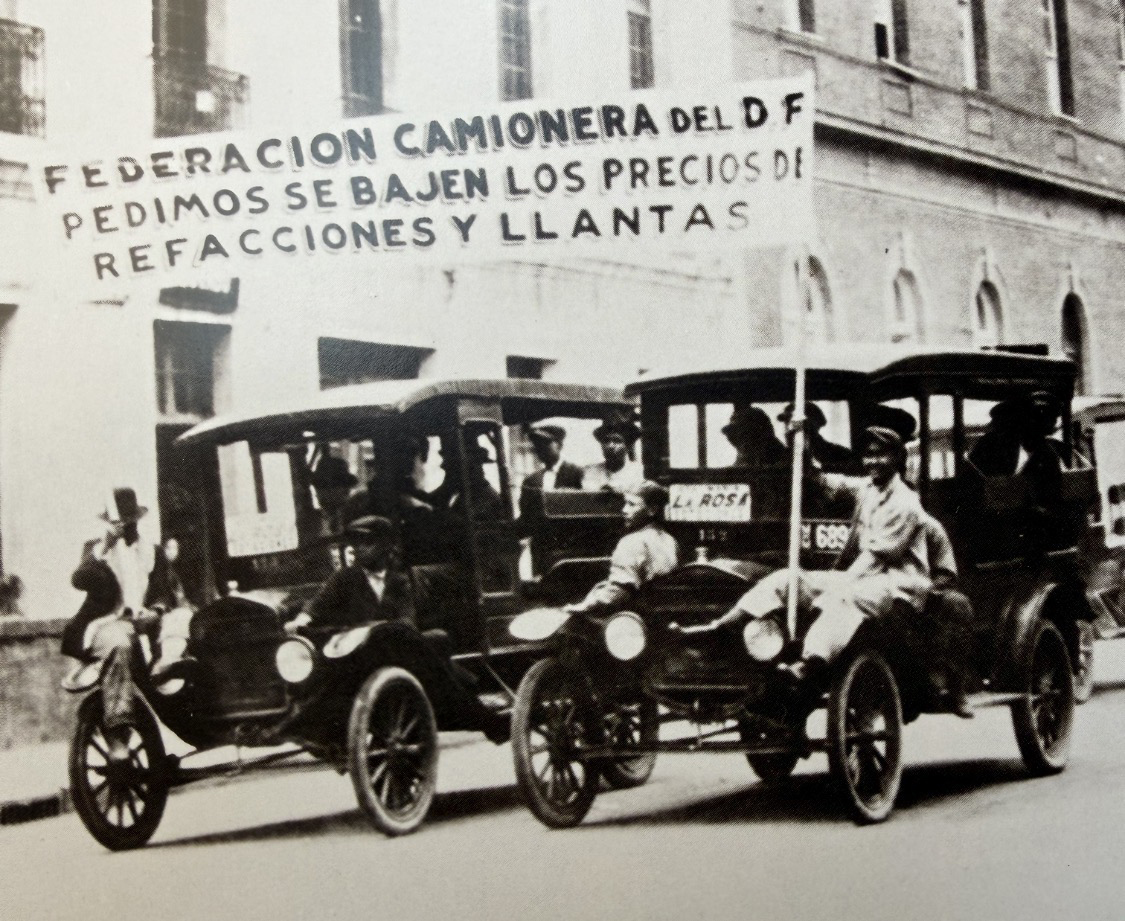
  • #689X, a four digit plate on a La Rosa jitney.
  • #6XXX, on an obscured but still recognized plate driving alongside the La Rosa #689X.

But there’s now another mystery.  There is no known dated 1922 DF plate.  But there are other period public jitney vehicles that clearly show an undated “DF” stacked suffix designation.  So if the 1922 M de M was used by Distrito Federal for 1922, then when were the undated DF plates used—1921 or earlier?   If the undated DF plates are older than the M de M plate, then why did Mexico City, DF use the odd and still unknown “M de M” designation for just that one year?    

So, there are still several major questions left unanswered:

  1. What does “M de M” mean and how did it come to be used on license plates?
  2. When were the undated DF plates used? Even more compelling, when were the first plates required or issued in Mexico City?  For example, the 1922 M de M highest known is #22133 yet the known 1923/24 DF plates or photographs are no higher than 4 digits. 
  3. Is there a chance that the DF plates and M de M plate were used concurrently in Mexico City? Or could the M de M plate have been issued by Estado de Mexico (as in “Municipios de (Edo) Mexico” and still be seen on the streets of Mexico City as shown in these photographs.

Until now, the earliest known Distrito Federal plate has been a dated 23/24 DF plate, with all subsequent years accounted for through dated issued confirmed for 1925 through 1985, and then again in 1999.  So with DF plates documented from 1923 on up, the undated DF plate is a mystery.  

With all this in mind, our leading theory is that the 1922 M de M is the first dated plate, used in just 1922 (not ’19-’22) followed by the dated DF 23/24, and then subsequent annual issues from 1925 through 1985 before returning to multi-year (and undated) base plates through today.   We don’t believe the undated DF and M de M plates were used concurrently, and we know that the undated DF plates were in use at least back to 1919 if not earlier.   

But this does create another mystery.  Why would Distrito Federal start issuing plates with DF, then switch to M d M for just one year, and then go back to DF.  Indeed DF or Distrito Federal was used from 1923/24 through 2015 when DF finally ceased and gave way to CDMX.

Do you have any related photos, evidence or theories to share?  Please let us know in the Comments below.   We will update as new or clarifying information is collected. 

Well, you could chuckle and say at least one known meaning of M de M is the Mystery of Mexico!

1922 M d M on Jitney
1922 M d M #361
1922 Edo de Mexico
1922 M de M on both vehicles
In 1922, the truckers federation of Distrito Federal launched a protest against the rising prices of spare parts and tires. Note the 1922 M de M plates on each of these jitneys.
1922 M de M #3803 on a crowded jitney on the streets of Mexico City. All of these jitney's with 1922 M de M plates may suggest that they were issued to public or municipal vehicles. Has anyone seen any photos of 1922 M de M plates on private vehicles in Mexico City? Perhaps this suggests that there may have been concurrent issues. But there are no known M de M plates for any other year than 1922.

1923/24 Distrito Federal

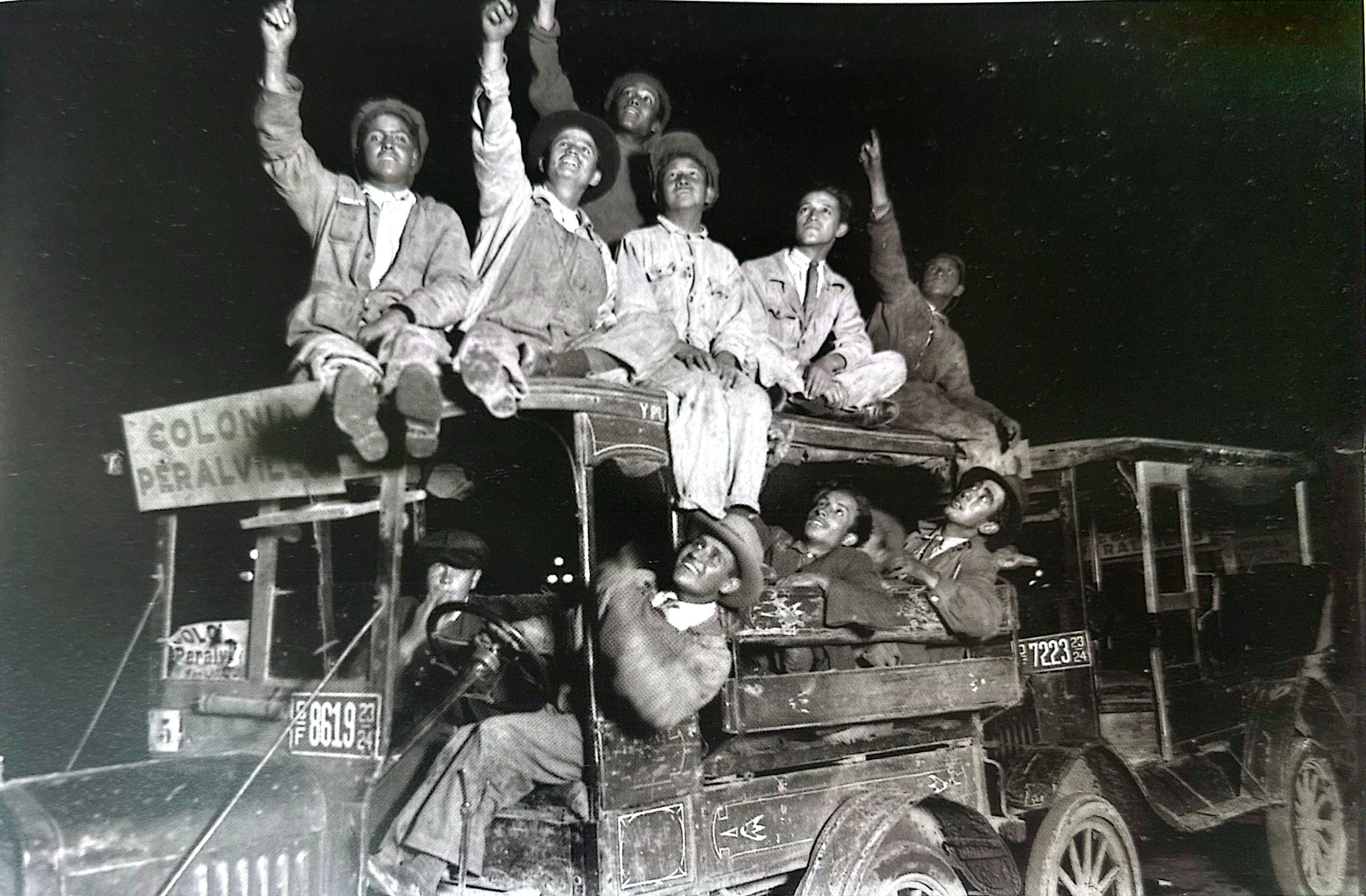
It’s all smiles on this colectivo carrying passengers in Mexico City,  The truck is full with at least 10 passengers, including the driver.  The transport is headed to Colonia Peralvillo,  a neighborhood located in the Cuauhtémoc borough of Mexico City, just northwest of the historic center. It has been a poor area since colonial times, and the modern colonia was established in the late 19th and early 20th centuries.

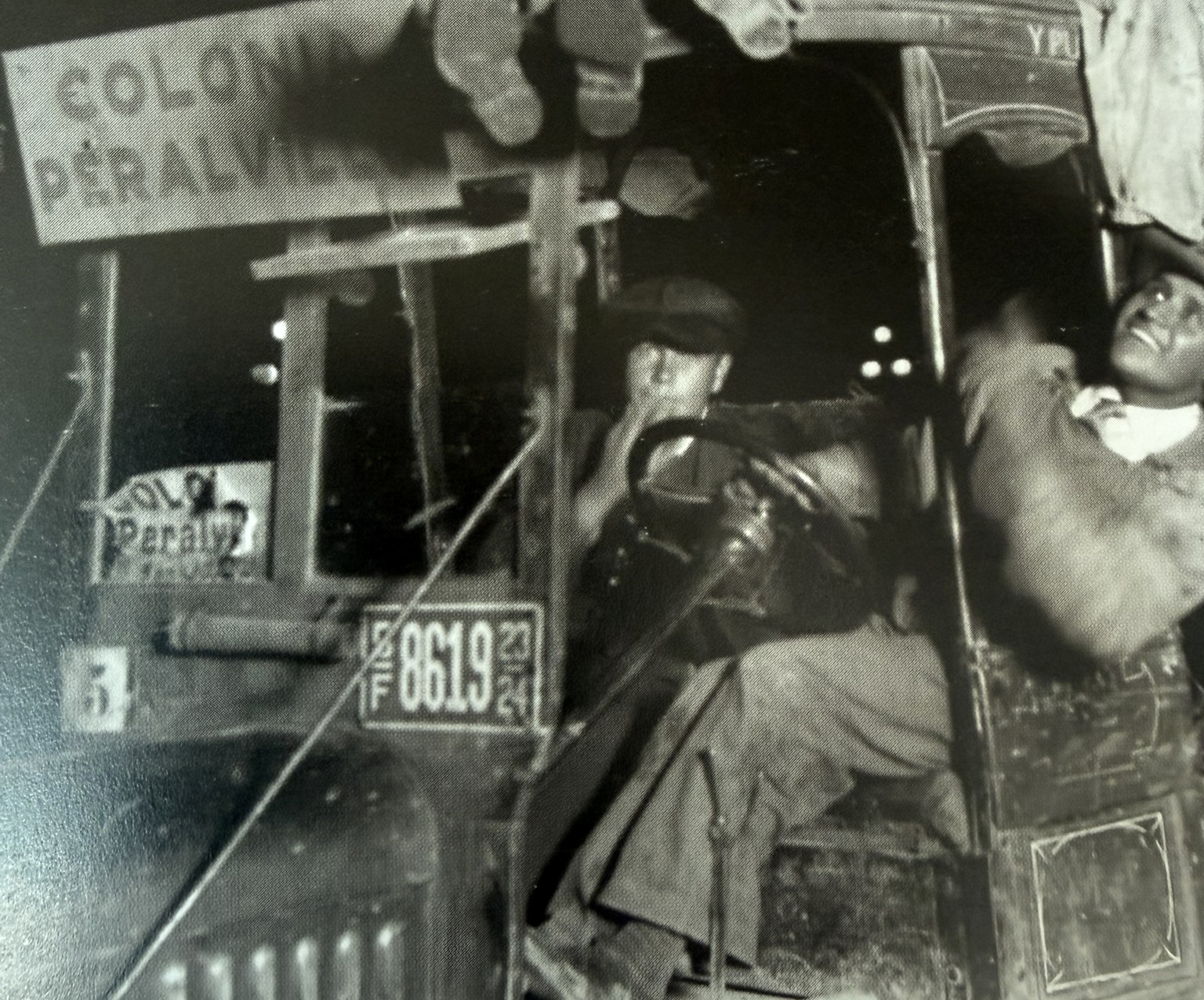
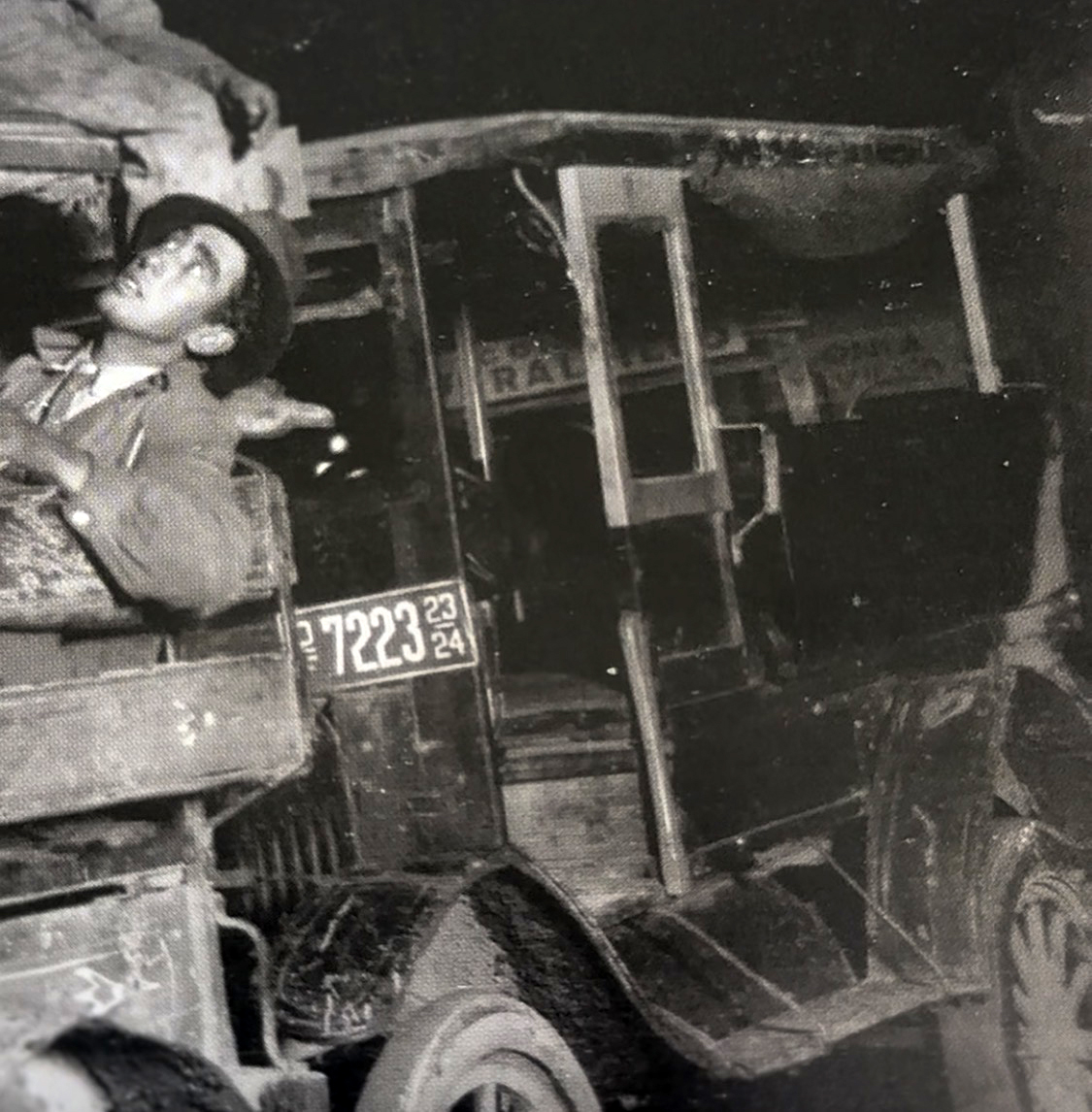
There are two transport trucks: the first carries #8619 on a license plate mounted to the front windshield, a customary practice it appears.  Right behind is #7223.  These plates were replaced the next year with a DF 1925 plate.  Starting in 1925, Distrito Federal issued annual dated plates through 1985 and then again in 1999. 

1923/24 Distrito Federal #8619.
1923/24 Distrito Federal
1923/24 Distrito Federal #7224 on an empty jitney in Mexico City.

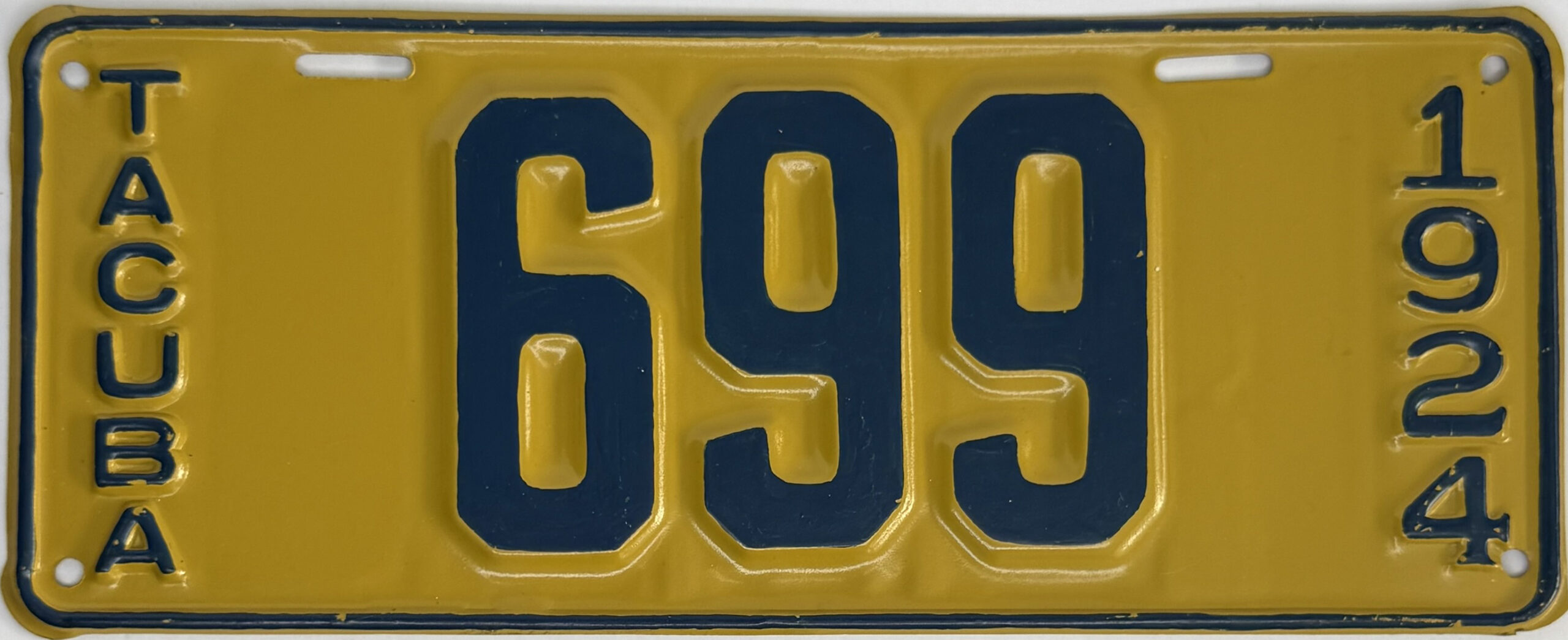
1924 Tacuba

1924 Tacuba

Tacuba was an autonomous municipality of México City until 1928, when it was incorporated  into the Central Department, along with the municipalities of México, Tacubaya, and Mixcoac.  Later the Central Department was divided into delegaciones (boroughs), including Miguel Hidalgo that covers what was then Tacuba.   Perhaps as a political statement to its neighboring behemoth of DF, the small town of Tabuca issued its own license plates, and they are some of the finest known.  Presumably manufactured by S.G. Adams of St. Louis, Missouri, USA, the plates have their familiar dies.  S.G. Adams was successful in making plates for many far-flung international destinations in the era, including but not limited to St. John, Newfoundland (then a British dependency), Panama, Colon (autonomous region near Panama Canal) and other.


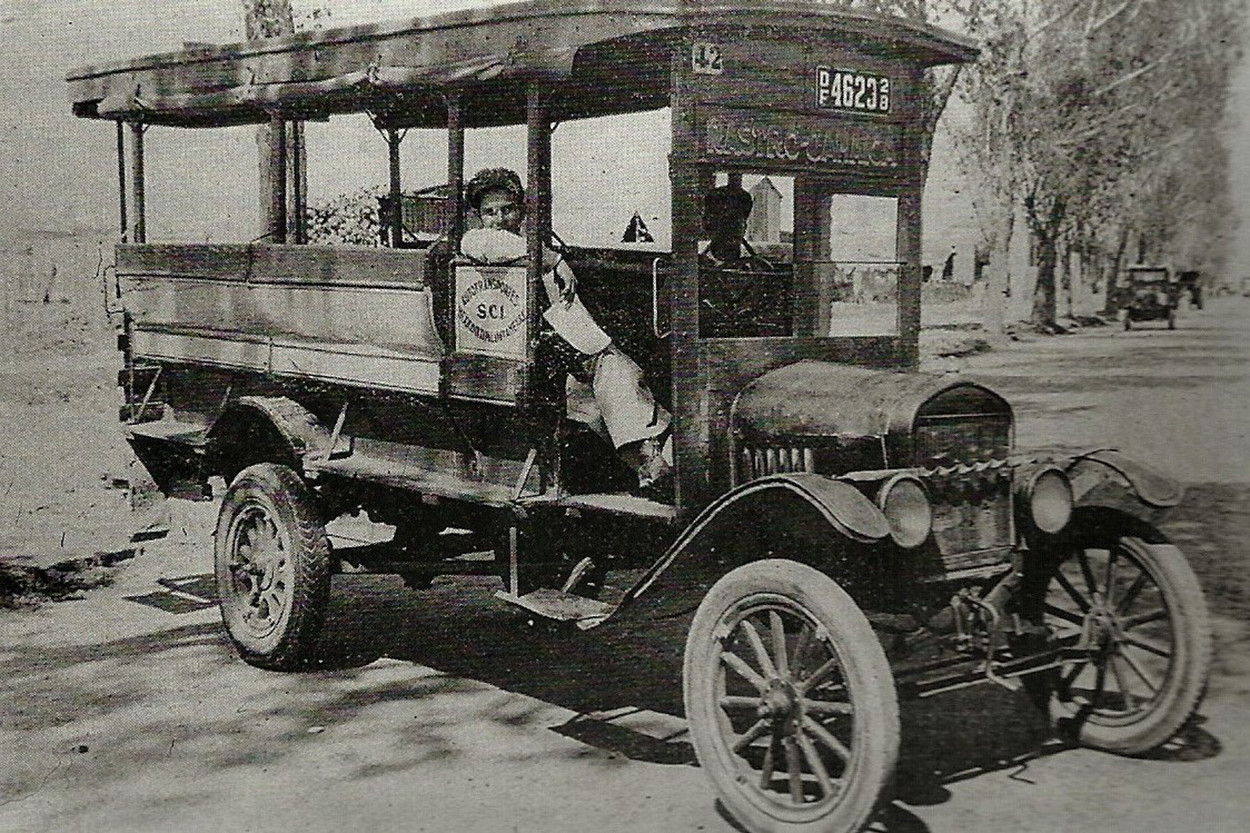
192X DF Mystery

DF 1920 X 4623 Rastro Jitney

At first glance, this DF jitney looks like it’s 1928 with a two digit date stacked right.  But we know that can’t be true as confirmed 1928 DF plates have a 4-digit year, “1928” stacked vertically, a period after DF. and distinctly different dies.  The dies on the plate above matches the 1923/24 and undated plates, but the two digit stacked year makes this a mystery.  Any clues or theories? 

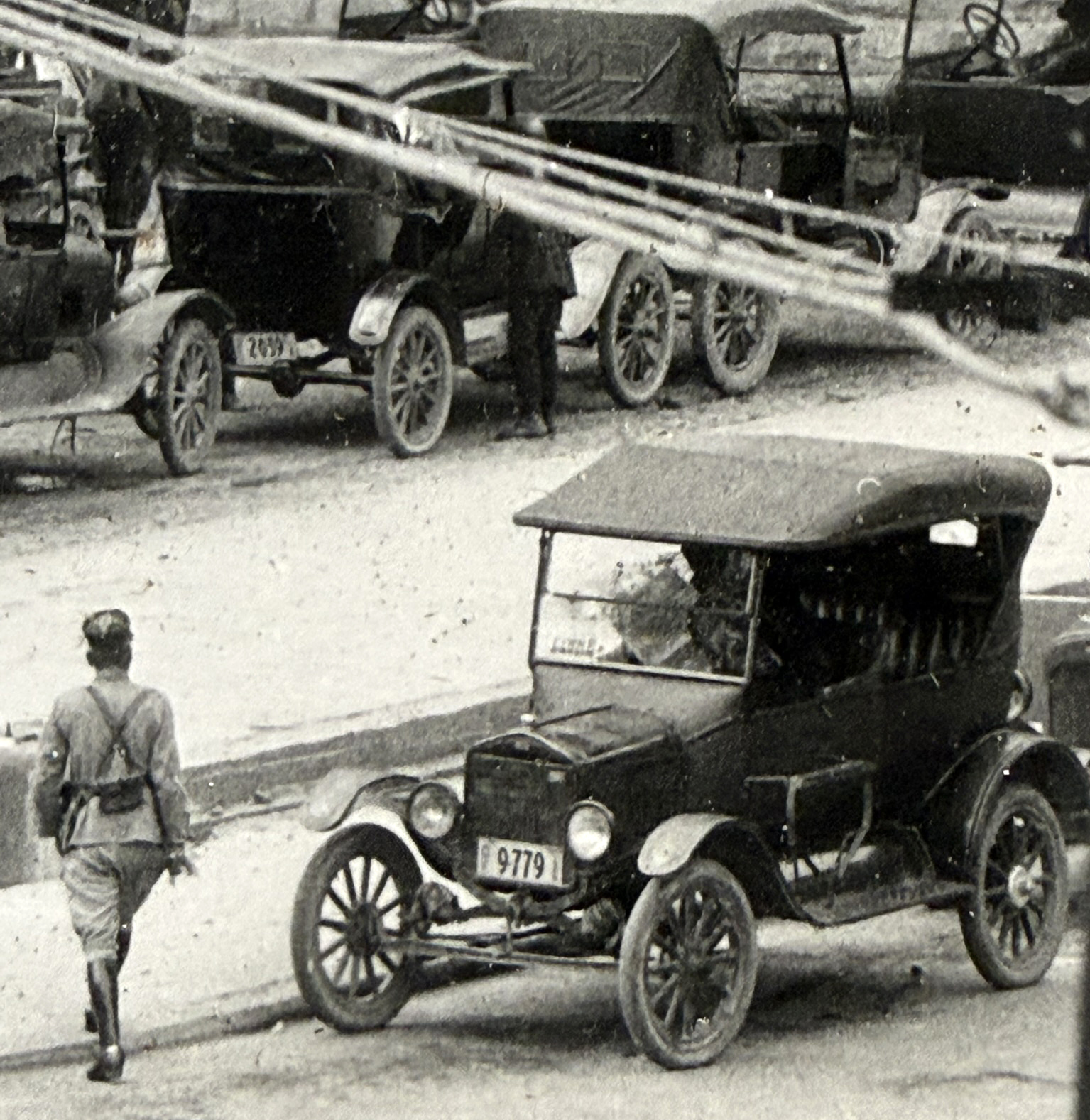
Circa 1925/26 Distrito Federal

This marvelous photo shows two Distrito Federal plates, #9779 in the foreground and #2039 in the background. 

The plates shown are clearly dark numbers embossed on a light background, and the vertical date stacked on the right appears to be four digits and not two.  That helps us narrow down the possible years to 1925, 1926, 1928, and 1929. 

1925 is red on gray, so the contrast doesn’t seem right in this photo.  To date, 1926 colors are unknown so that’s still a possibility (as the plates look black on white here).  But the die on the #9 here looks like 1925 (and could be 1926), but not 1927, 1928, or 1929).  Could this be the first evidence of the elusive 1926?

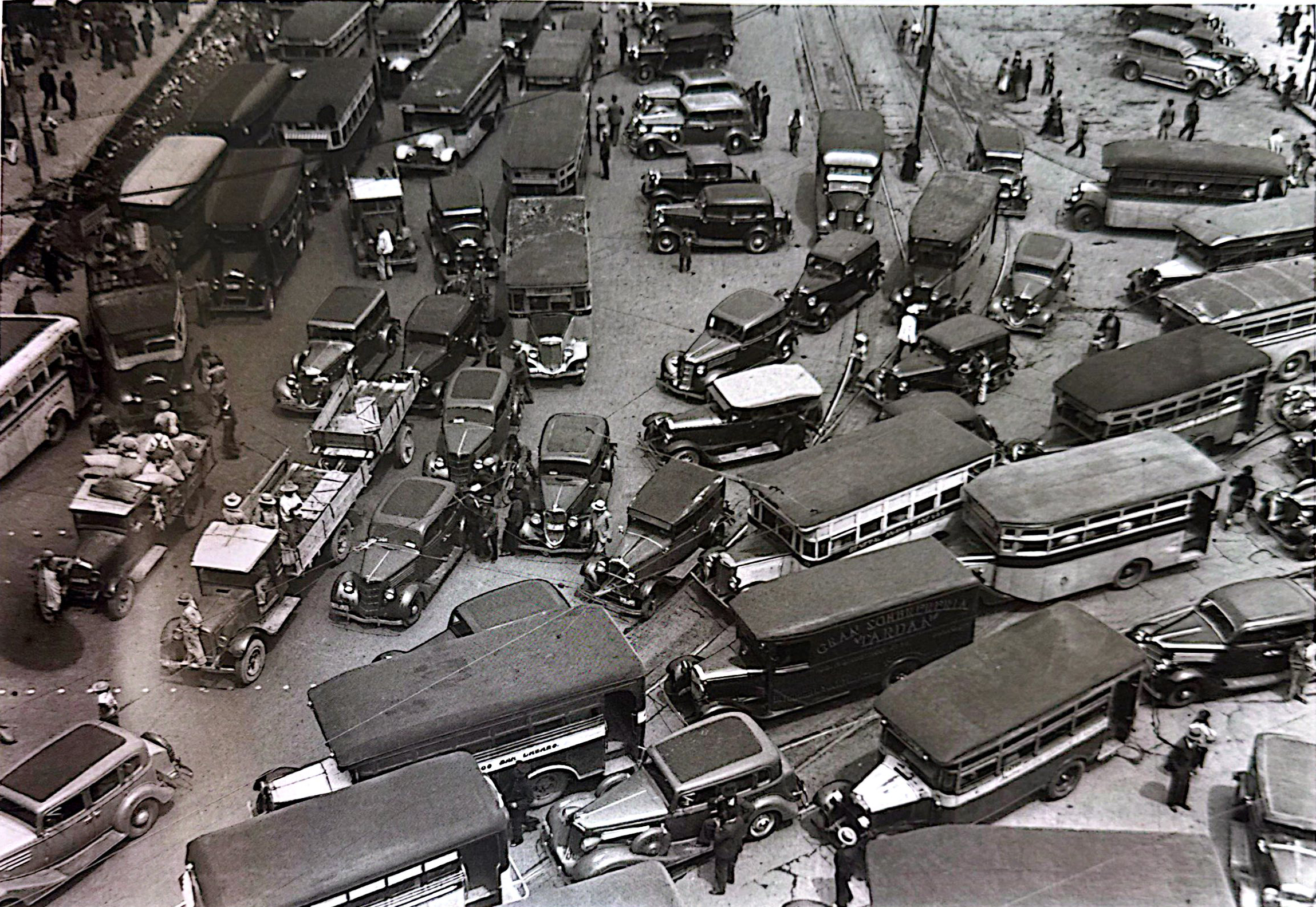
Circa 1925 Mexico City.

1932 Distrito Federal City Traffic

1932 Distrito Federal

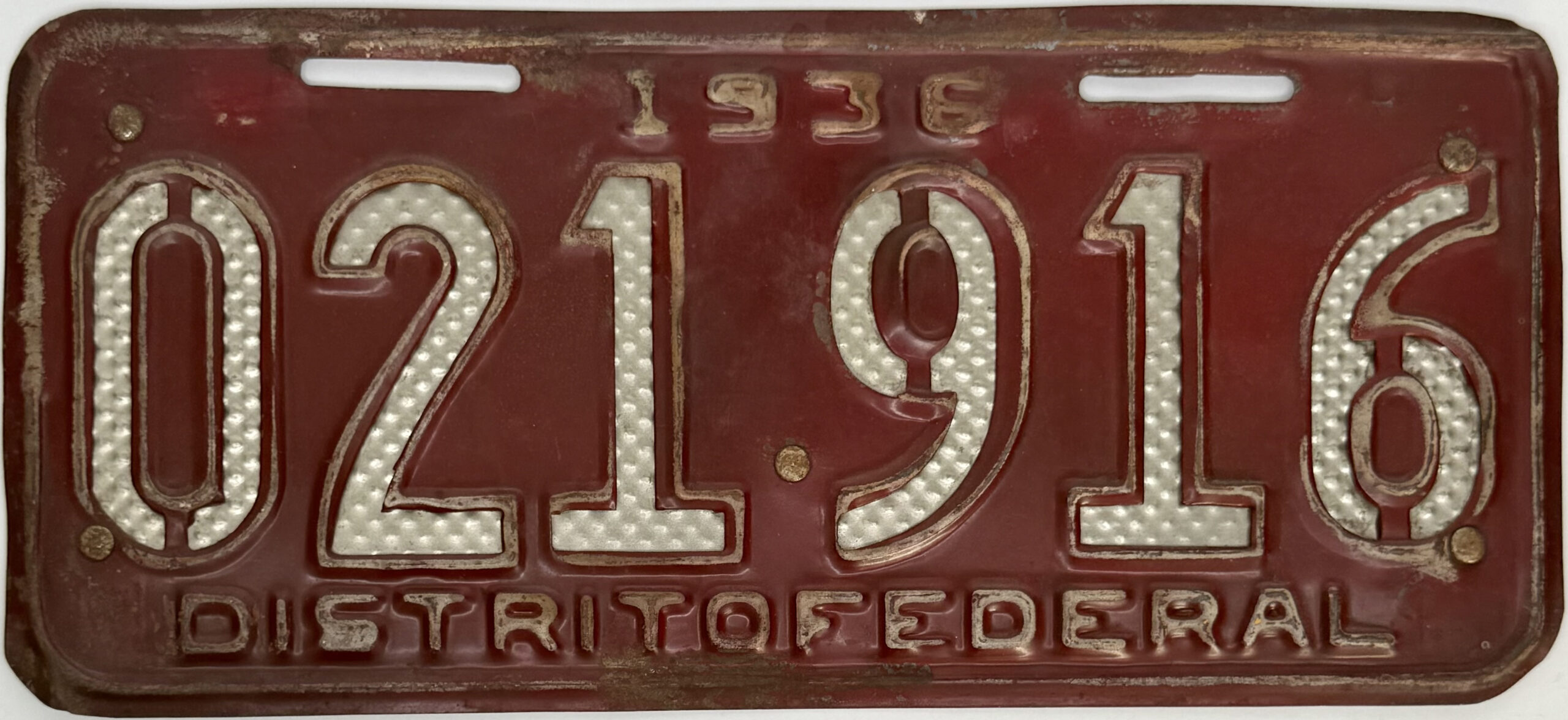
1936 Distrito Federal

One the world’s most extraordinary license plate compositions, the 1936 Mexico series is one of the most sought after by collectors around the globe.   

The need for increased road safety with exploding numbers of automobiles and highways called for new ideas.  

In the early 1930s, several states in the USA experimented with anti-theft plates, like the 1935 Massachusetts, Florida, Mississippi, Georgia, and Iowa. 

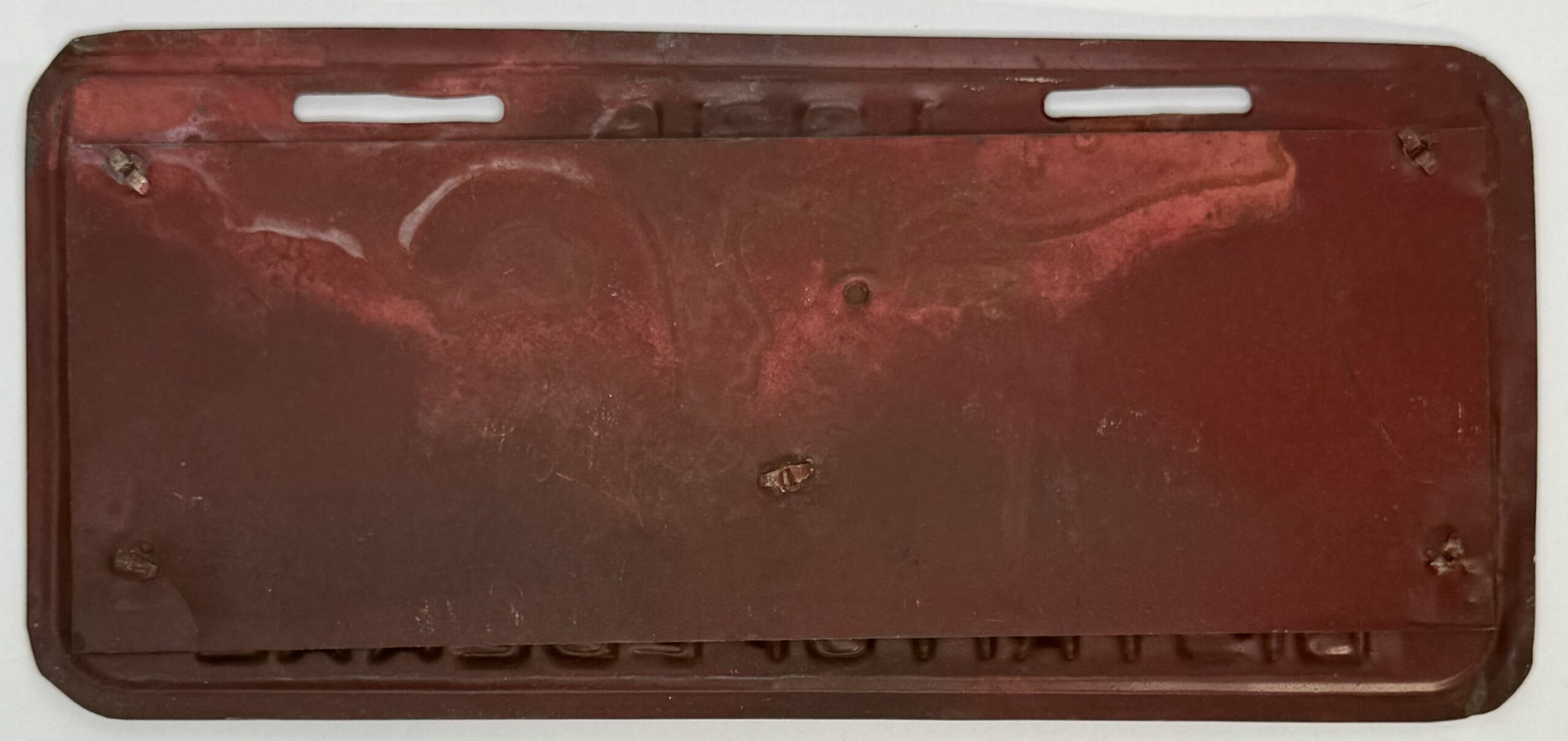
But the 1936 Mexico appears to combine both road safety with reflectorized numbers.  There are several types of backing for these plates.  In this example, there is crimped aluminum.  Other Mexican states used glass beads. 

Mexico pioneered the technology for increased visibility, especially at night with the variations of insert backings in the 1936 base plate.   Next came the USA, with the 1941 Georgia plate with glass beaded paint on the embossed portions.  Canada lagged with this innovation for decades.  The 1967 Alberta Centennial base plate was the first fully reflectorized beaded plate.

Does anyone have information about who manufactured 1936 Mexico plates?

1936 Distrito Federal

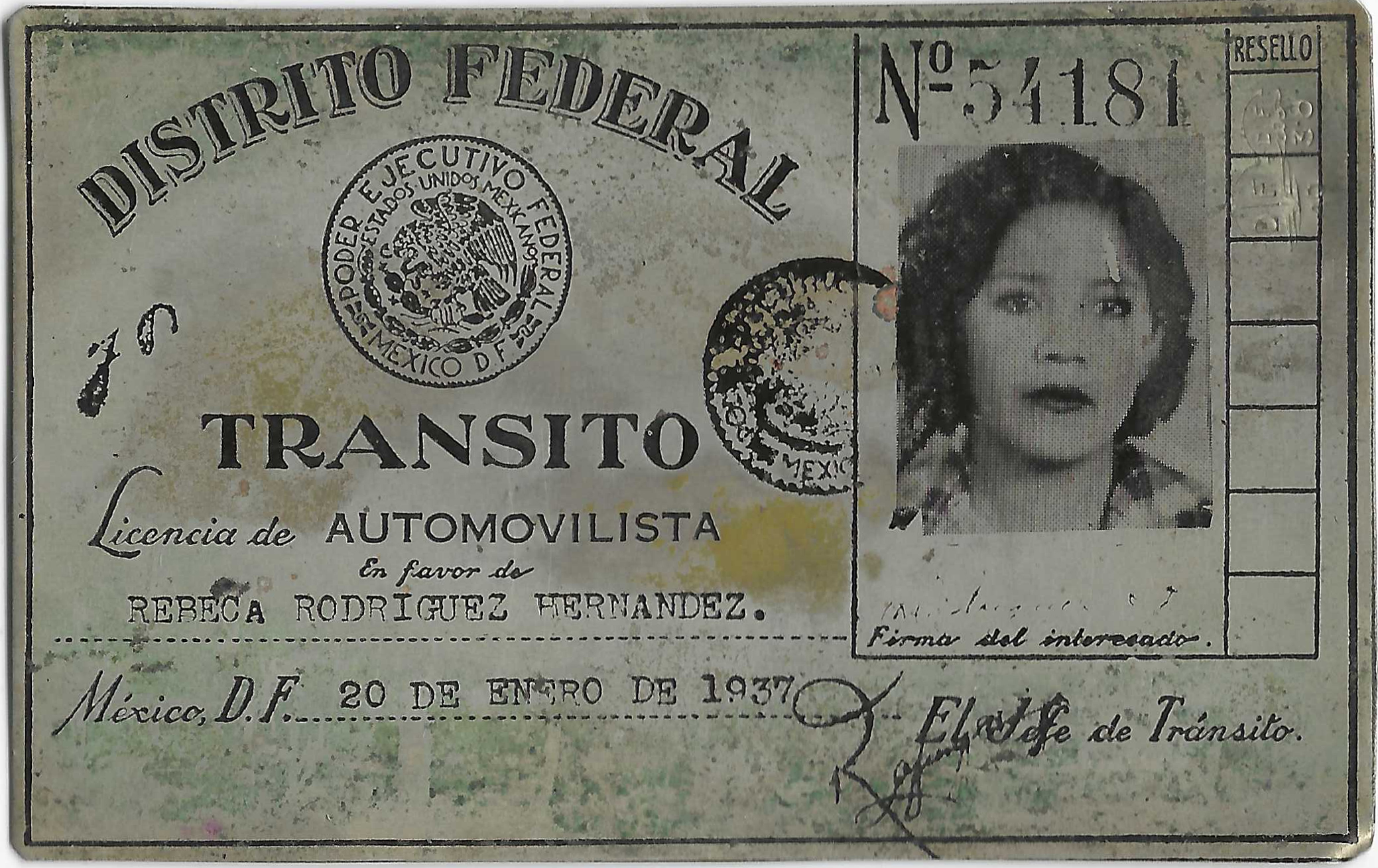
1937 Distrito Federal Automobile Drivers License

1937 DF Drivers License

The drivers license are screened thick, lightweight metal and appear quite sophisticated with the driver’s photo. Compare this to most other driver’s license in the USA and other countries were simply printed paper. This license was issued to Rebeca Rodriguez Hernandez on January 20, 1937. On the right, the license is stamped twice under Resello, with room for more. Does this mean these license’s were renewed annually and valid for up to 7-8 years?

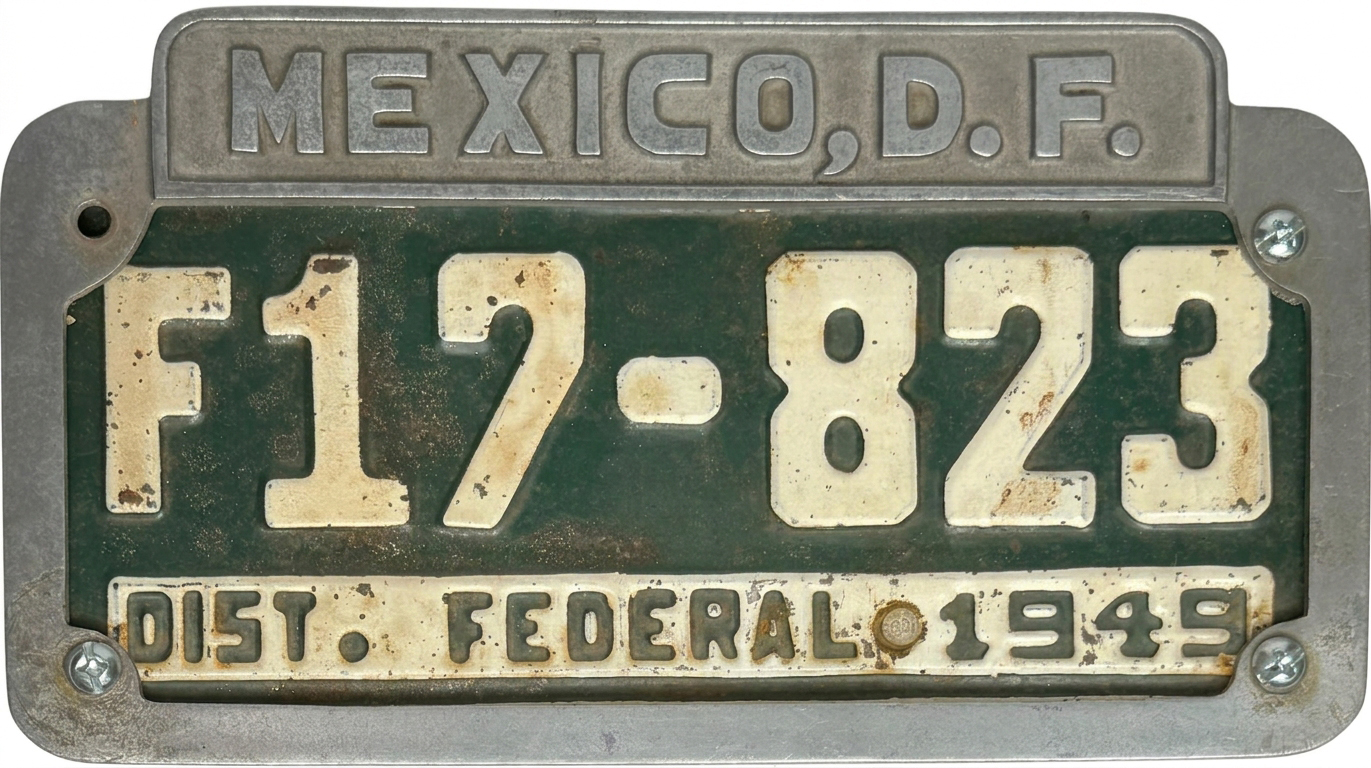
1949 Mexico, DF Cast Topper

1949 Distrito Federal

Germany's BP Oil Collector's Series

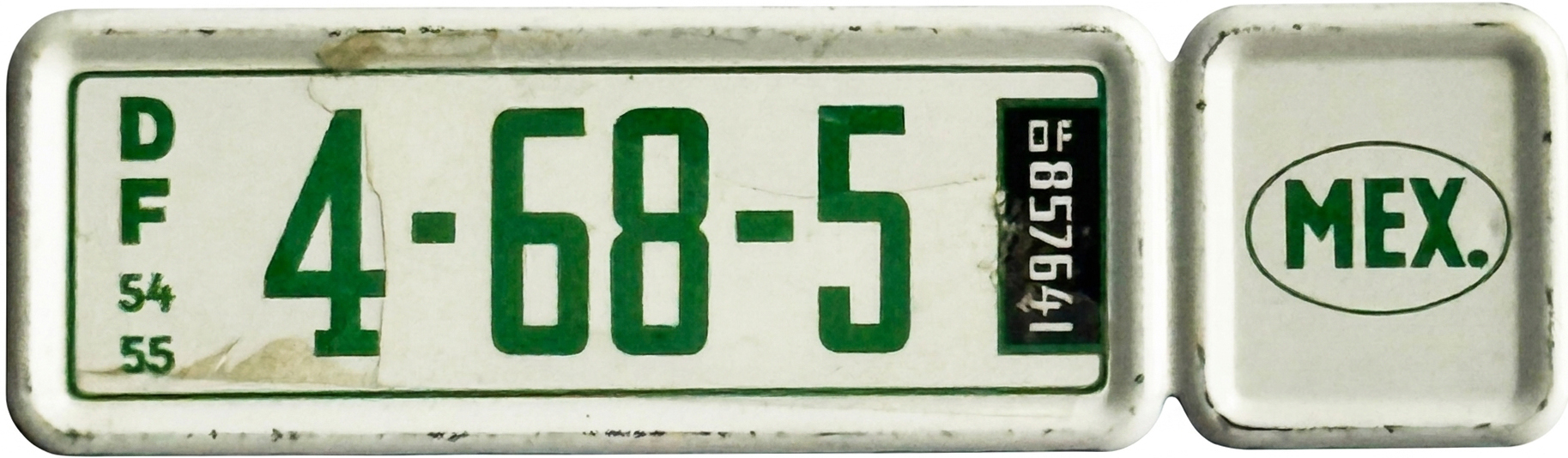
1954/55 Distrito Federal BP Oil tab.

in the mid-1950’s, Germany’s BP Oil company introduced a gas station collectors premium for their customers–miniature license plates from many countries around the world, including Mexico.  On the back is the inscription in German: “Nr. 8 Mexiko. aus der Kollektion internationaler <Nummis> Serie 1”   This translates that this 1954/55 DF with the international MEX oval was number 8 in their collector series. 

1956 Mexico City

A short film showing busy traffic motoring throughout Distrito Federal.   (YouTube credit: BAMSLERC).


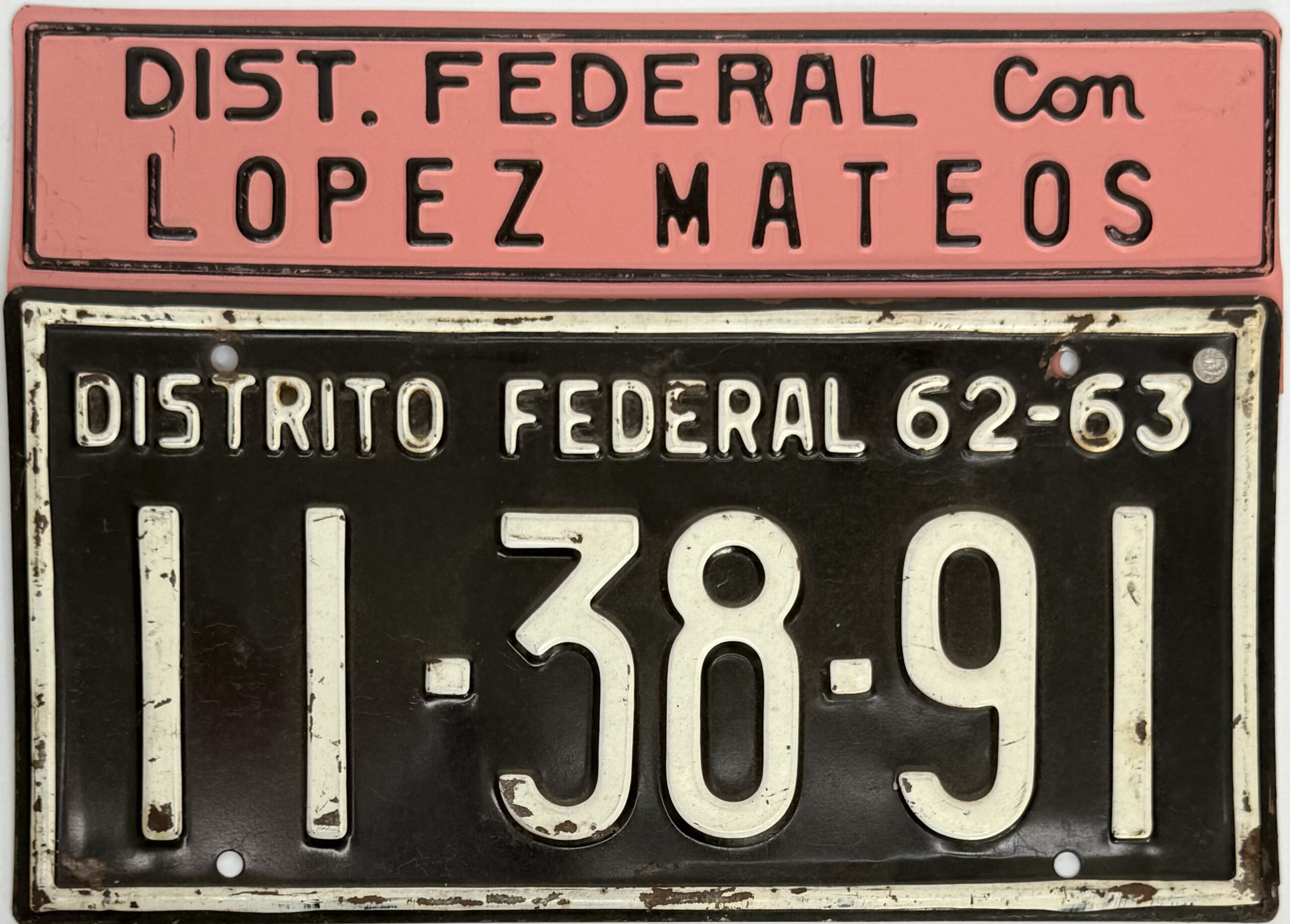
President Adolfo López Mateos Topper

1962/63 Distrito Federal
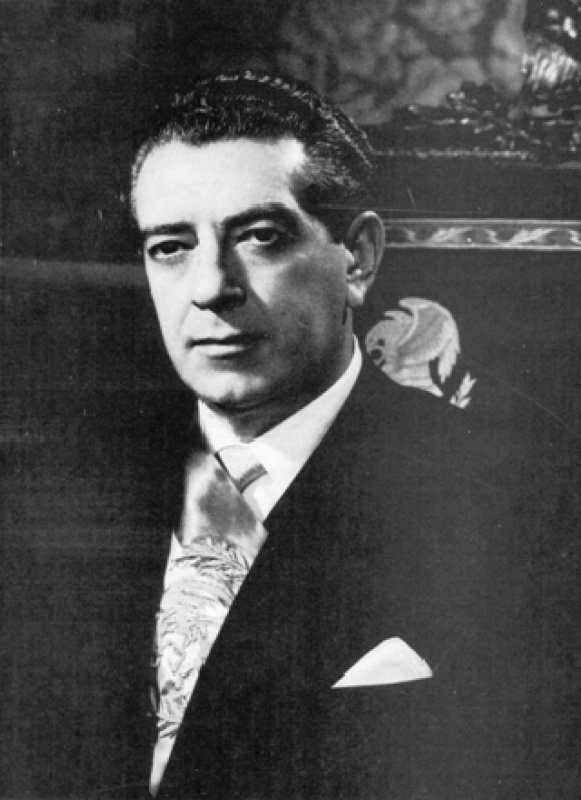
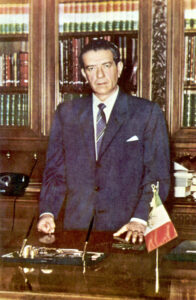
Adolfo López Mateos

Adolfo López Mateos (26 May 1909 – 22 September 1969) was a Mexican politician affiliated to the Institutional Revolutionary Party (PRI) who served as President of Mexico from 1958 to 1964. As President, he nationalized electric companies, created the National Commission for Free Textbooks (1959) and promoted the creation of prominent museums; such as the Museum of Natural History and the Museum of Anthropology in Mexico City


A librarian and teacher of Spanish-American literature, López began his public career with an assignment to the United Nations. He served as a federal senator (1946–52) and later was appointed secretary-general of the Partido Revolucionario Institucional (PRI). As minister of labor, he was skilled in mediating disputes and helped draft the U.S.–Mexico migrant-labor treaty.
 

Though accusations of corruption clouded his six-year term as president, López increased industrialization, extended agrarian reform laws, stepped up state intervention in the economy, embarked upon major public health programs, and initiated a literacy campaign.

Leading what one observer described in 1962 as “a pro-labor, social democratic, left-of-center government”, and what López Mateos himself described as “the administration of the constitutional left”, he has been praised for his policies including land redistribution, energy nationalization, and health and education programs, but has also been criticized for his repressive actions against labor unions and political opponents. Along with Cárdenas and Ruiz Cortines, he is usually ranked as one of the most popular Mexican presidents of the 20th century

1962 Adolfo López Mateos & John F. Kennedy Parade

1962/63 Distrito Federal

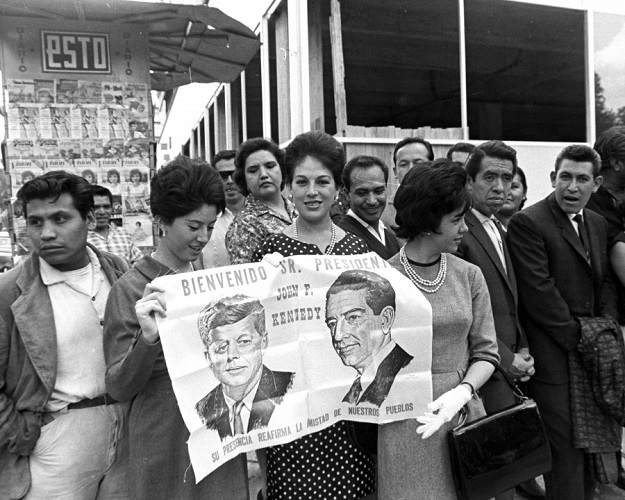
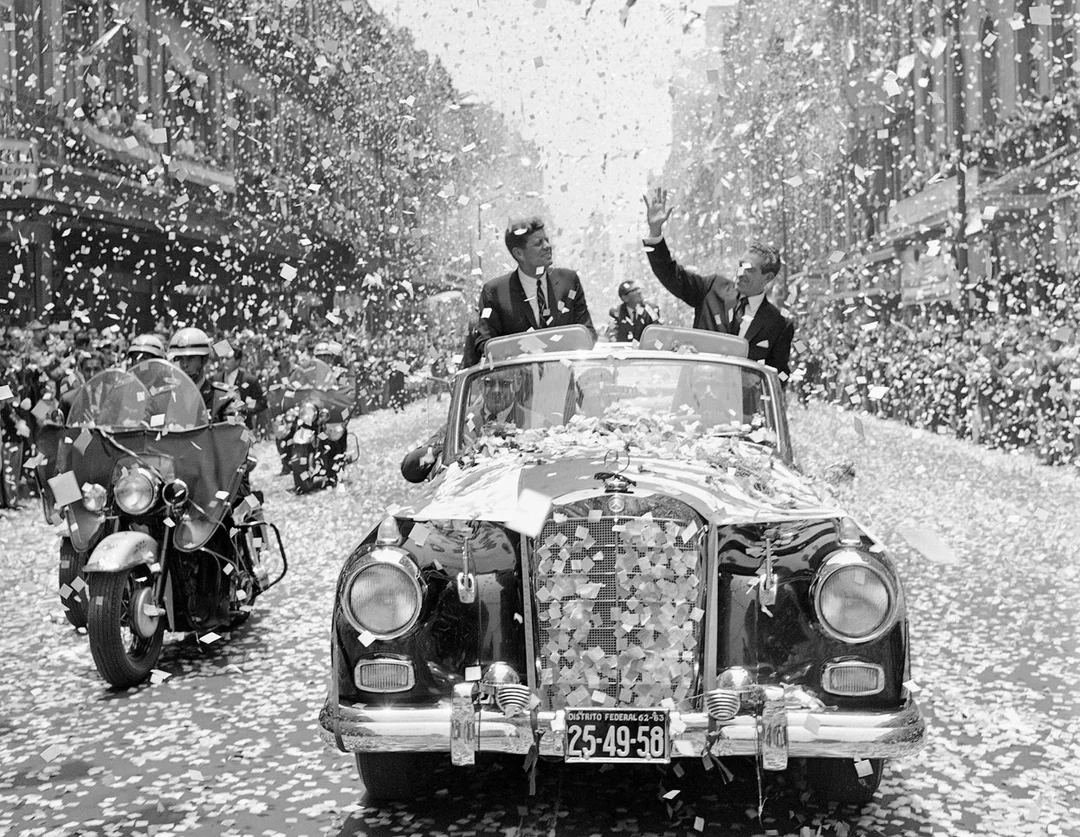
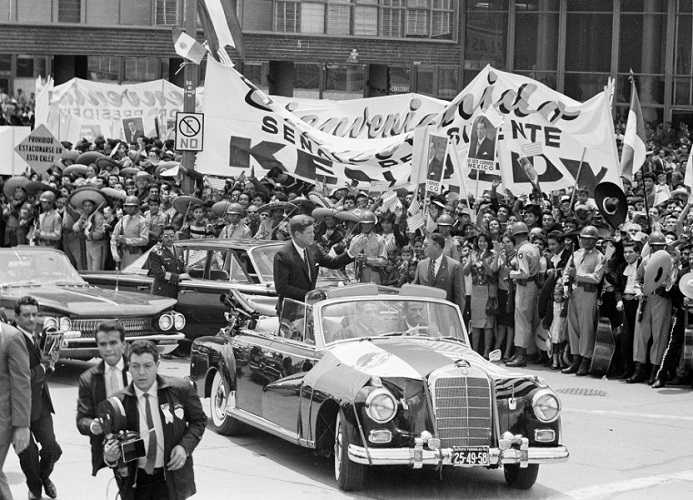
Mexican President Adolfo López Mateos welcomed to USA President John F. Kennedy with a ticker-tape parade in Mexico City in the summer of 1962.  About one million Mexicans lined to streets to watch the motorcade amidst of blizzard of confetti. 

Mexican’s presidential motor fleet included this German Mercedes Benz convertible and wore a general issue 1962/63 Distrito Federal #25-49-58.   Sadly, neither President live to see age 60 or survive the 1960s.

In July, 1962 President John F. Kennedy of the USA visited Mexico and was welcomed with a clamorous ticker tape parade in Mexico City. Behind the Mercedes- Benz that the two presidents rode in, you can see a 1960 Buick Electra and what looks like a 1960 Chevrolet.
Citizens lined the streets of Mexico City to see the parade with both Presidents Adolfo López Mateos and John F. Kennedy.

1949-1955: Mexico's First Automobile - DM Nacional

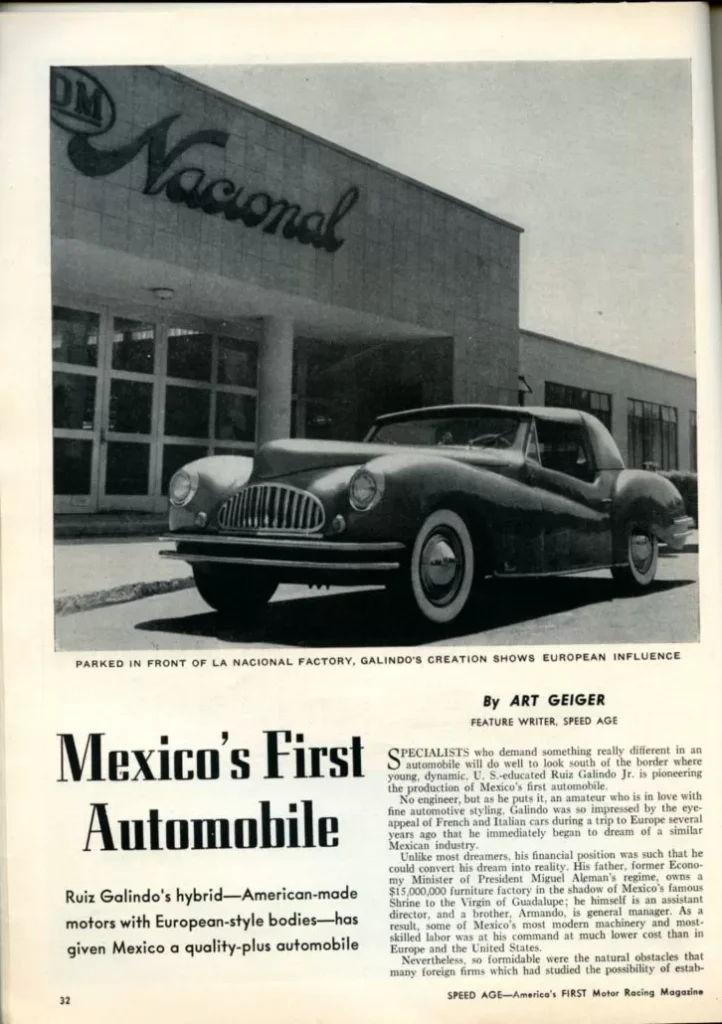
Ruiz Galindo’s hybrid – American Made Motors With European-Style Bodies Has Given Mexico a Quality-Plus Automobile

Specialists who demand something really different in an automobile will do well to look south of the border where young, dynamic, U.S. educated Ruiz Galindo Jr. is pioneering the production of Mexico’s first automobile. No engineer, but as he puts it, an amateur who is in love with fine automotive styling, Galindo was so impressed by the eye-appeal of French and Italian cars during a trip to Europe several years ago that he immediately began to dream of a similar Mexican industry.

Unlike most dreamers, his financial position was such that he could convert his dream into reality. His father, former Economic Minister of President Miguel Aleman’s regime, owns a $15,000,000 furniture factory in the shadow of Mexico’s famous Shrine to the Virgin of Guadalupe; he himself is an assistant director, and a brother, Armando, is general manager.

As a result, some of Mexico’s most modern machinery and most-skilled labor was at his command at much lower cost than in Europe and the United States. Nevertheless, so formidable were the natural obstacles that many foreign firms which had studied the possibility of establishing plants for construction of a Mexican car had abandoned the ideas as impractical although a number of companies – such as Ford, General Motors, Hillman – maintain assembly plants utilizing imported parts.

Galindo, who attended school in the United States at Carlsbad, California’s Army and Navy Academy and Northwestern University at Evanston, Illinois, realized he could not compete with American mass-production methods. So he decided to concentrate on producing a quality automobile.

Here he ran into another serious problem. While the Mexican can afford it Galindo frankly admits he prefers the low-slung, lithe lines of European cars, and objections to the latter’s sale are practically prohibitive. With the almost miraculous expansion of Mexico’s highway system during the past six years, all the better-known American manufacturers have well-equipped service stations and repair shops in every part of the Republic.

But spare parts for the more expensive European brands are another story. Hence Galindo was forced to another decision; he must combine easily-repaired American motors and chassis with European-style bodies bult by low-cost Mexican labor.

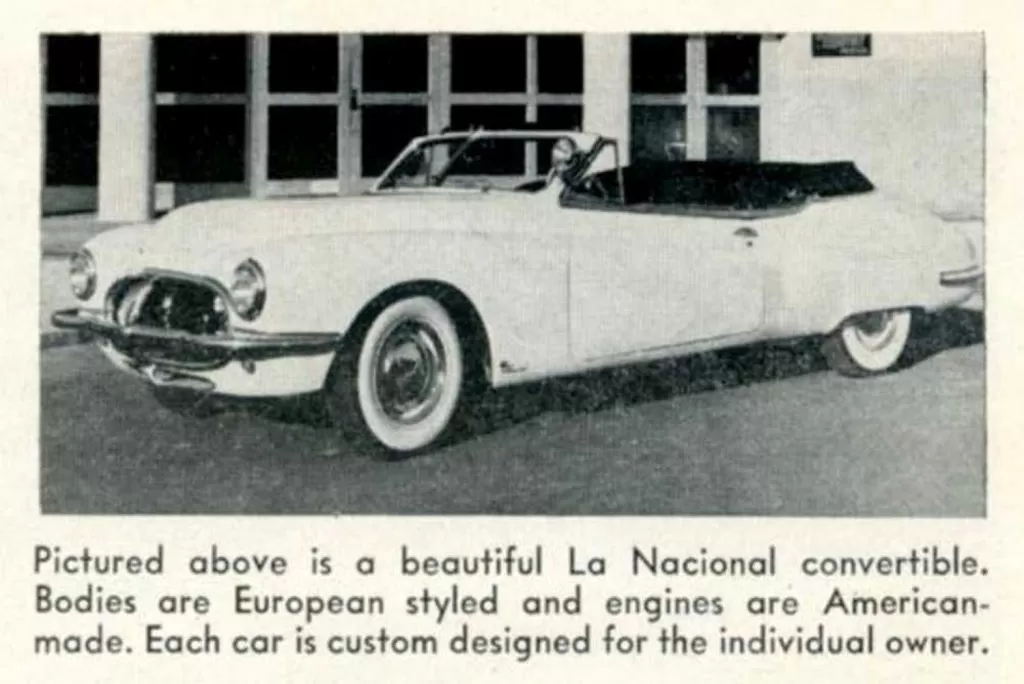
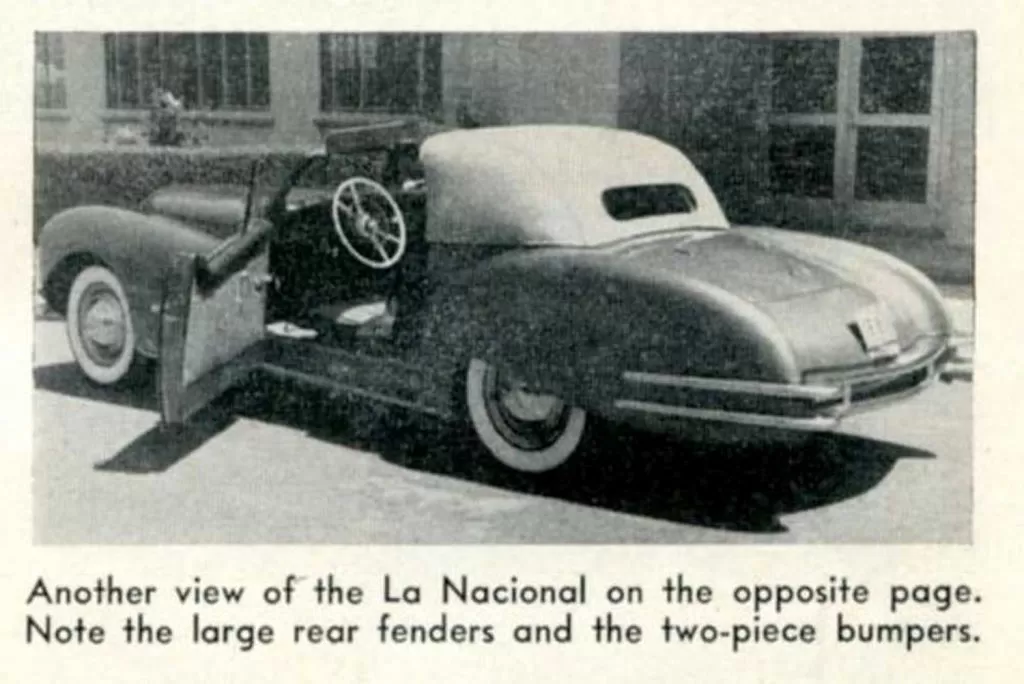
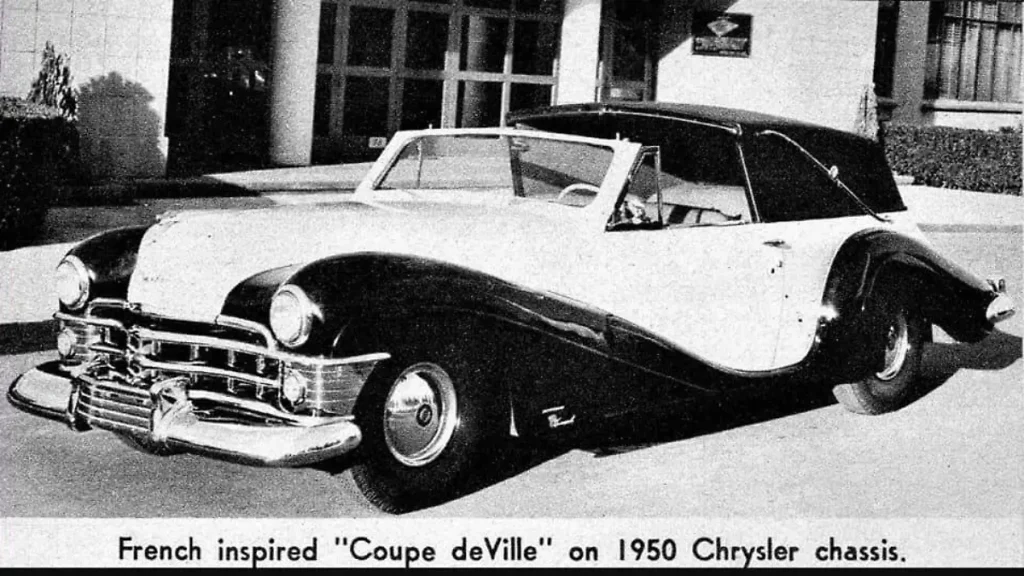
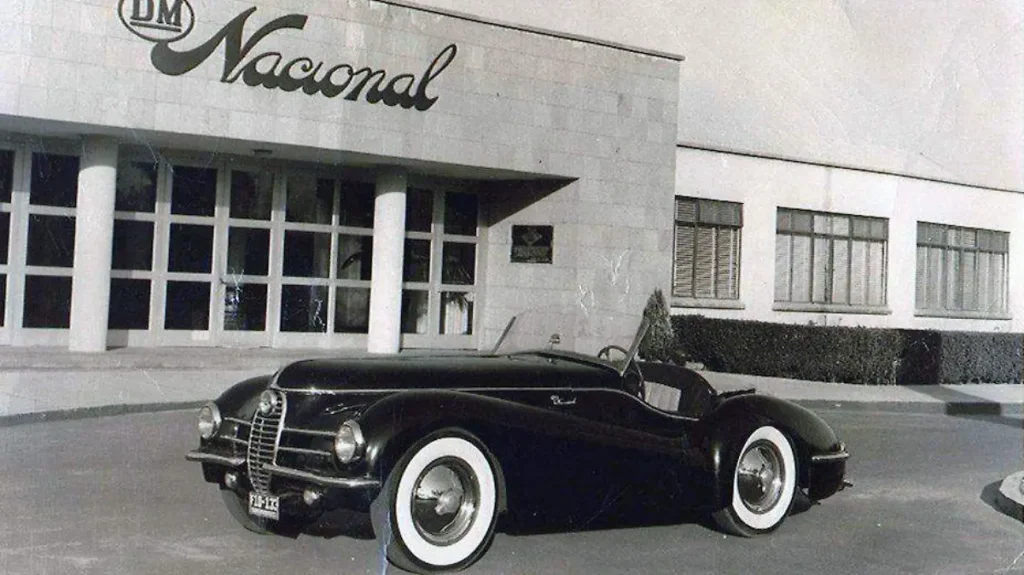
The result is the surprising automobile the family firm – Distrubuidora Mexicana, or as it is better known, “DM” christened “La Nacional.” La Nacional’s strongest appeal is that no new models are alike. Horsepower, speed and even appearance vary so much that specifications cannot be standardized.


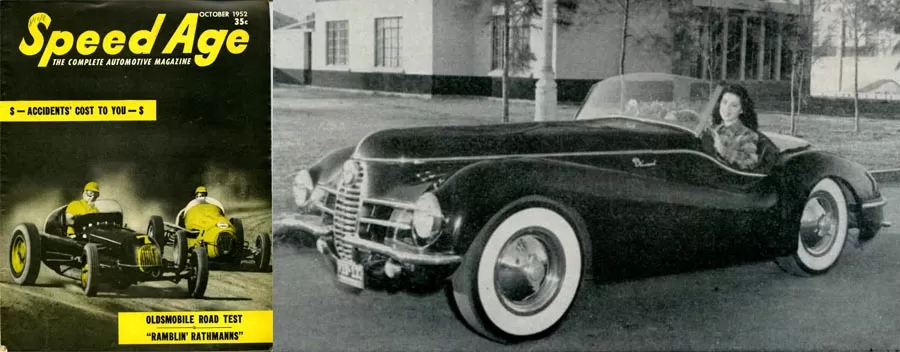
In October, 1952, Speed Age magazine ran a feature story on Mexico’s new automobile design and production.  The promotional photo at the right shows a publicity photo with what looks like a 1949 Distrito Federal plate on the front.  The formal production ran from 1950-1955.  

The customer supplies his own motor or commissions DM to buy one – Ford V8s, Mercurys, and Chryslers are the most popular choices – and Galindo designs a selection of individual styles around it in accordance with the client’s desires.

Any innovations within reason – if you can call within reason insistence of a visiting Chicago businessman upon six ash trays – are included. Some request Galindo admits he regards as crazy but all are conscientiously carried out..

1954/55 Distrito Federal
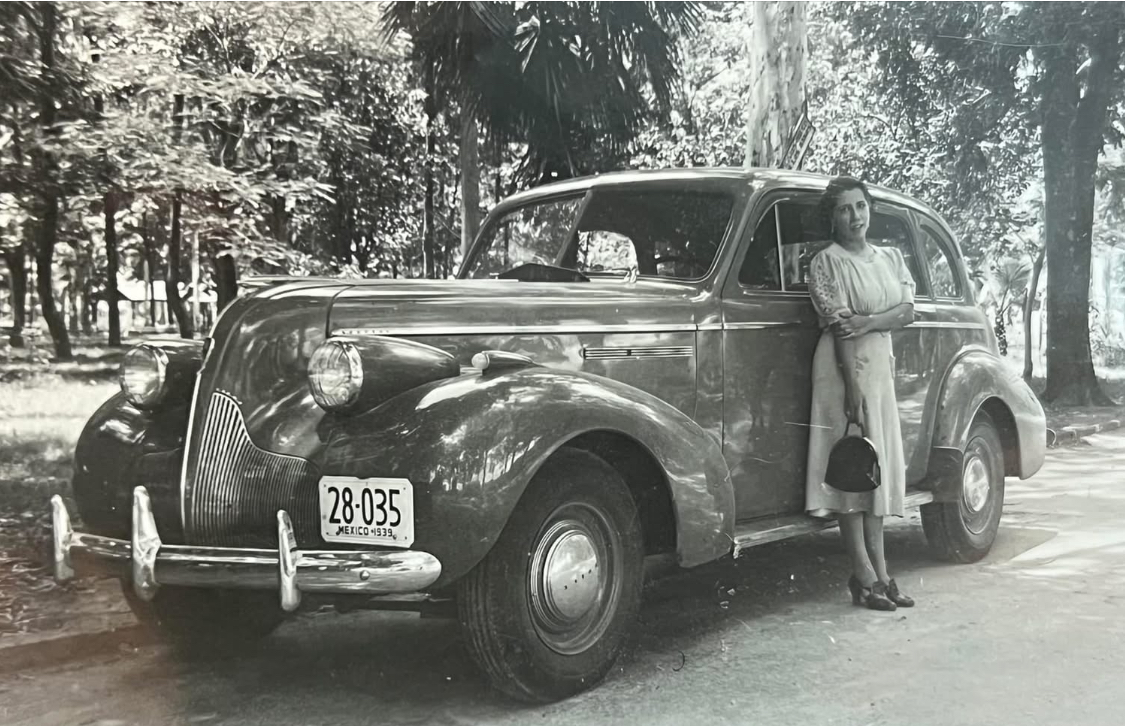
1939 Buick in Mexico City with national 1939 Mexico plate.
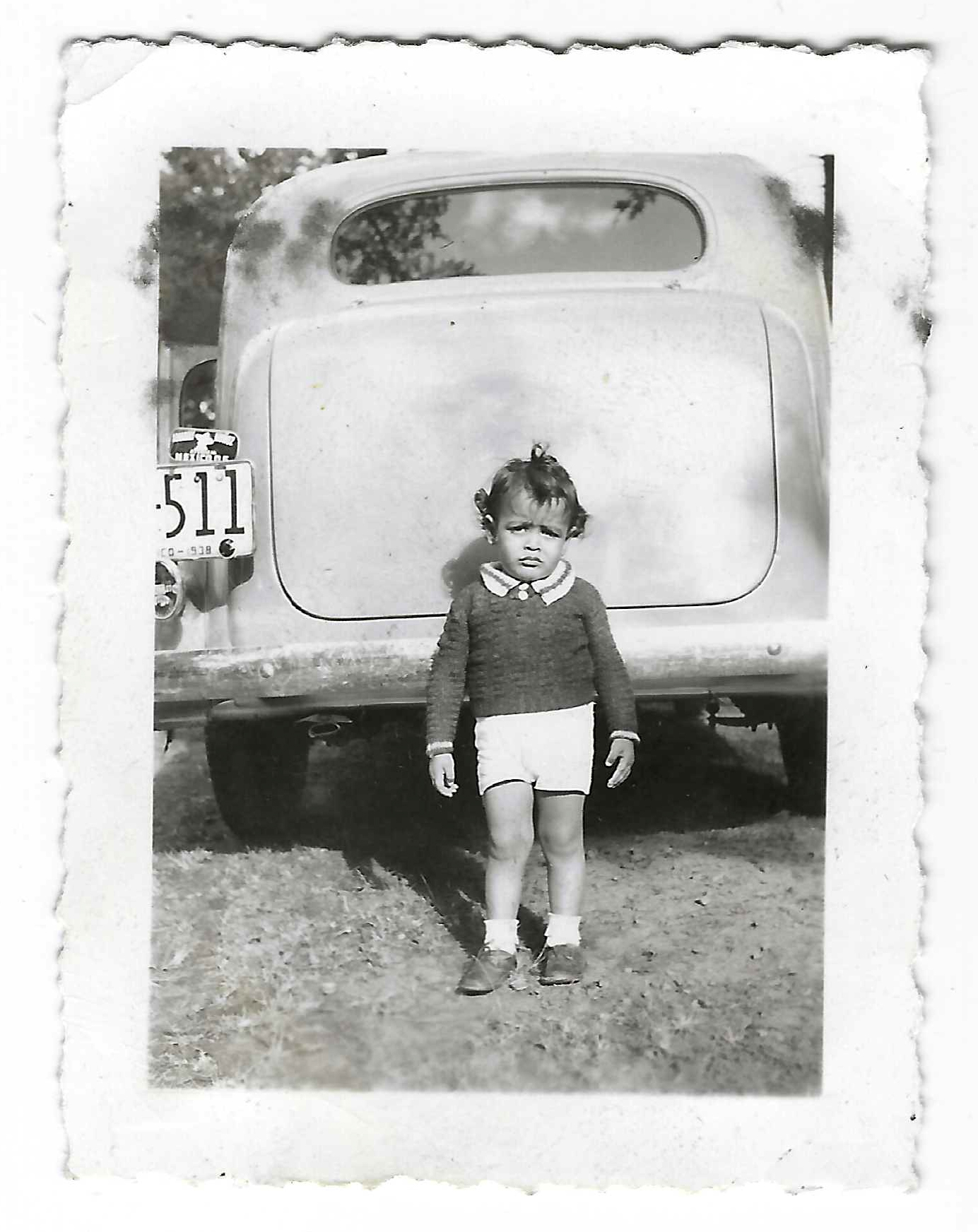
1938 Mexico
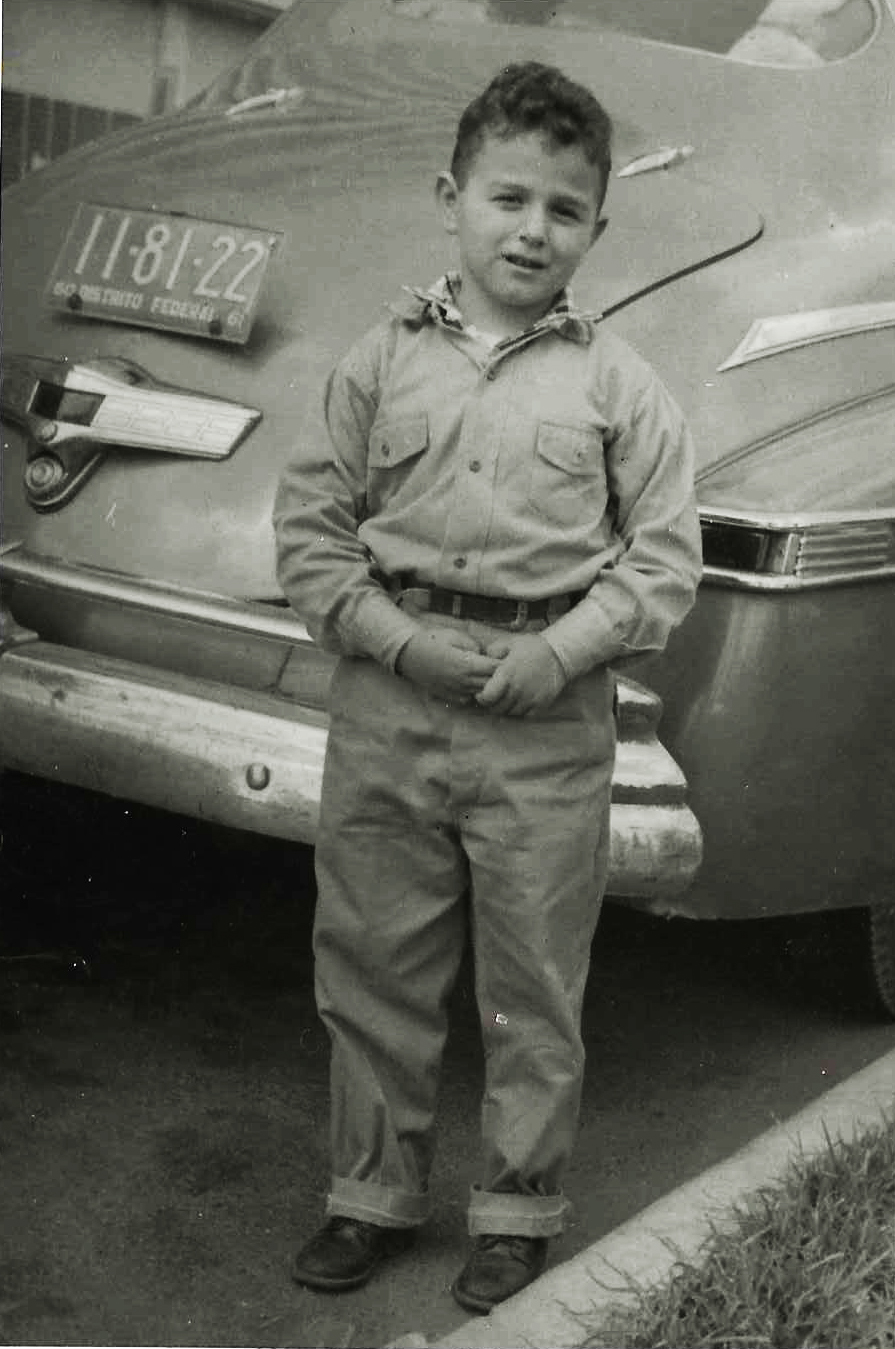
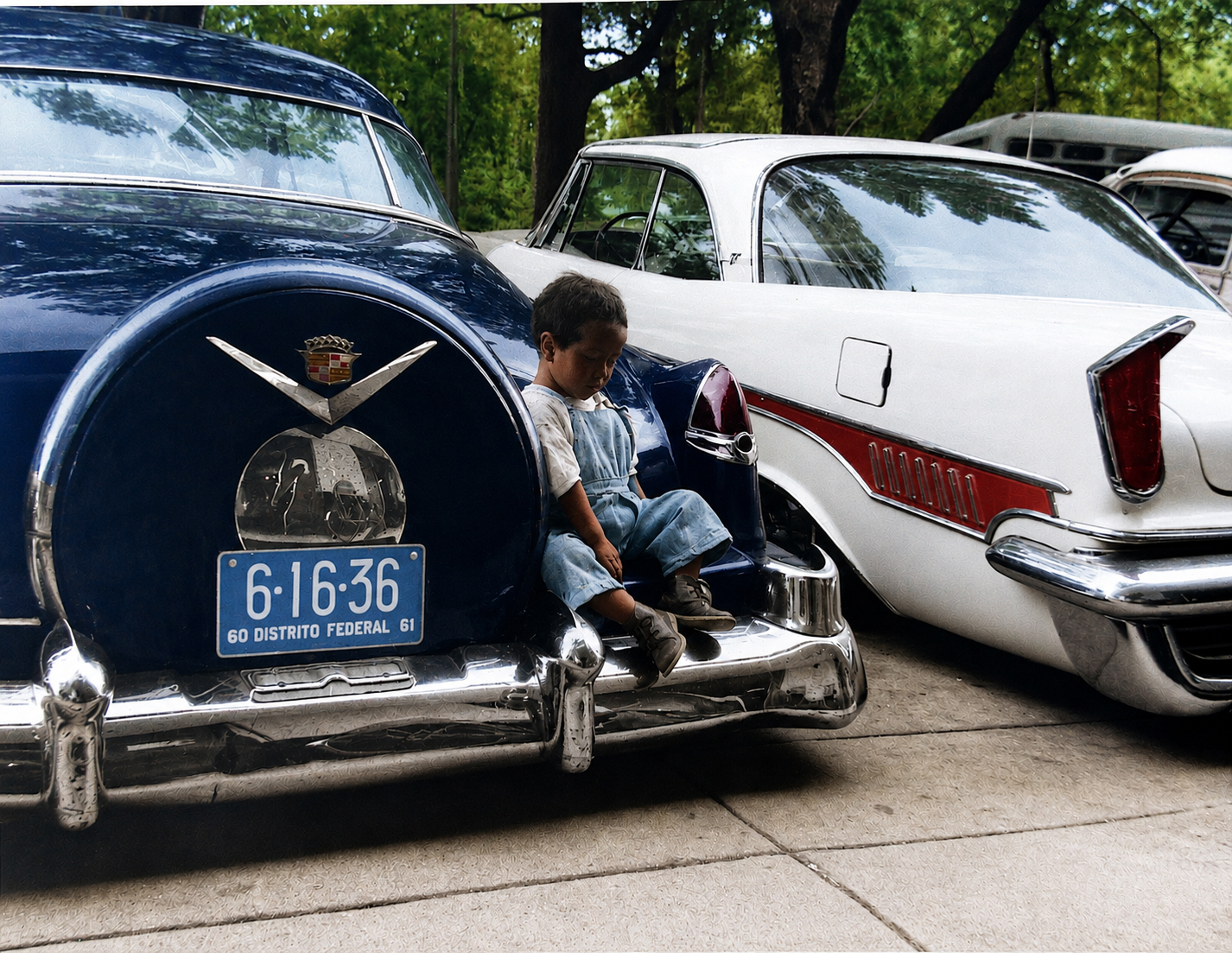
1960/61 Distrito Federal
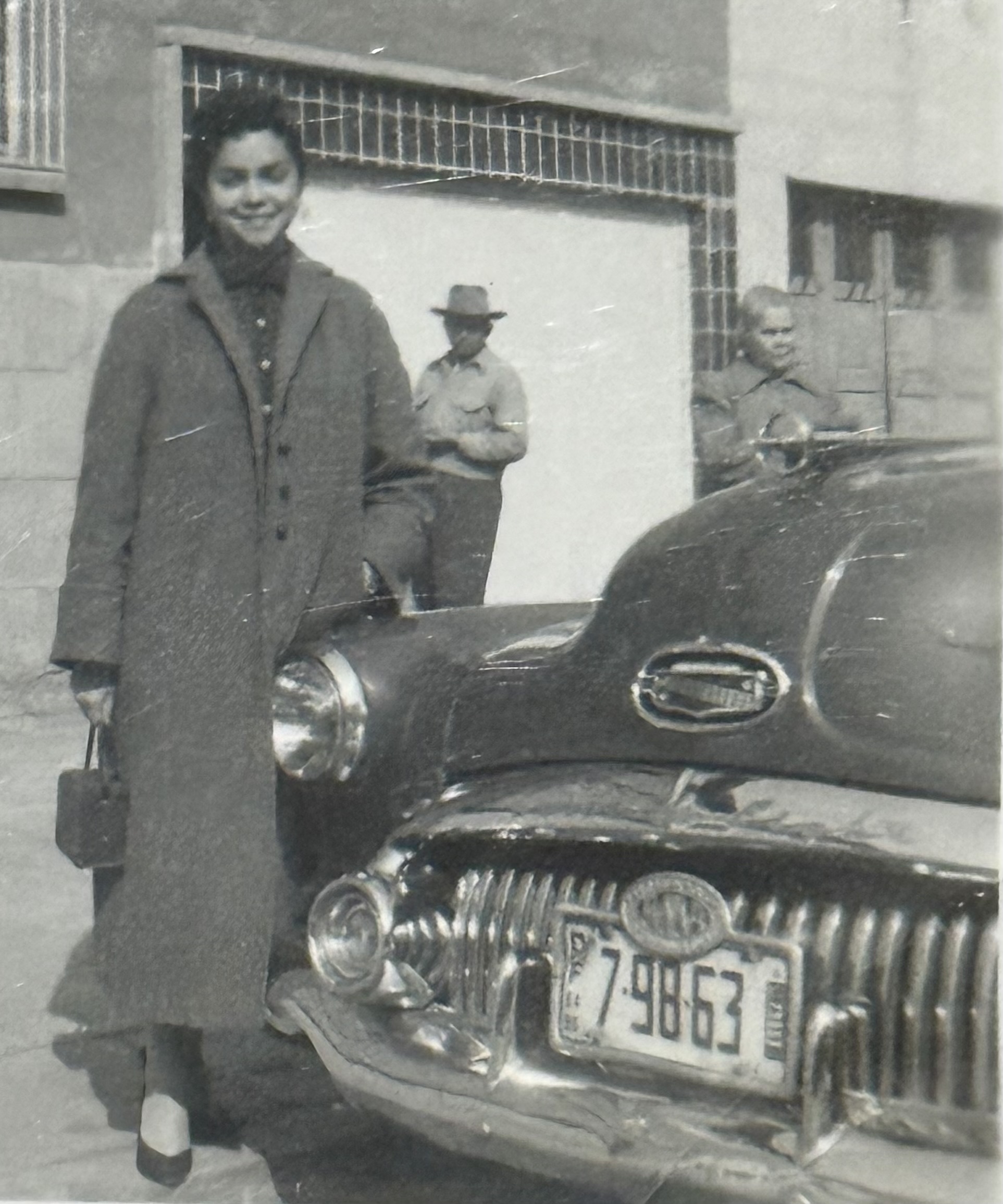
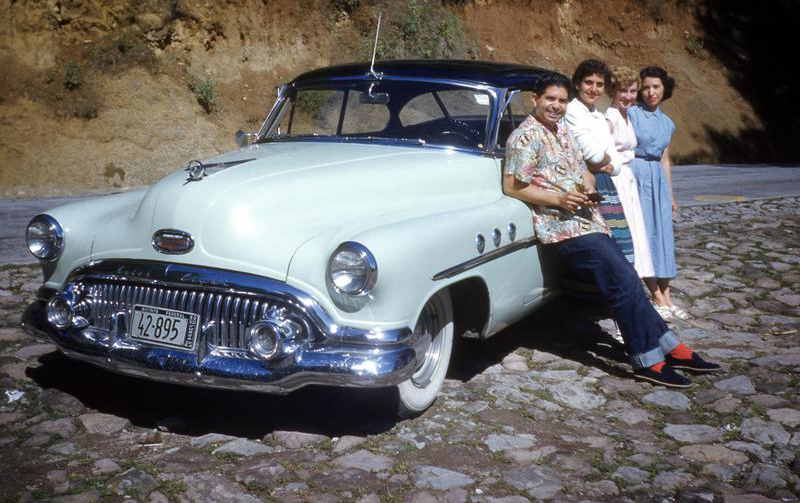
1953 Distrito Federal. Family posing with 1953 Buick.
1960/61 DF
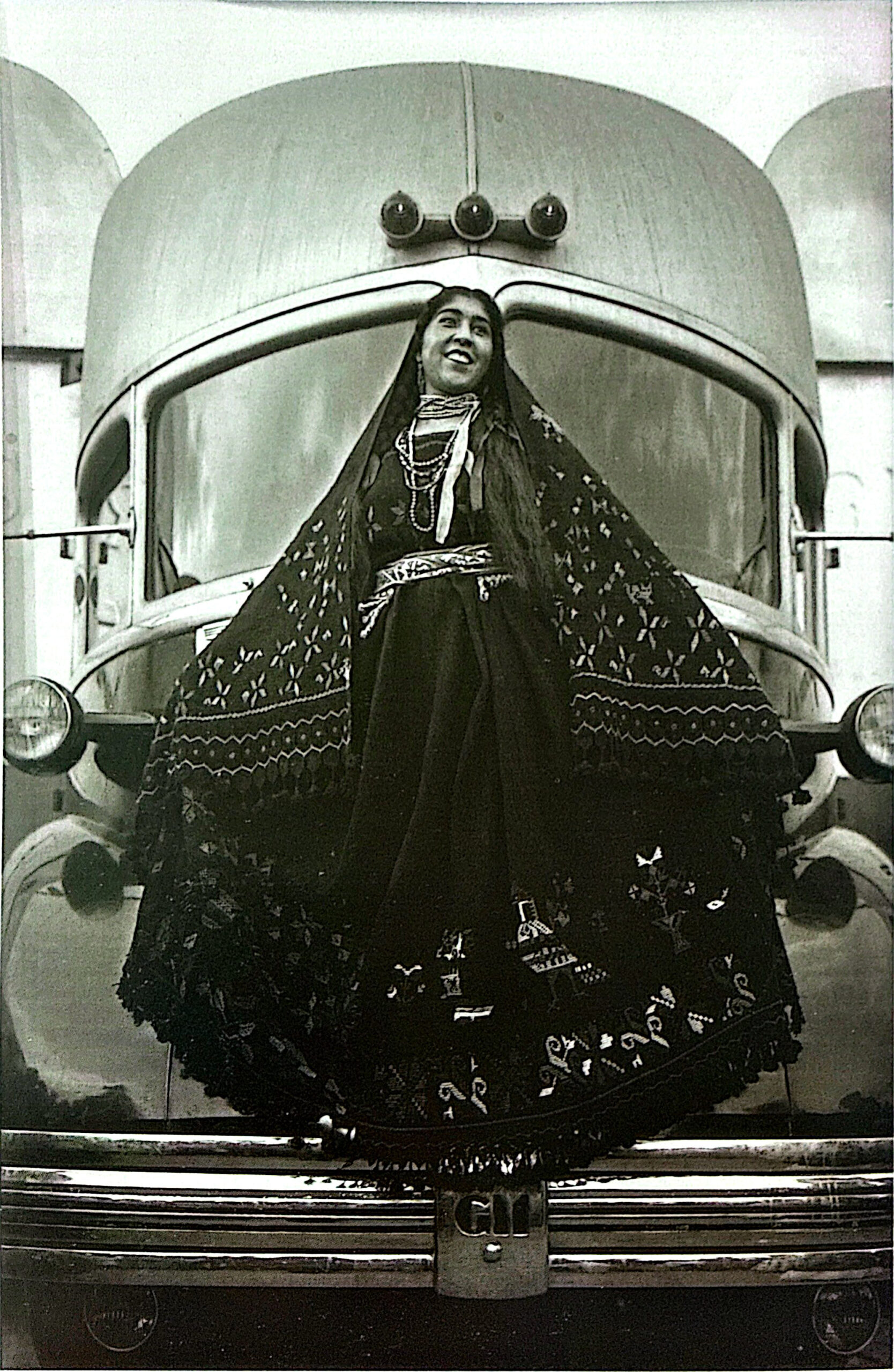
1935 Mexico City photo of indigenous woman standing in front of a GM bus.
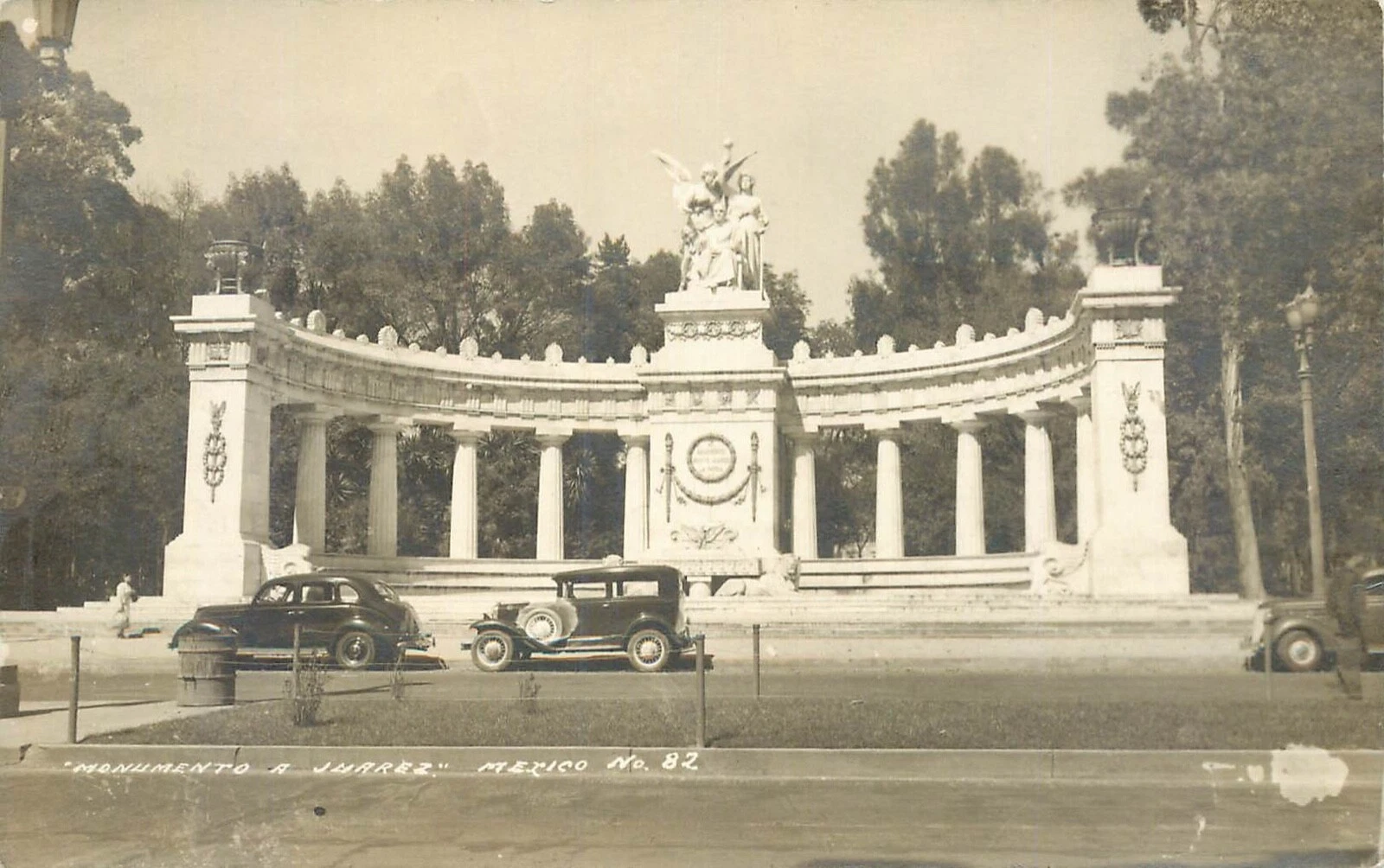
1920s Ciudad de Mexico street scene in front of Juarez Monument.
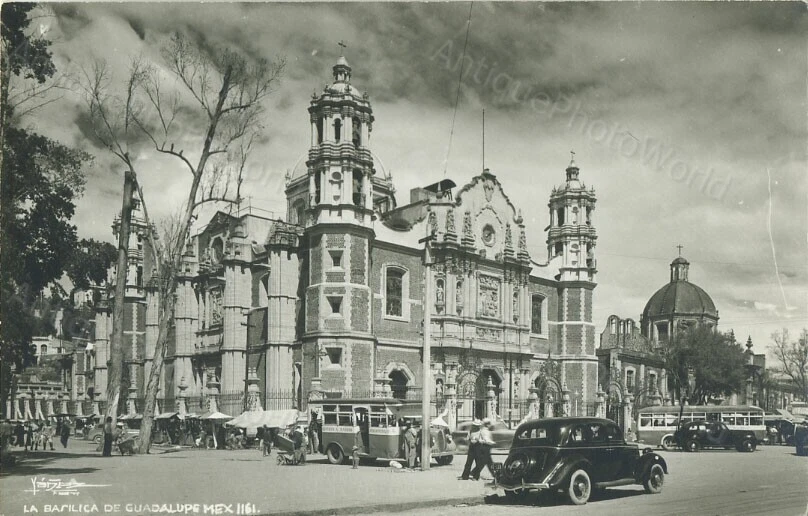
he Basilica of Our Lady of Guadalupe, Mexico officially known as the “Templo Expiatorio a Cristo Rey,” the first structure of the old basilica was begun in 1695 and it was not finished until 1709. In 1921 a bomb planted in a flower vase near the altar by an anticlerical terrorist exploded, causing great damage to the interior of the building. (In memory of this incident, the New Basilica displays an iron crucifix called “the attempt on Christ”.) The cloak survived undamaged. The basilica is the most-visited Catholic shrine in the world, and the world’s third most-visited sacred site.
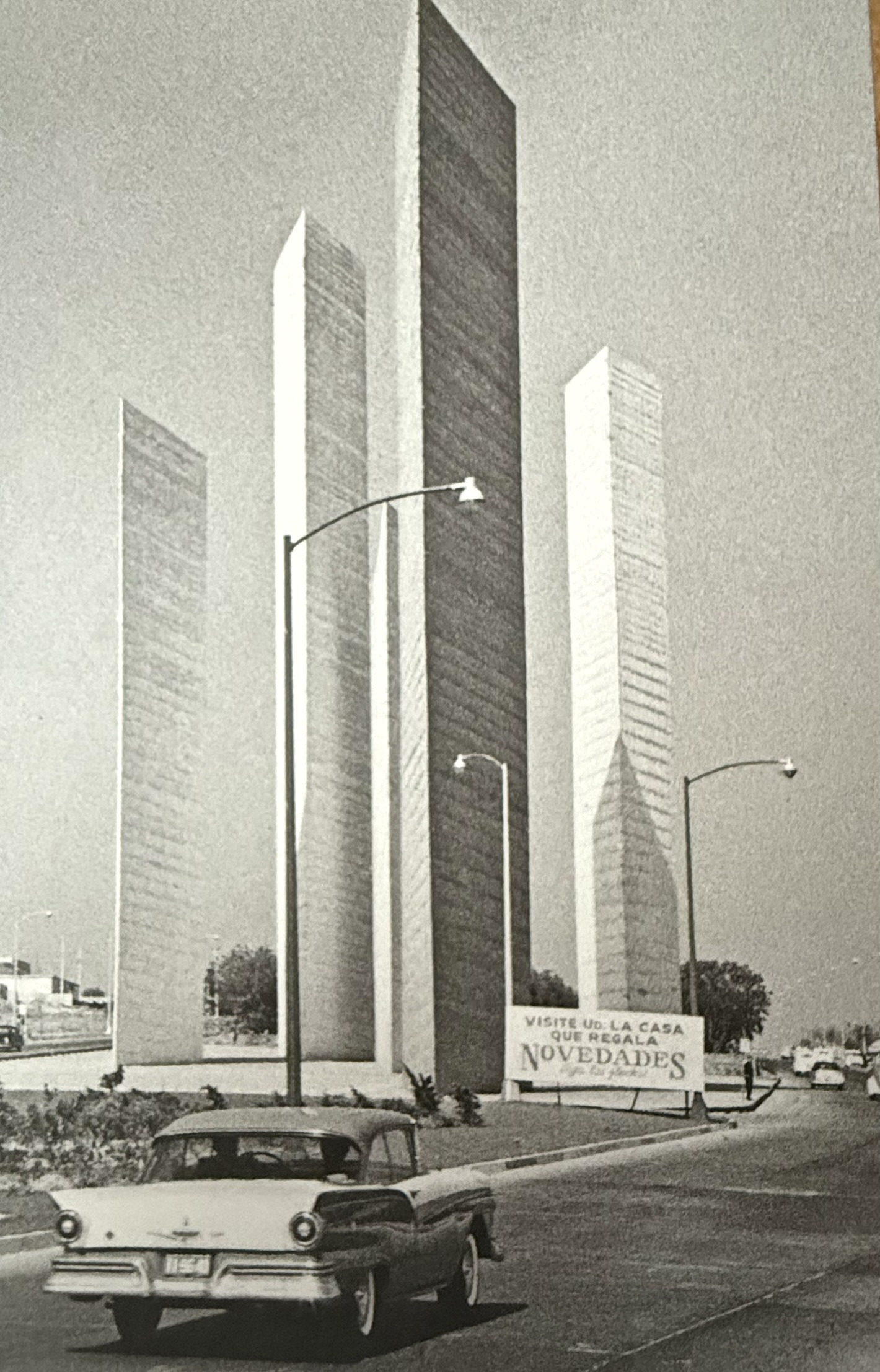
A lonely 1957 Ford Fairline sails along an empty highway in front of Mexico City's gleaming new skyscrapers.
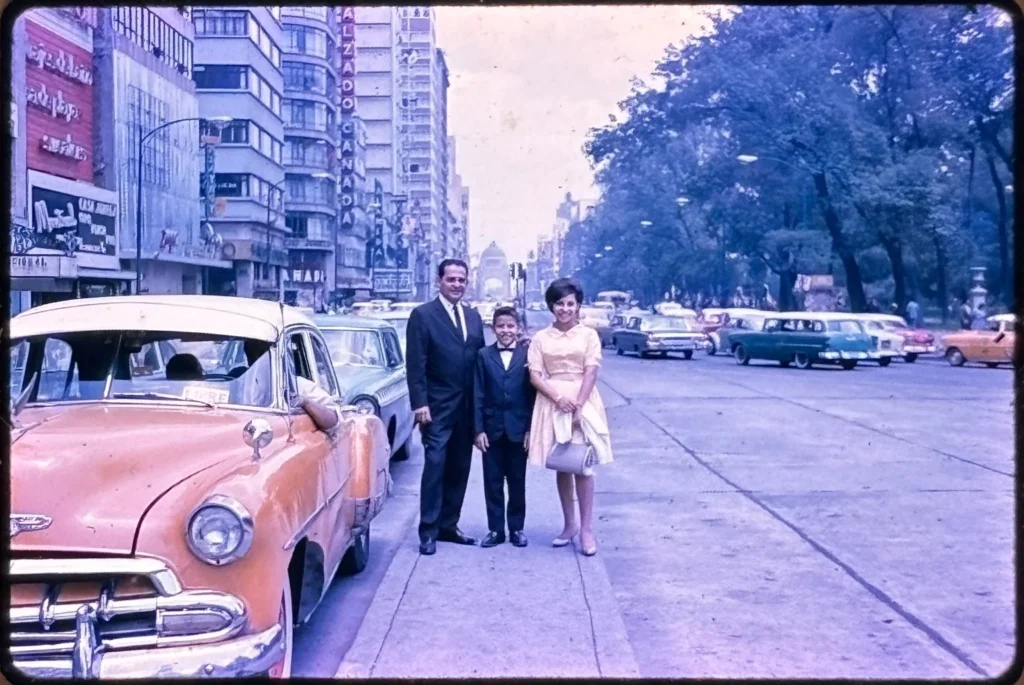
Early 1960s Mexico City street scene with a smiling and dapper family dressed in their Sunday best. In front, there's a 1953 Chevrolet in coral and a For Hire sign in the windshield.
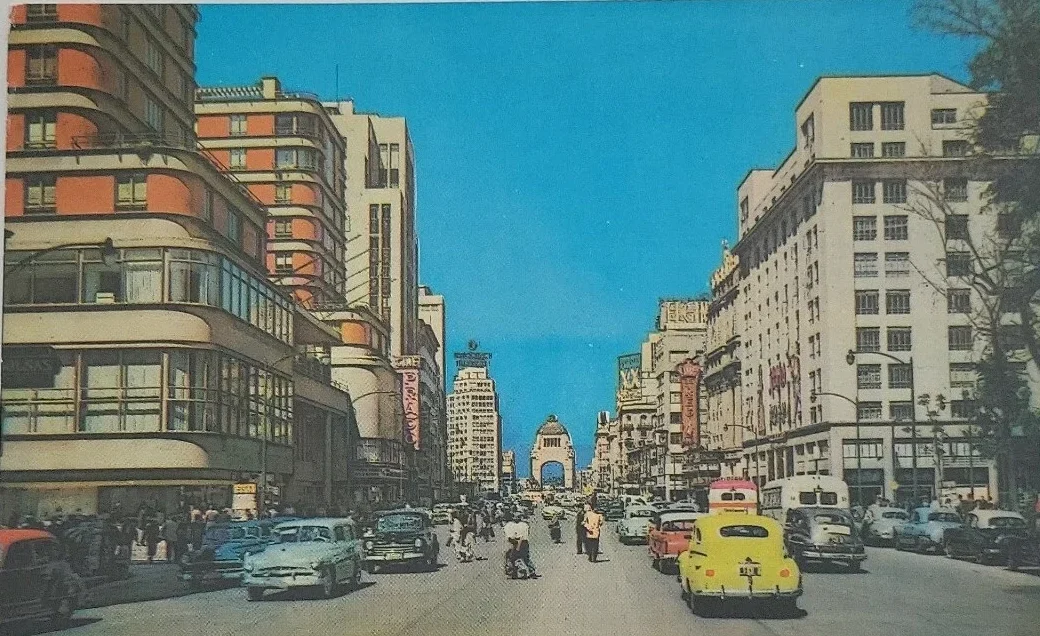
1952 Ciudad de Mexico traffic along Avenida Juarez. On the 1940s yellow taxi in front, it appears to be a yellow on black taxi non-passenger plate on the back of the car.
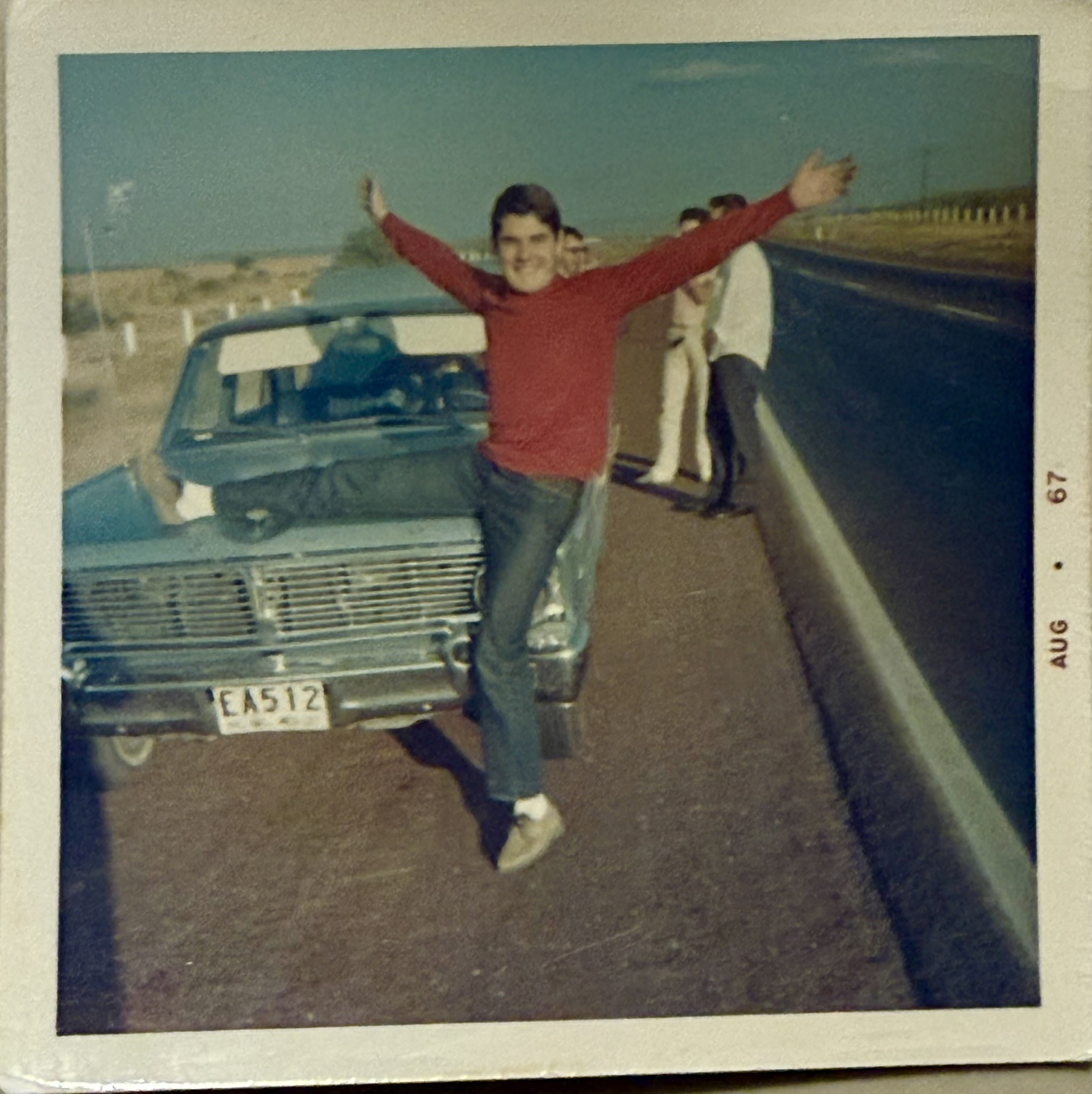
1966/67 Distrito Federal #EA512, with exuberant young man in a red sweater smiling in front of a Ford Falcon parked on the roadway. Photo dated August, 1967.
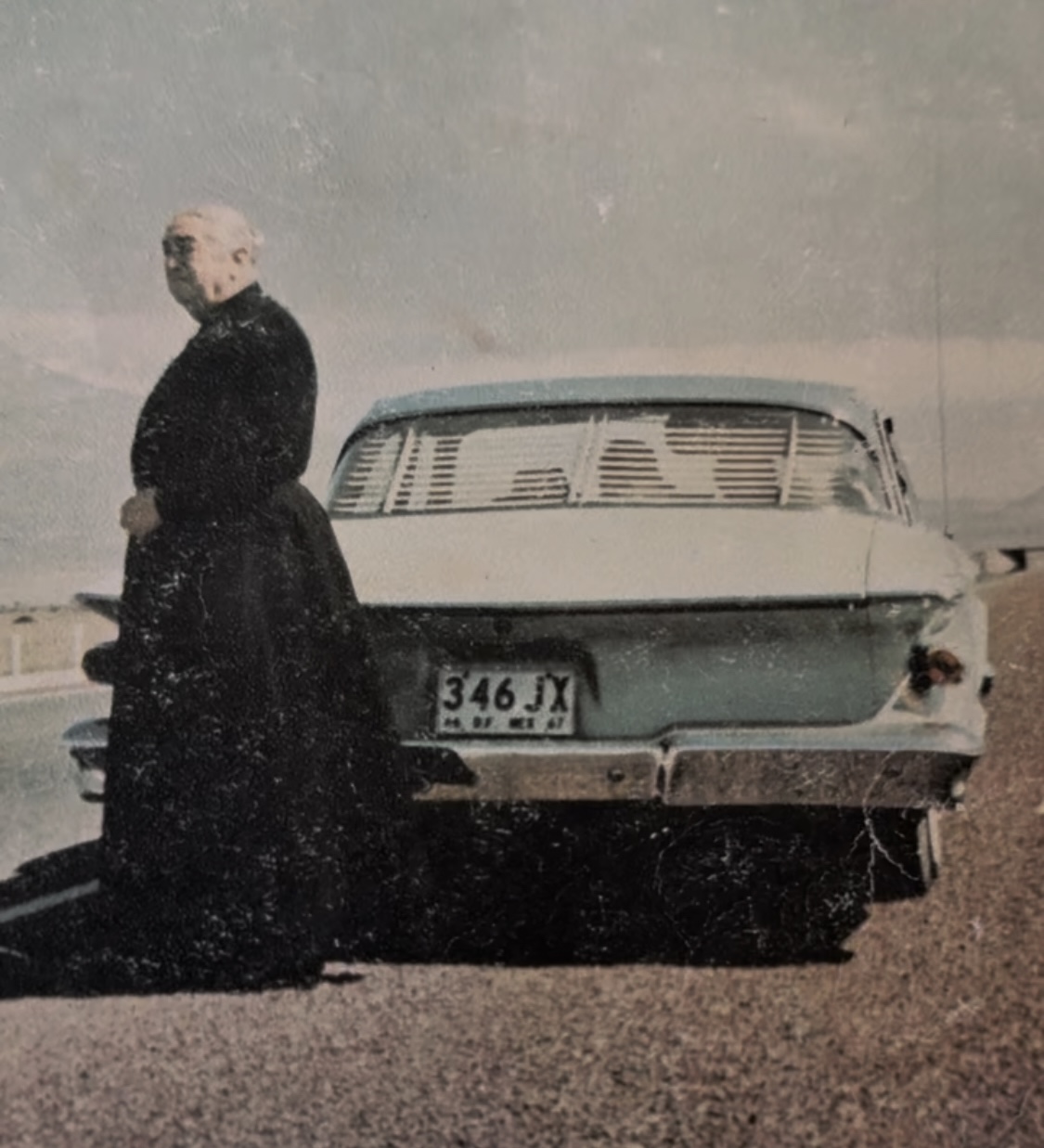
1966/67 Distrito Federal with a priest standing on the roadway behind a 1961 Plymouth Fury.