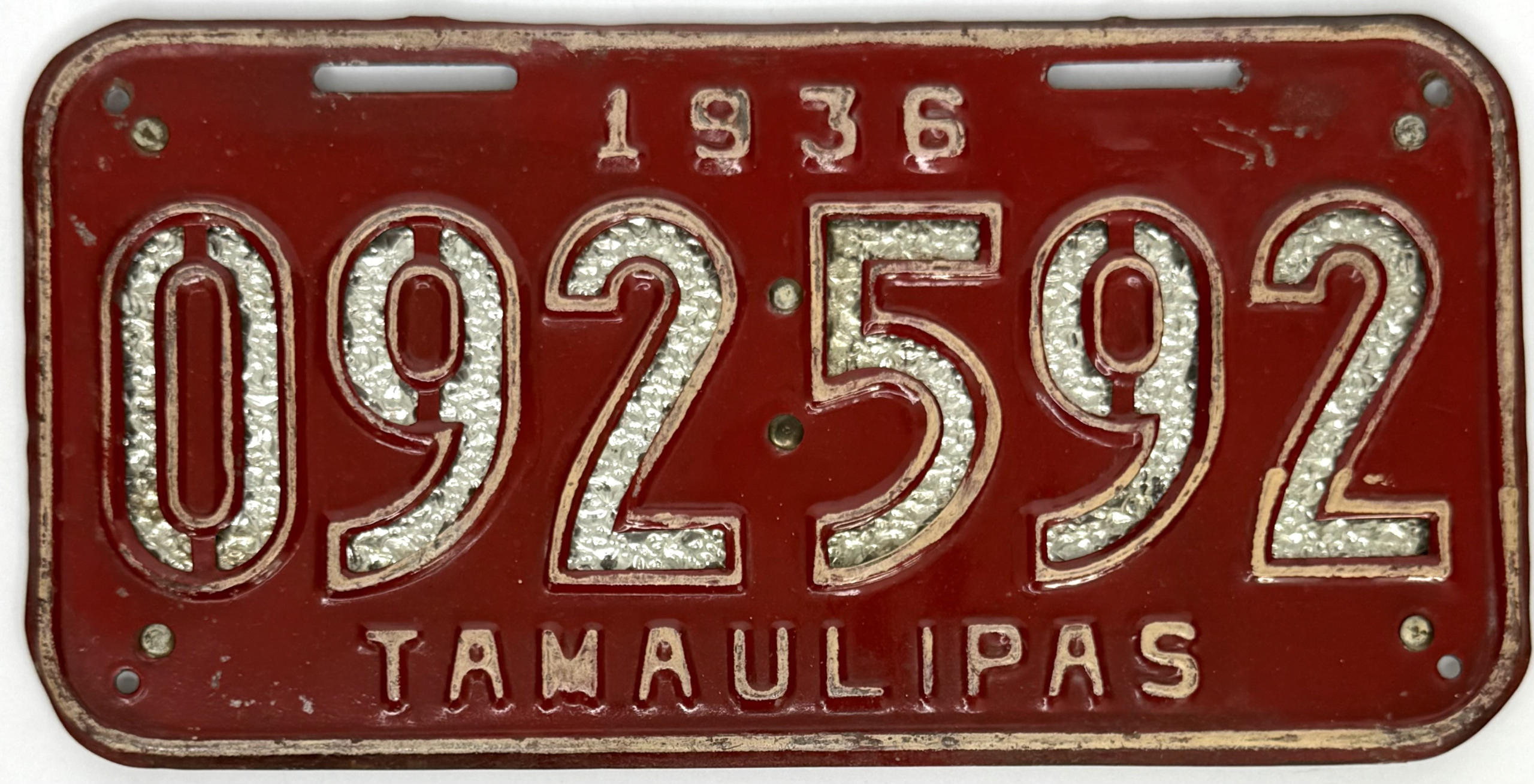
Mexico’s 1936 safety license plate design is perhaps the most famous and ingenious license plate ever made. It’s the world’s first reflective license plate designed for night driving illumination. Interestingly, the USA experimented in this same era with anti-theft license plate technology with the series of locking plates issued by various states.
For 1936 Mexico license plates, there are at least 3 known types, and some jurisdictions used at least two:
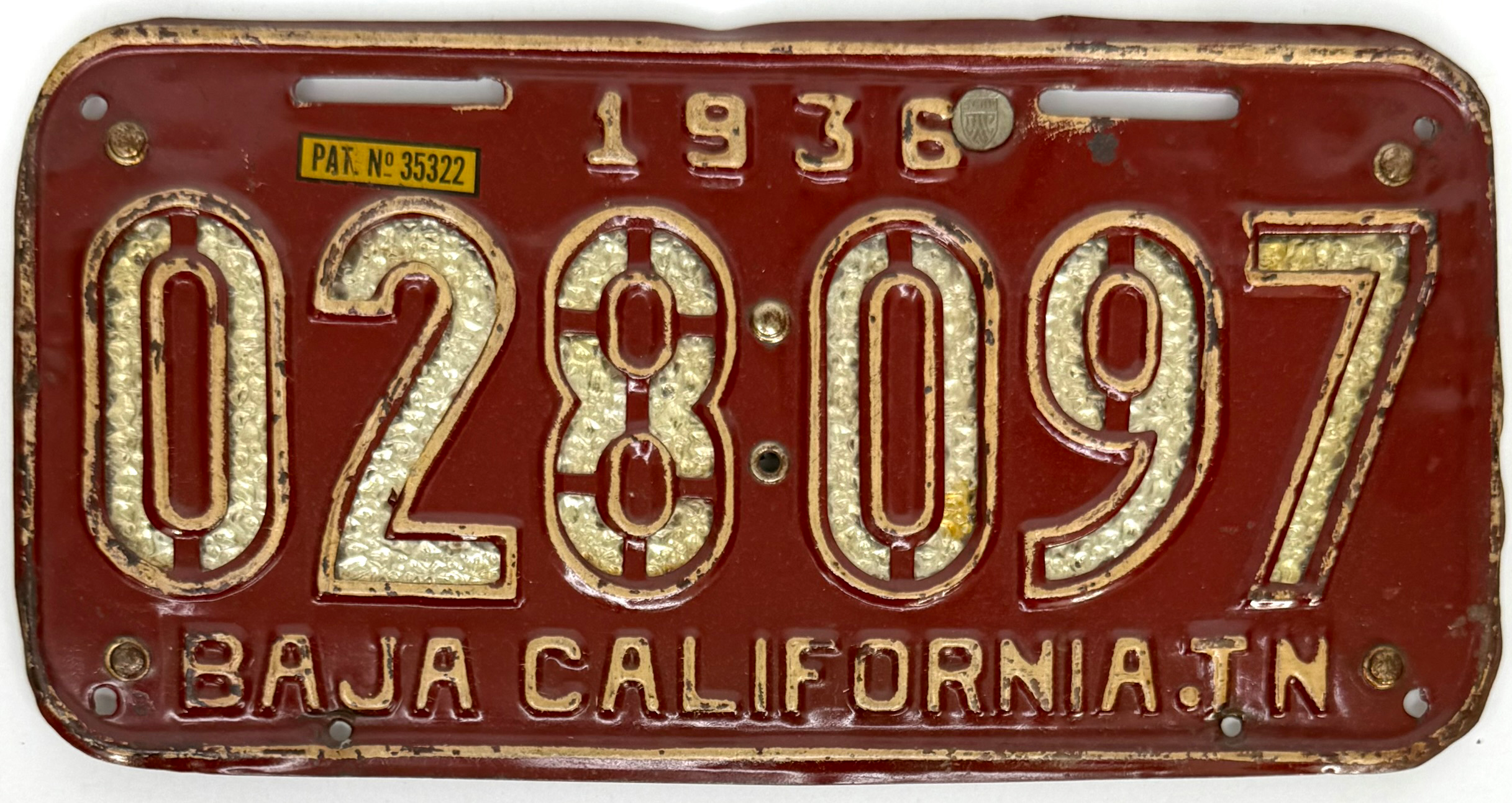
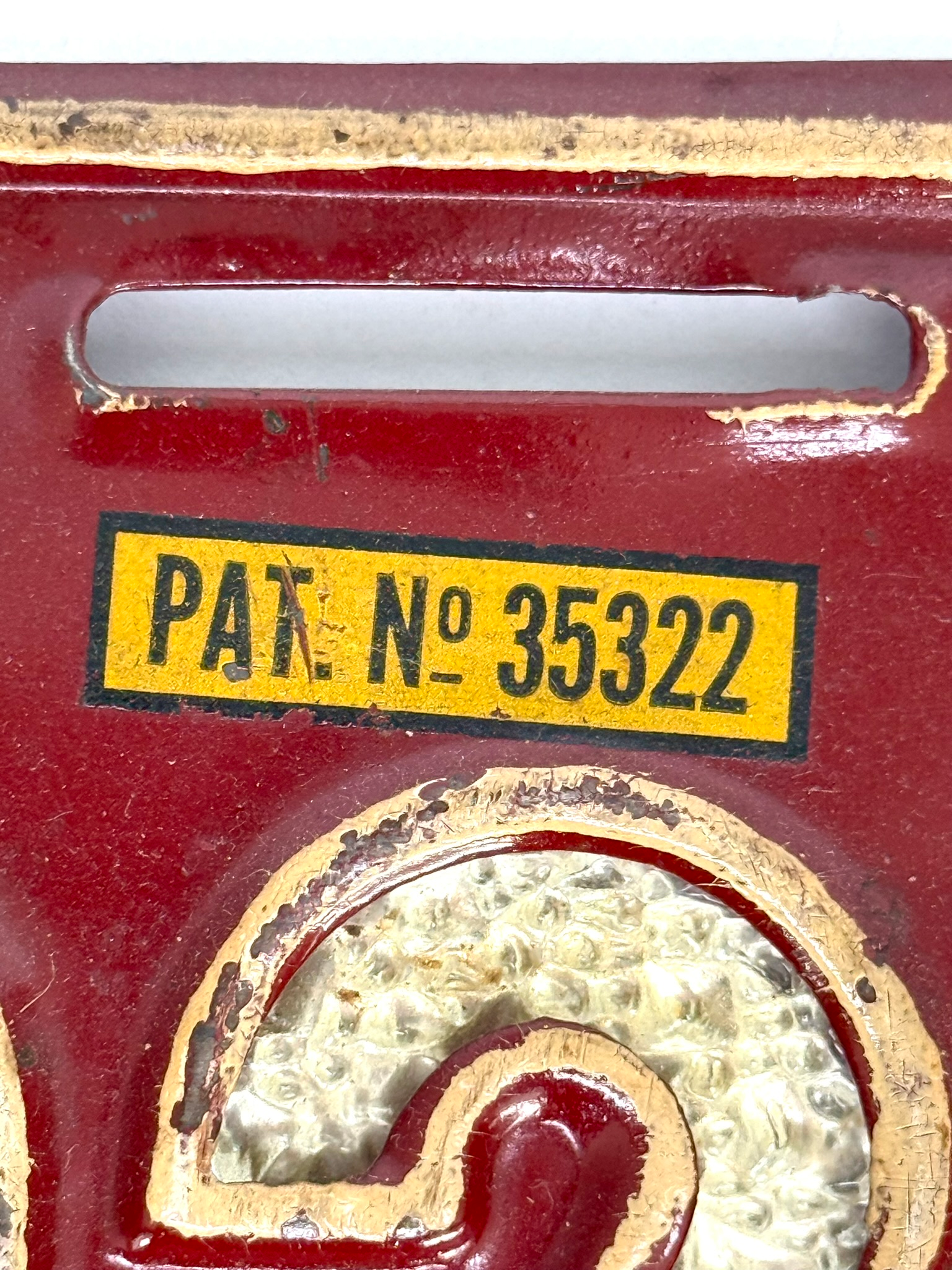
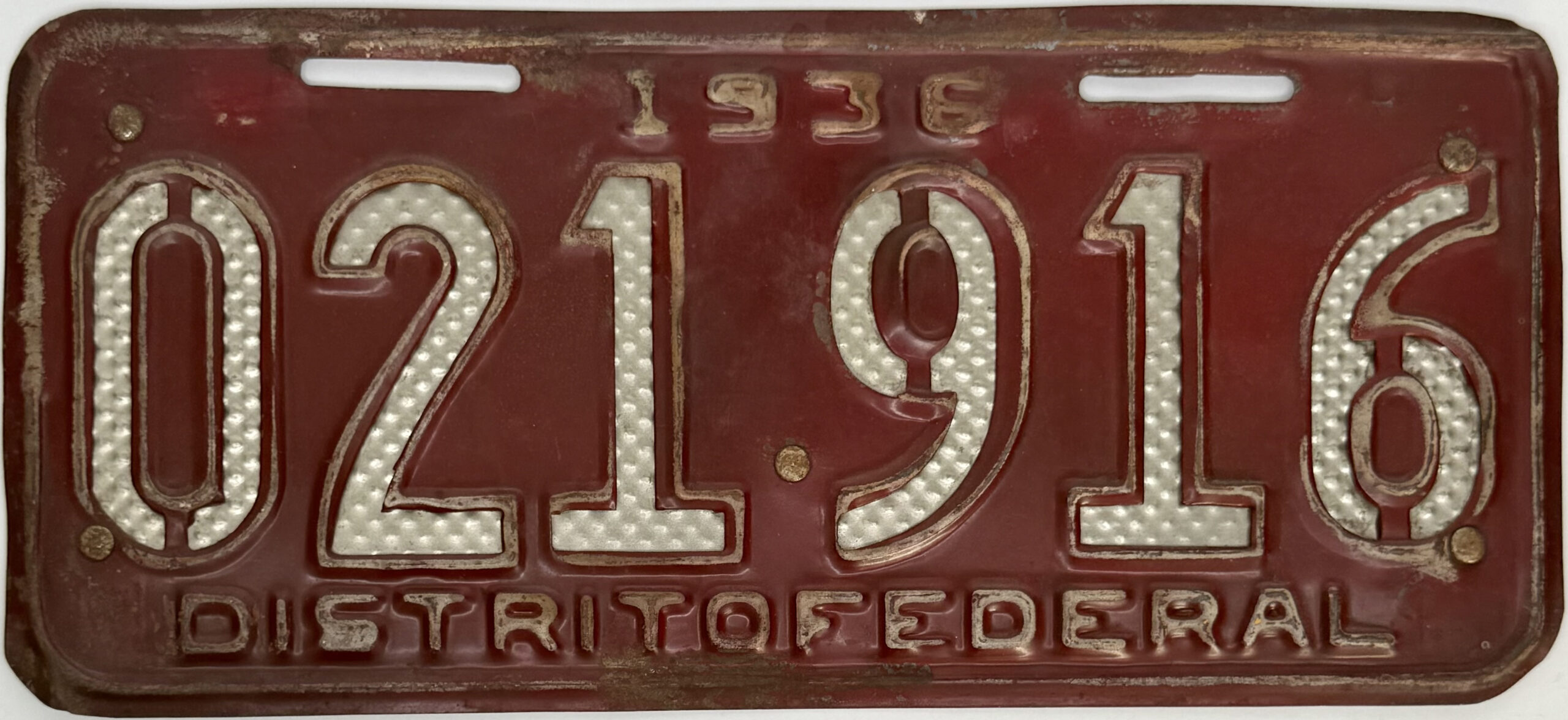
Type 1: 1936 Taller Reflective. The Baja California, Distrito Federal and San Luis Potosi are all Type 1 examples. The Patent Number decal has been seen on some but not all. We don’t know if that means all plates received the decal and most wore off, or more likely some manufacturers applied the decal and others did not.
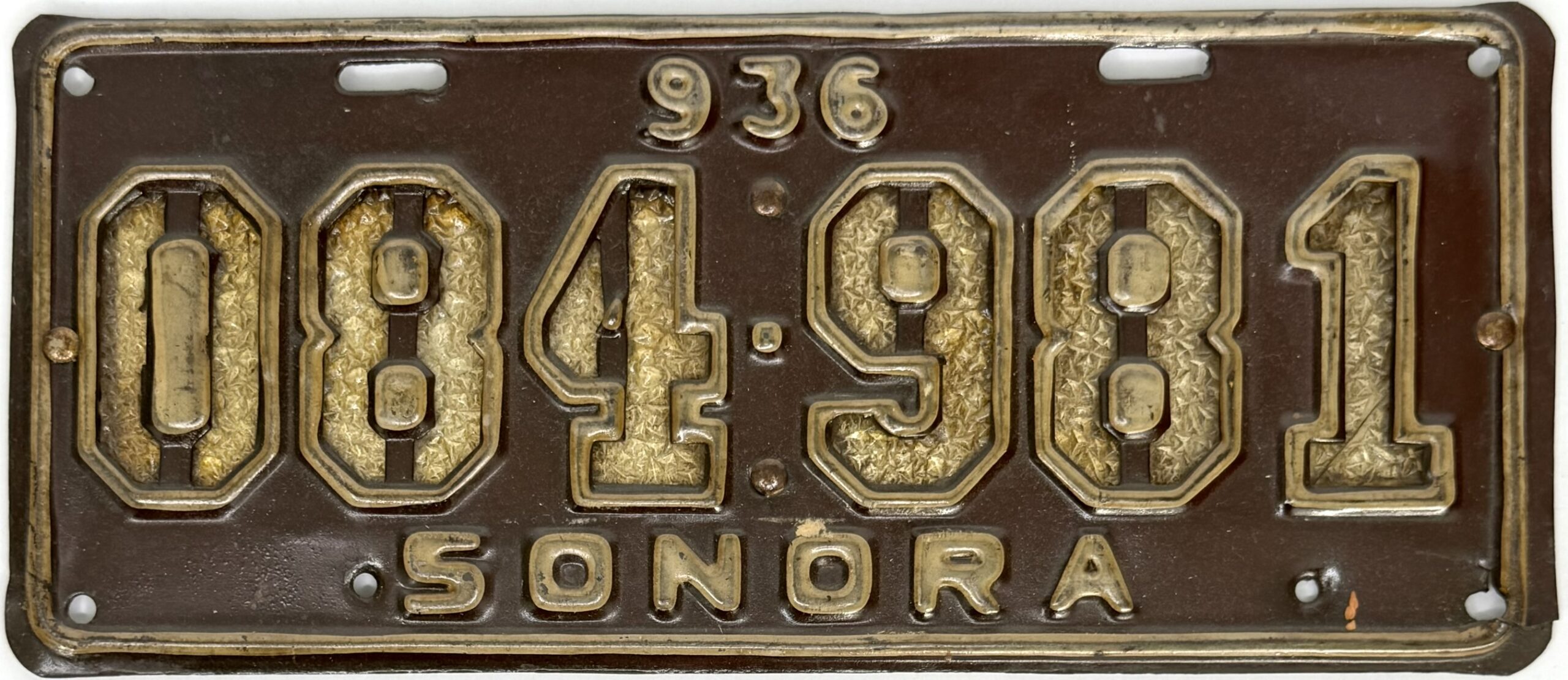
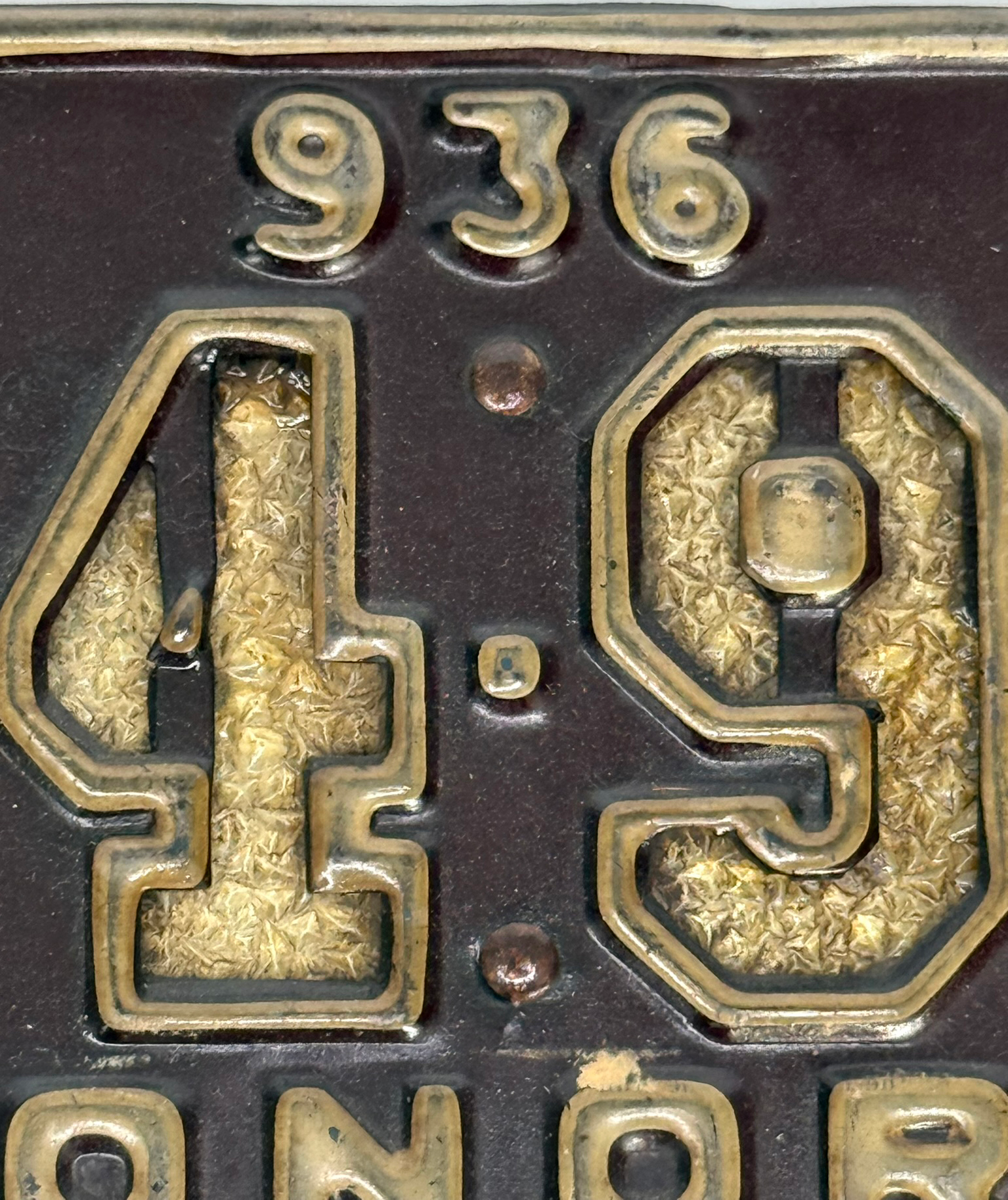
Type 2: 936 Shorter Reflective. This type uses the 3-digit year convention, where the millennium number (the initial “1”) is assumed. This convention is far more common in Latin America than the United States or elsewhere. The Type 2 plate is shorter, longer and uses a darker maroon background.
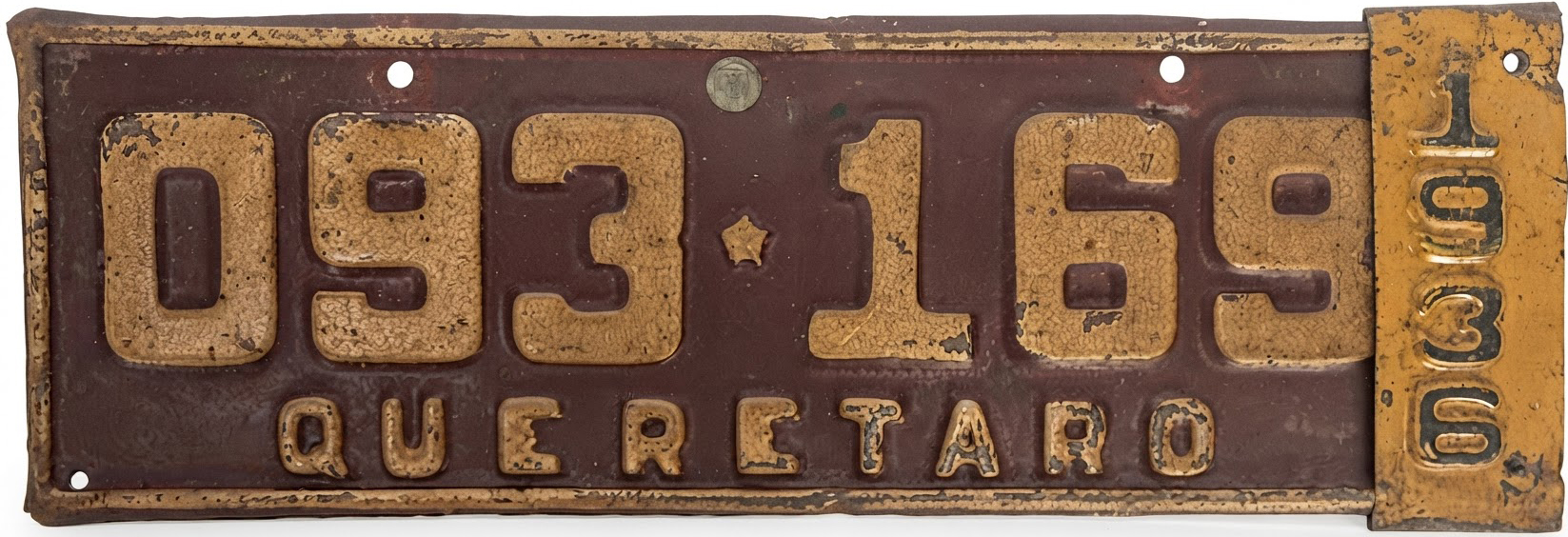
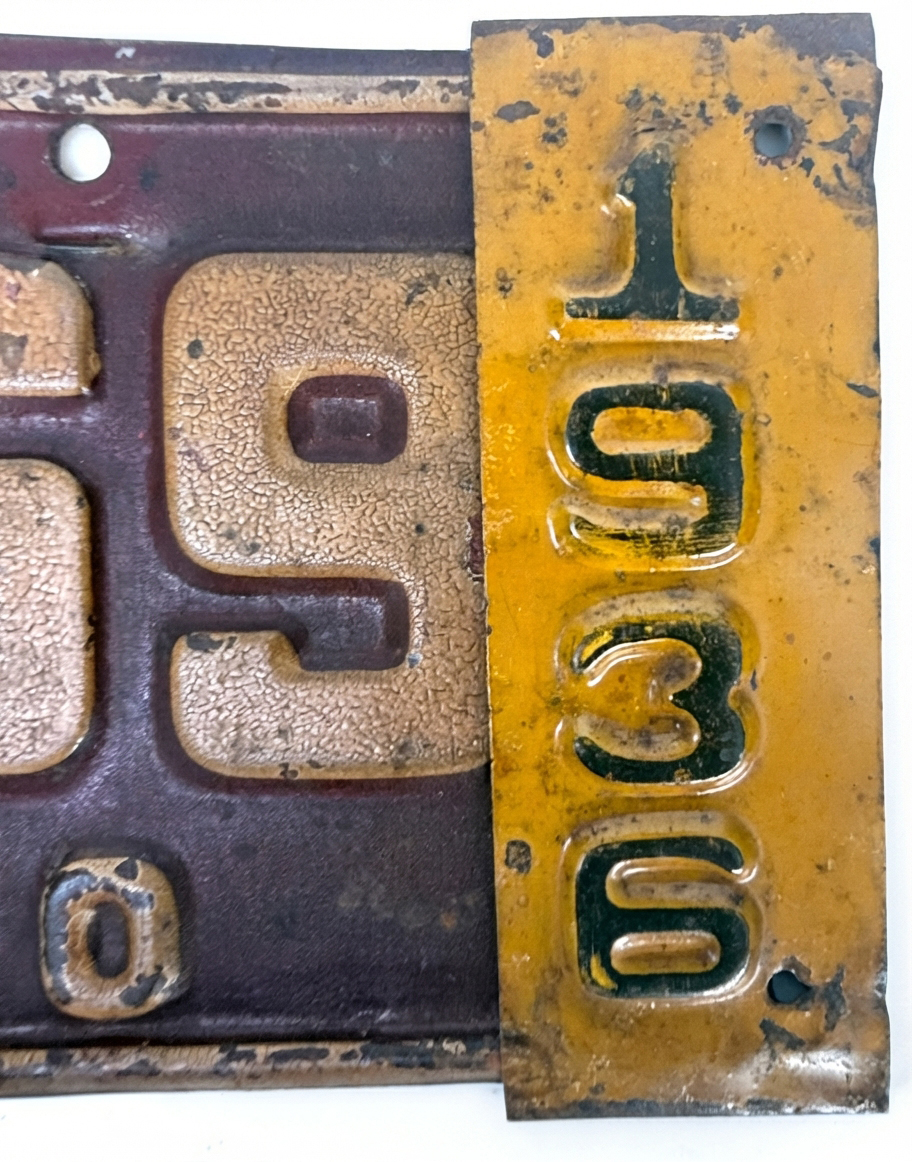
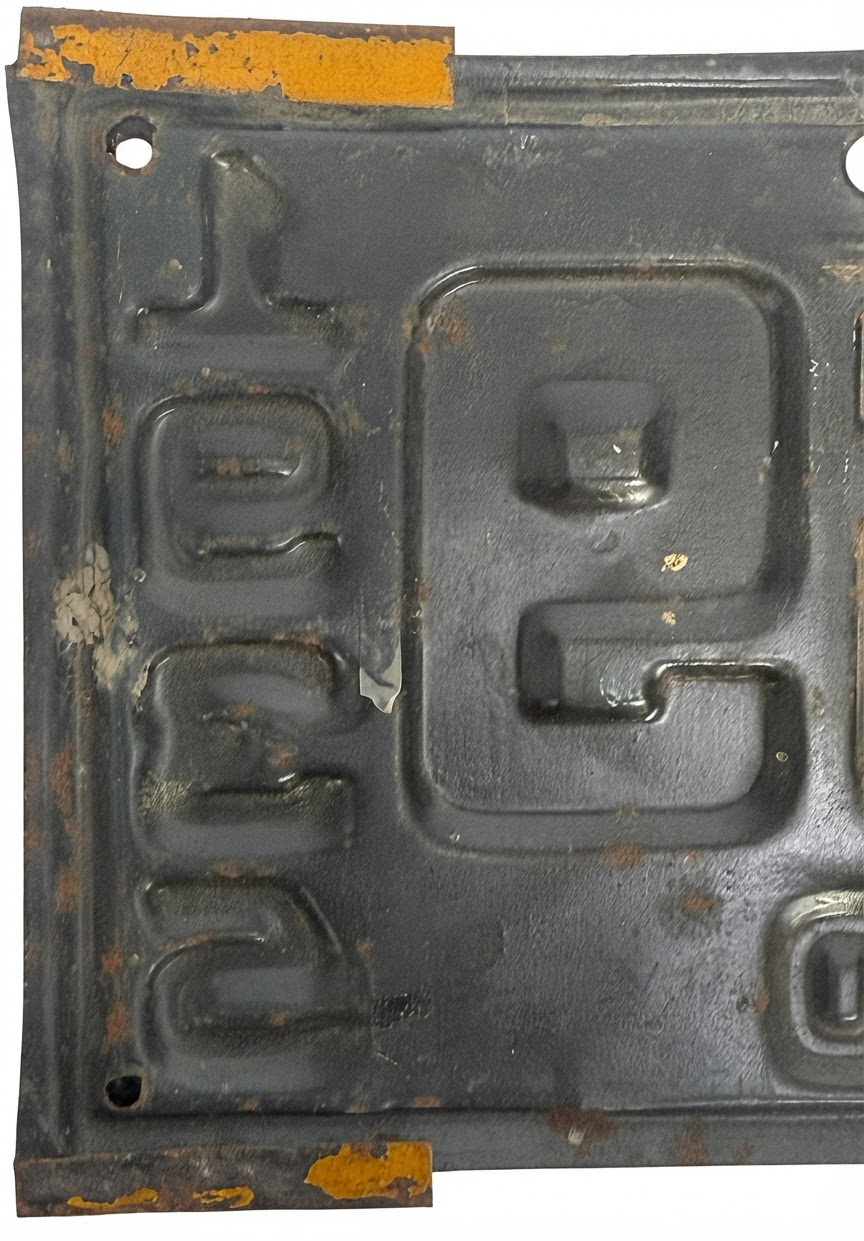
Type 3: Non-Reflective Date Tab. Some states used a simple vertical “1936” date tab like the Queretaro shown here. We presume this alternative was chosen for cost or production capability reasons.
While 1936 plates are rare, some may argue the Type 3 Vertical Tab issue is harder to find than the more complicated and more interesting patented reflective sheet in a box design.
Las nuevas placas reflectantes para la seguridad vial y la conducción nocturna resultaron tan revolucionarias que el diseñador y fabricante solicitó una patente. Suponemos que el número de patente 35222 correspondía a una solicitud de patente para el diseño de seguridad integral, tramitada en Ciudad de México para todo el país.
Sin embargo, resulta curioso que cada estado parece haber fabricado su propia placa basándose en el mismo concepto novedoso, ya que se observan grandes variaciones en la fabricación. De hecho, al menos un estado prescindió del nuevo diseño y optó por una etiqueta más sencilla para revalidar sus placas de 1935 de cara al año siguiente. Cabe destacar que México otorgó la patente número 35322 en 1969, aunque es posible que el número hubiera sido reutilizado. Lo más probable es que no se trate de un número de patente de Estados Unidos, dado que la Oficina de Patentes de ese país asignó el número 35222 en 1869 a una lámpara de aumento (aunque resulta intrigante pensar si esa misma patente de 1869, relacionada con la iluminación y la mejora de la visibilidad, pudo haberse aplicado a la nueva placa reflectante; es poco probable, pero constituye una coincidencia interesante). ¿Alguien tiene alguna teoría o prueba sobre la historia de la primera placa de matrícula de seguridad del mundo?
The new reflective plates for road safety and night driving was so revolutionary that the designer/manufacturer applied for a patent. We assume the Pat. No 35222 was for a Patent Application for the overall safety design, applied for in Mexico City for the country.
But curiously each state appears to have manufactured their own plate based on the same new concept since you can see there are great varieties in manufacturing. And at least one state bypassed the new design and chose a simpler tab to revalidate their 1935 plates for the following year.
Interestingly, Mexico issued Patent Number 35322 in 1969, though the number could have been reused. This is most likely not a United States patent number, since US Patent Office issued number 35222 in 1869 for a magnifying lamp (though it is intriguing to think if that same 1869 patent for illumination and improved visibility may have been applied for the new reflective license plate. Likely now, but an interesting coincidence).
Does anyone have a theory or evidence on the history of the world’s first safety license plate?
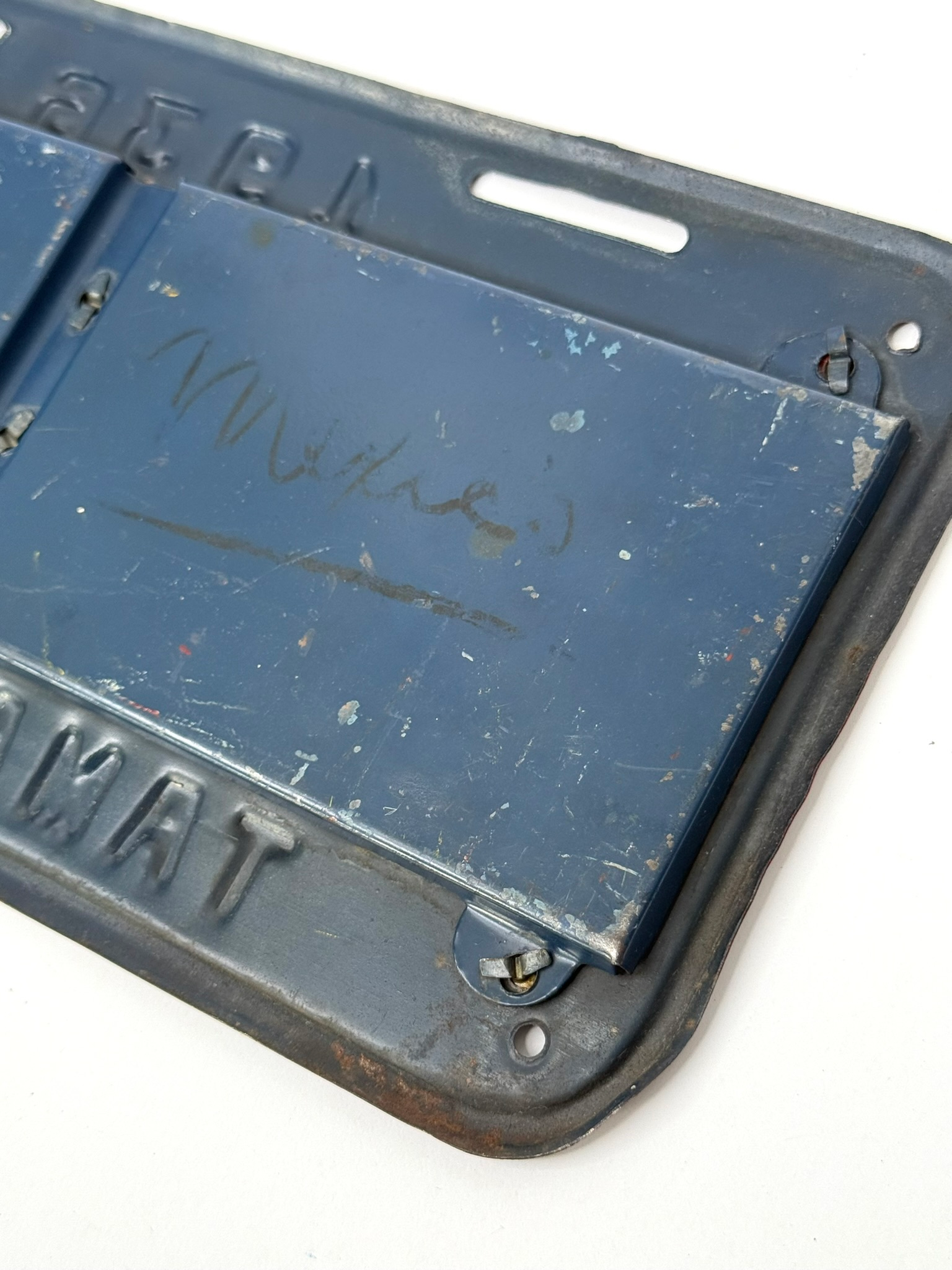
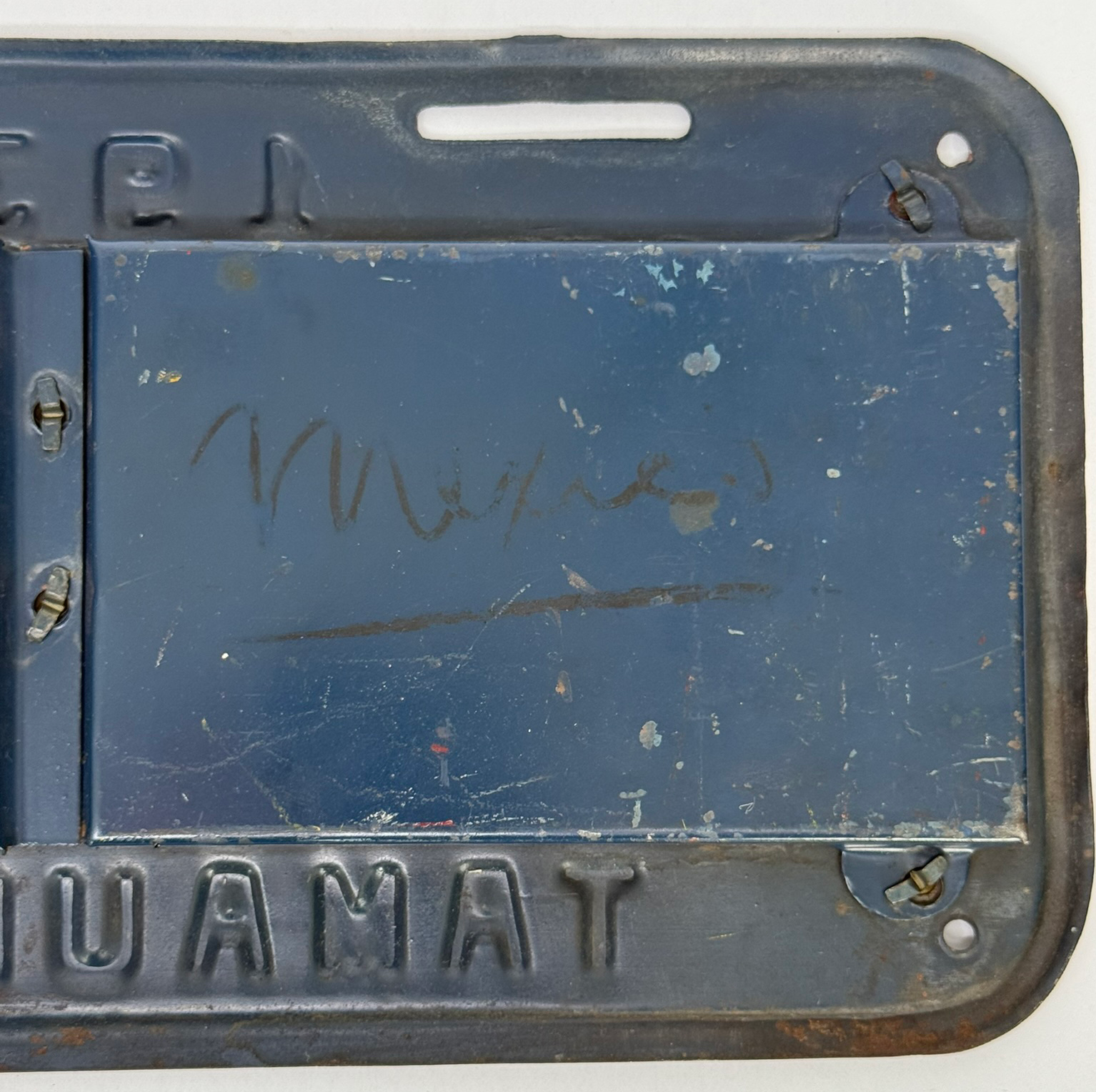
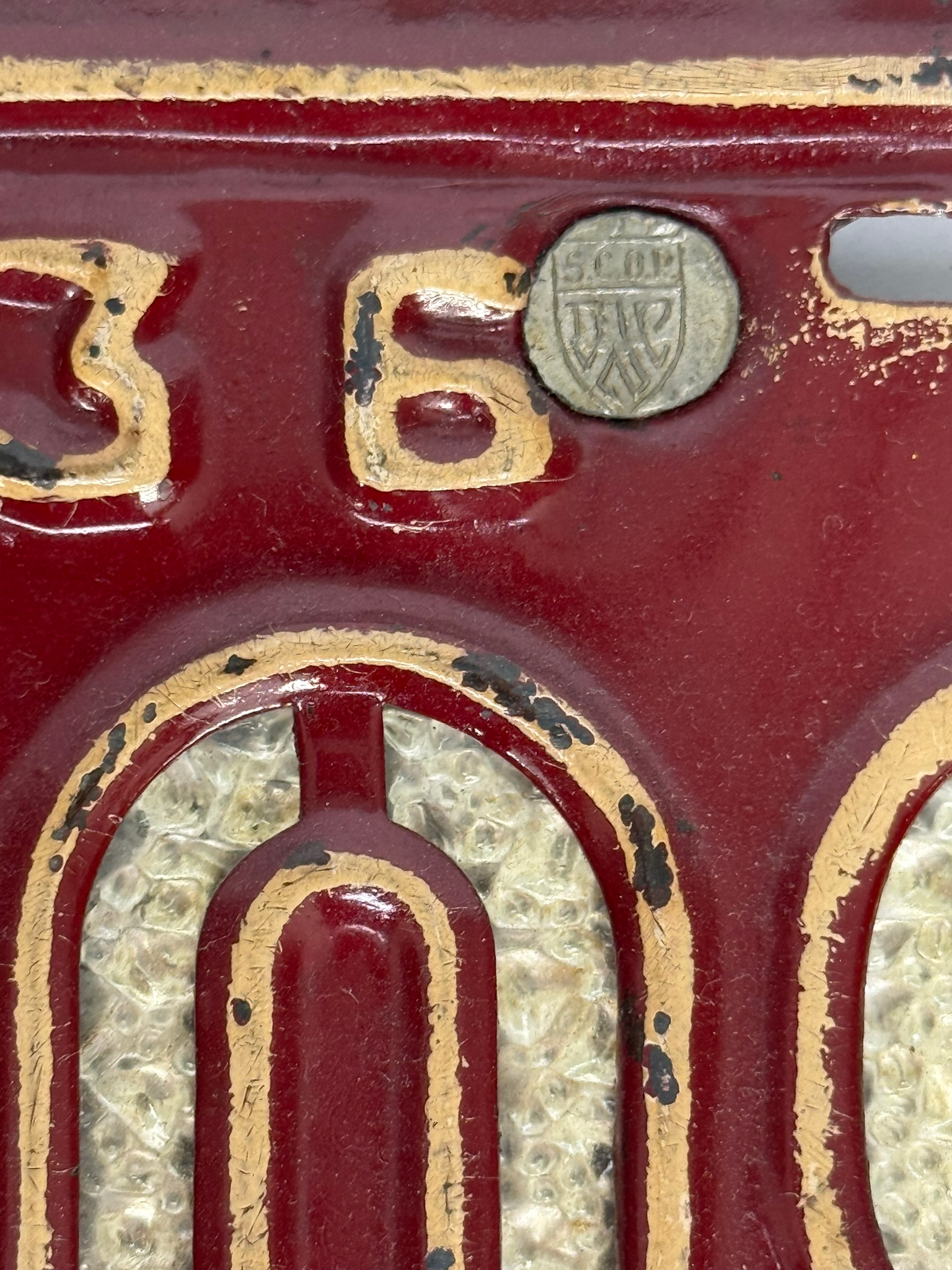
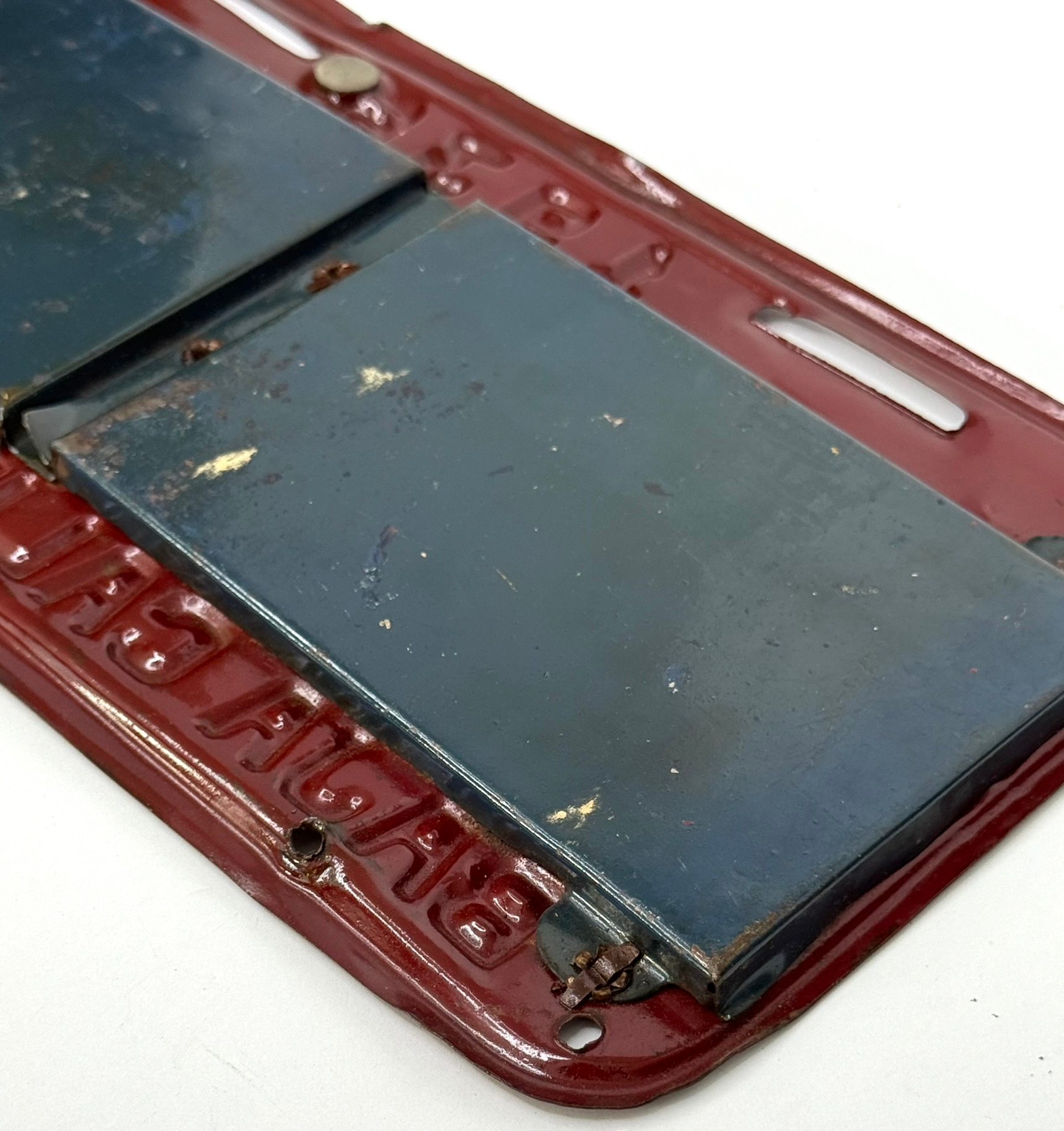
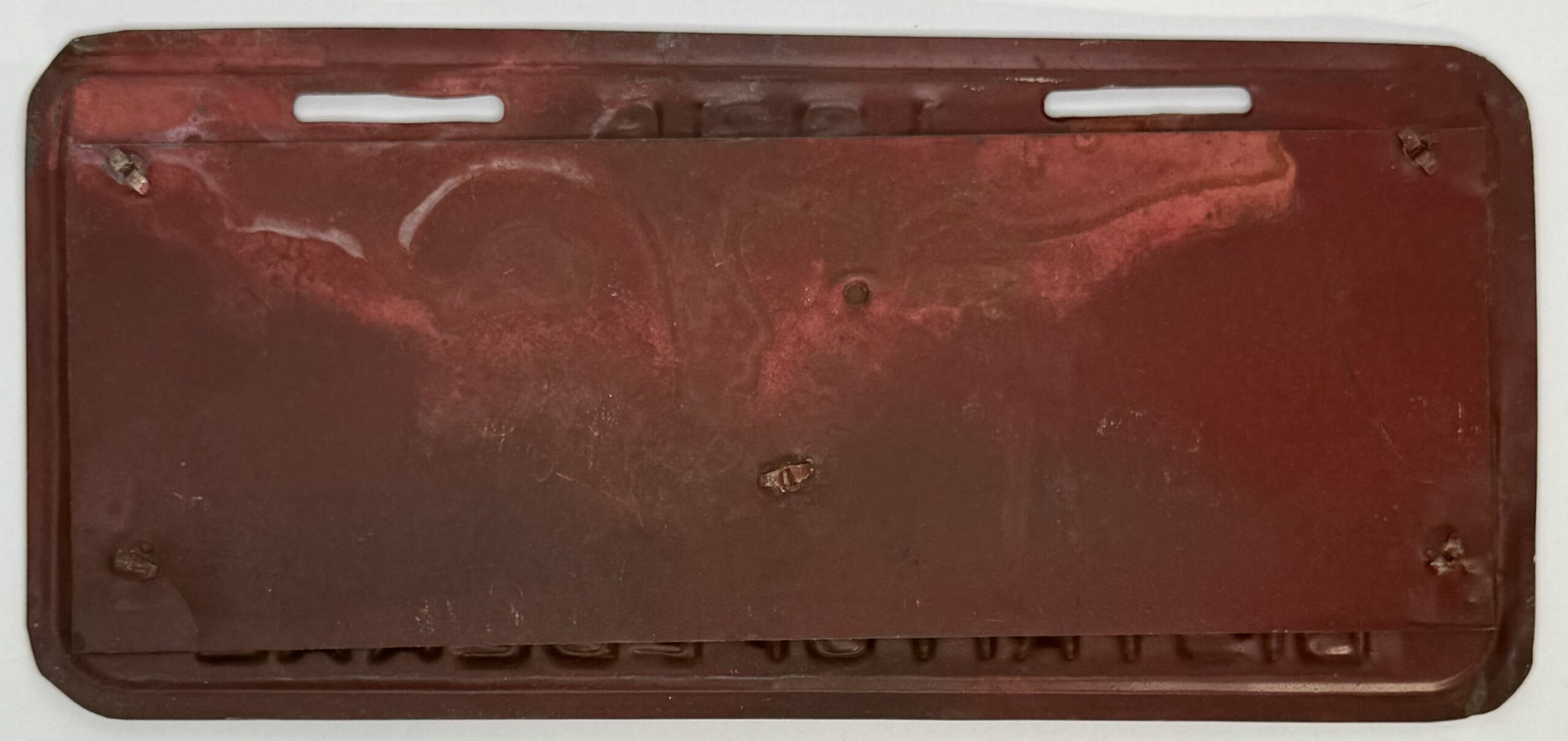
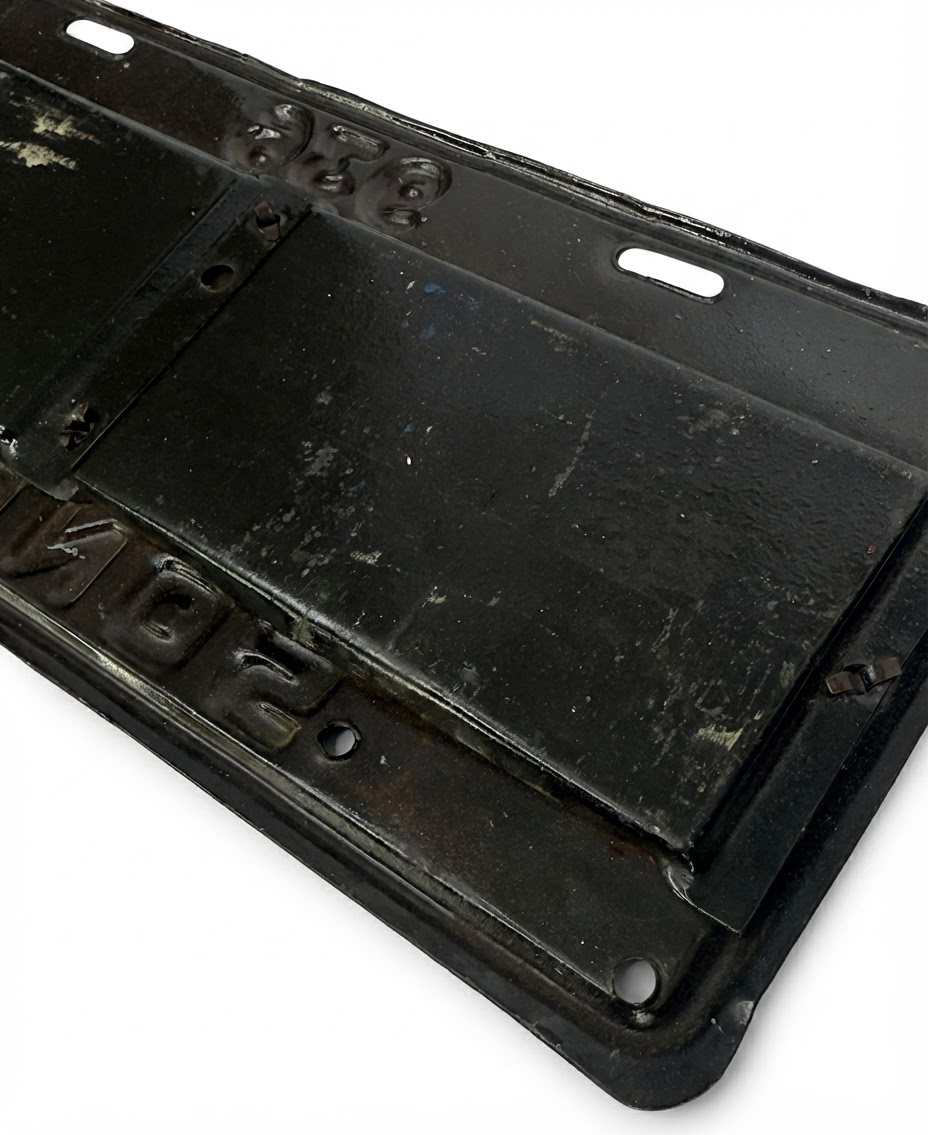
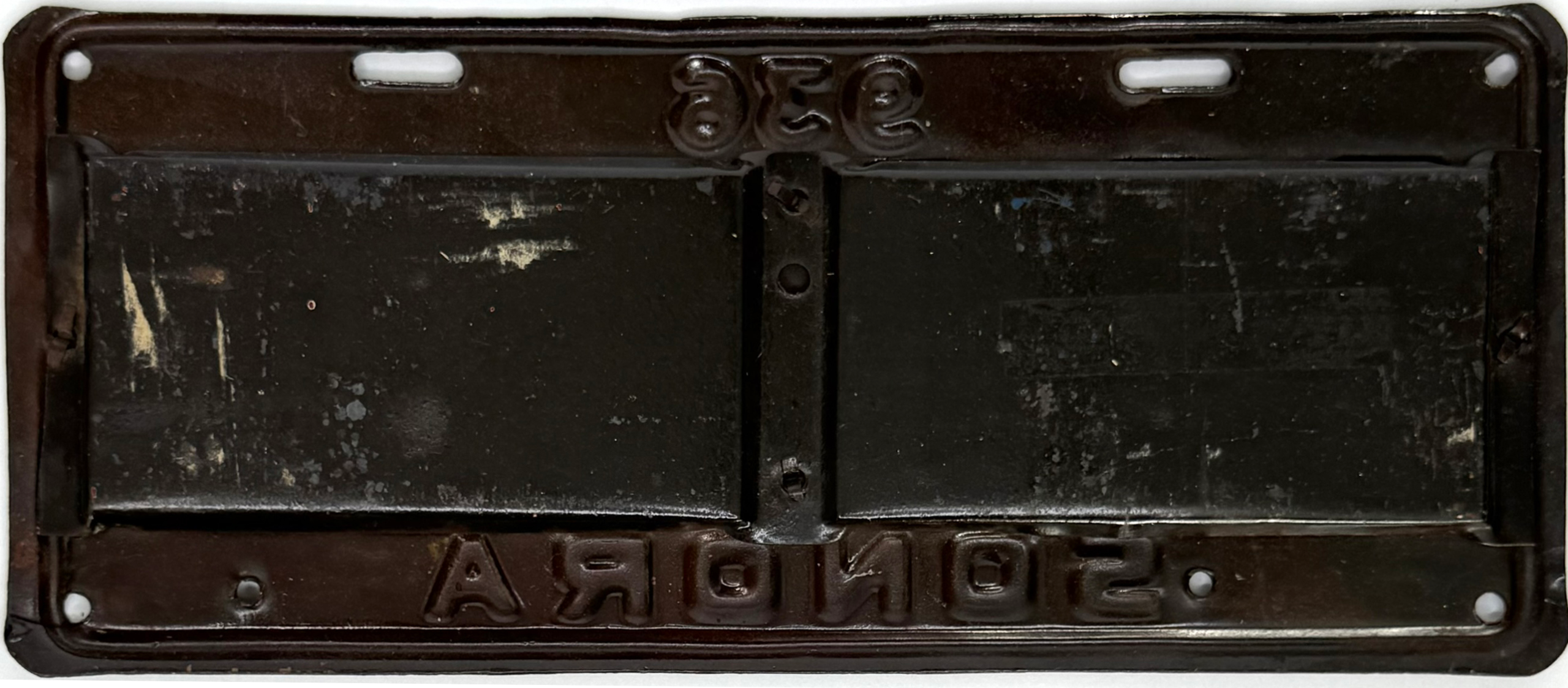
Aquí se muestran detalles en primer plano de la fabricación de la placa de Sonora de 1936. En el reverso de la placa de acero estampada, se remachó un compartimento de acero. Tras estampar la placa, se insertó en dicho compartimento una lámina de aluminio con acabado brillante y bordes plegados, la cual se fijó posteriormente. Los números de la placa estampada presentan un diseño de contorno abierto.
Here are close-up details on the construction of the 1936 Sonora license plate. On the reverse of the embossed steel plate, a steel box compartment has been riveted on the back of the plate with fasteners. After the plate was stamped, a crimped aluminum glassy sheet was inserted into the compartment and then fastened. The embossed plate has open outline for the numbers.
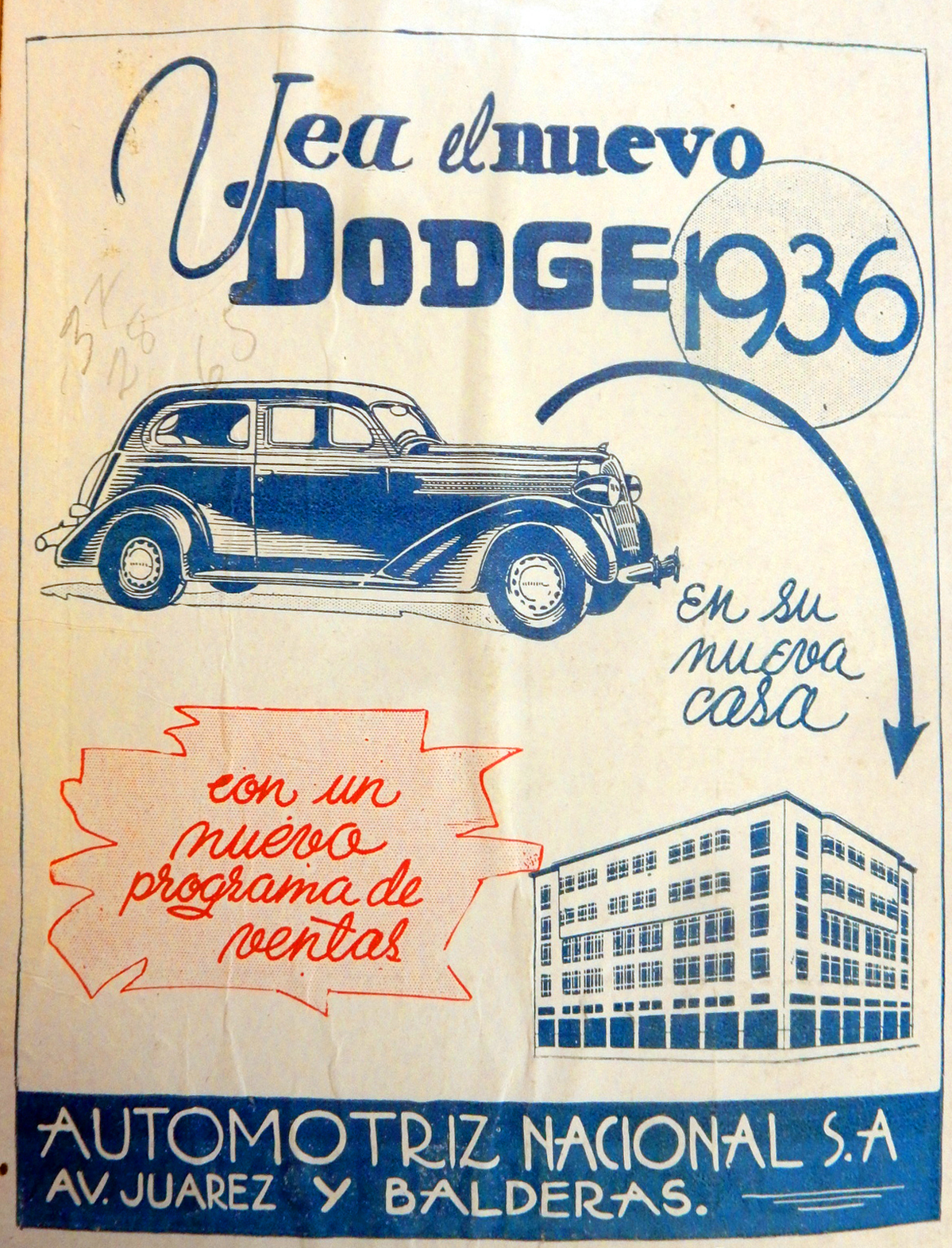
1936 Dodge shown at Automotriz Nacional, S.A. in Mexico City at Avenida Juarez y Balderas. A new Dodge sold at this dealer would have received a Type 1 Distrito Federal license plate.