To understand the automobile registration history of Mexico’s newest state, it’s helpful to know the political and geographical history of the Baja peninsula.
After Mexico gained independence in 1821, Baja California became a federal territory in 1824, which covered the entire Baja Peninsula. In 1931, the territory was divided into the Territorio Norte of Baja California and Territorio Sur of Baja California to improve administration and regional autonomy
In 1952, the northern territory became the 29th state of Baja California, while the southern area remained a federal territory. Finally, in 1974, Baja California Sur achieved statehood, Mexico’s newest and last state. This political chronology drove automobile registration issues in the 20th century:
About 1919, the first known Baja California plate is known, with a well defined history of annual issues following. There are also early undated municipal issues are known for Tijuana, Mexicali, and San Jose del Cabo.
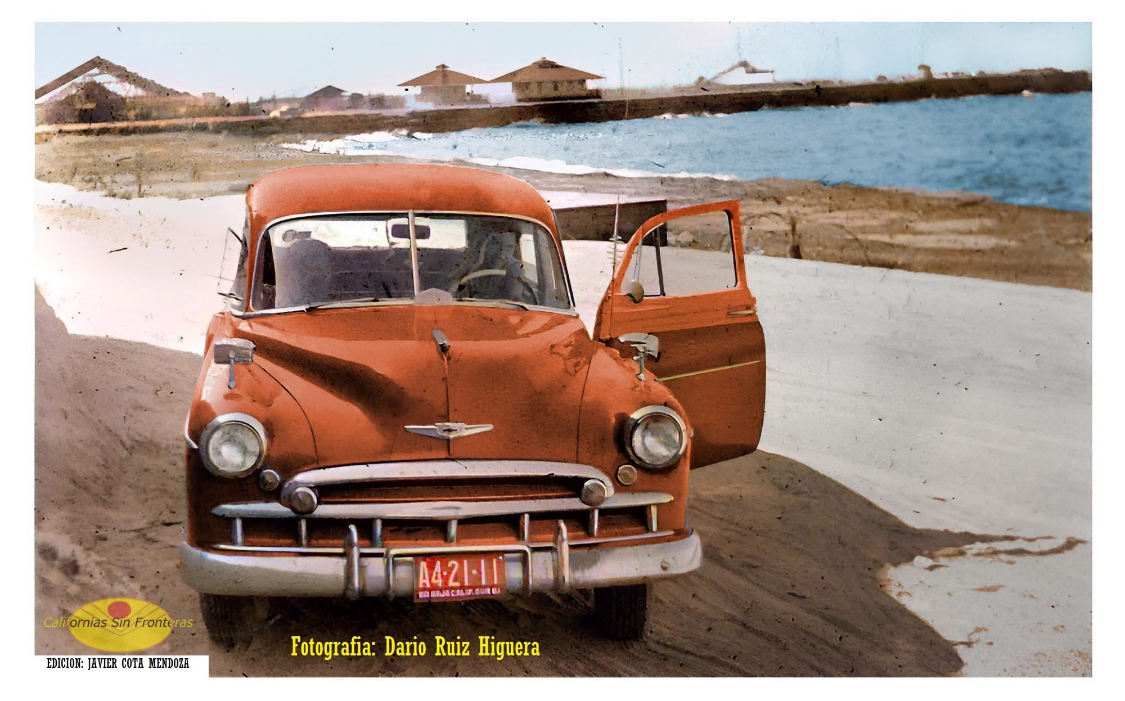
In 1931, the northern territory used “D.N. de la B.C.”, presumably for Distrito Norte of Baja California, to mark the federal division of the Baja territories. But we don’t know if a corresponding “D.S” or “T.S” was used for the few automobiles in the southern territory, which was created in 1931. From 1932 through 1953, all northern territory plates used the “T.N” (Territorio Norte) designation. The 1956/57 issue revised a designation with “N” suffix, for Norte. Curiously, the 1960/61 base, and maybe others, are seen with both the “N” suffix and no suffix. What’s not known is how Territorio Sur issued registrations before 1949:
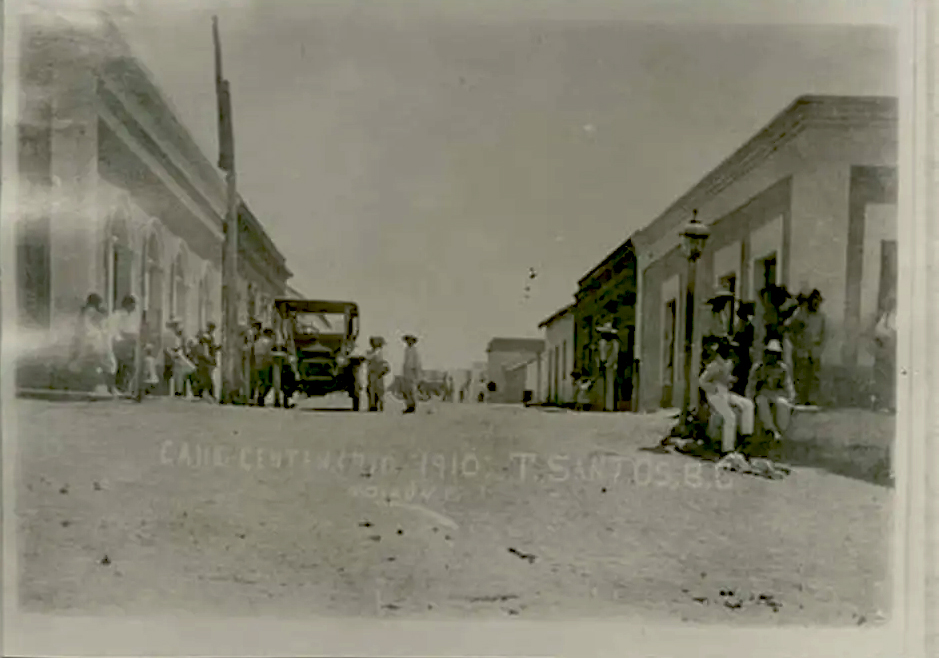
Photographed in 1910 on Calle Centenario in the Pacific fishing village of Todos Santos in what was then Baja California. (The entire Baja peninsula was one territory until 1930 when the Mexican federal government divided the area at the 28th parallel north into two separate territories, Baja Territorio Norte and Baja Territorio Sur.
The touring car clearly attracted a lot of attention as there’s a crowd gathered the motor car. It’s difficult to see, but there does not appear to be any registration plate on this motor car parked on the street. This is consistent with other circa 1910 photographs from throughout Mexico. Mexican automobile registration plates are not widely known before 1920.
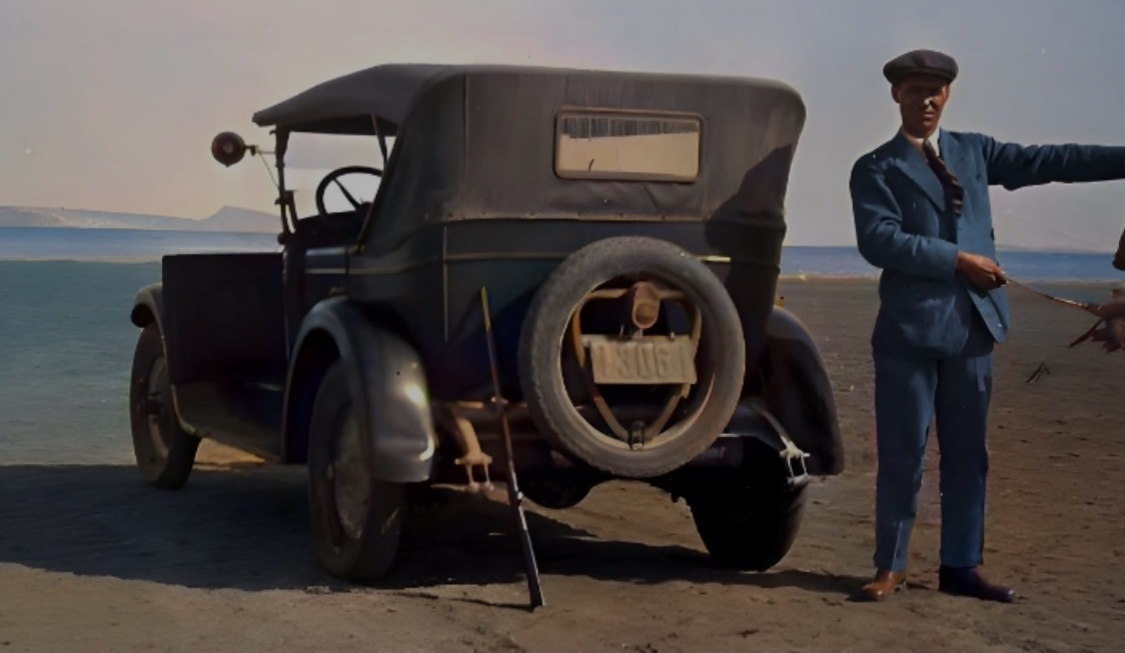
This photograph clearly has some modern colorizing of a hunter posing in Los Cabos, at the bottom of the Baja California peninsula. It’s remarkable that there were cars in this remote area. Baja Sur is often considered an island because even today there are long and difficult roadways to drive over land from the mainland to Baja Sur area. The registration plate is clearly #306, but any year or jurisdiction names are not legible. However, the dies on this plate look like the dies used by S. G. Adams Stamp & Stationery Co. St. Louis,, Missouri USA. in this era. While S.G. Adams produced plates for many USA states were made, but we also know that they were used by other countries. The dies on this plate is similar to other early Mexico plates, including 1924 Tacuba.
So where is this car from? We do know that this plate here does not match any known Baja California territory plate of this era, which is well documented. And we know that this photo likely pre-dates 1930 when Territorio Sur was created. But there is tantalizing evidence of other local plates in Baja Sur at this time, including a known undated San Jose Del Cabo and the newly identified 1927 La Paz plate below. If this is not from Baja Sur, then it likely travelled by boat from the Mexican mainland. Do you have any thoughts or insights?
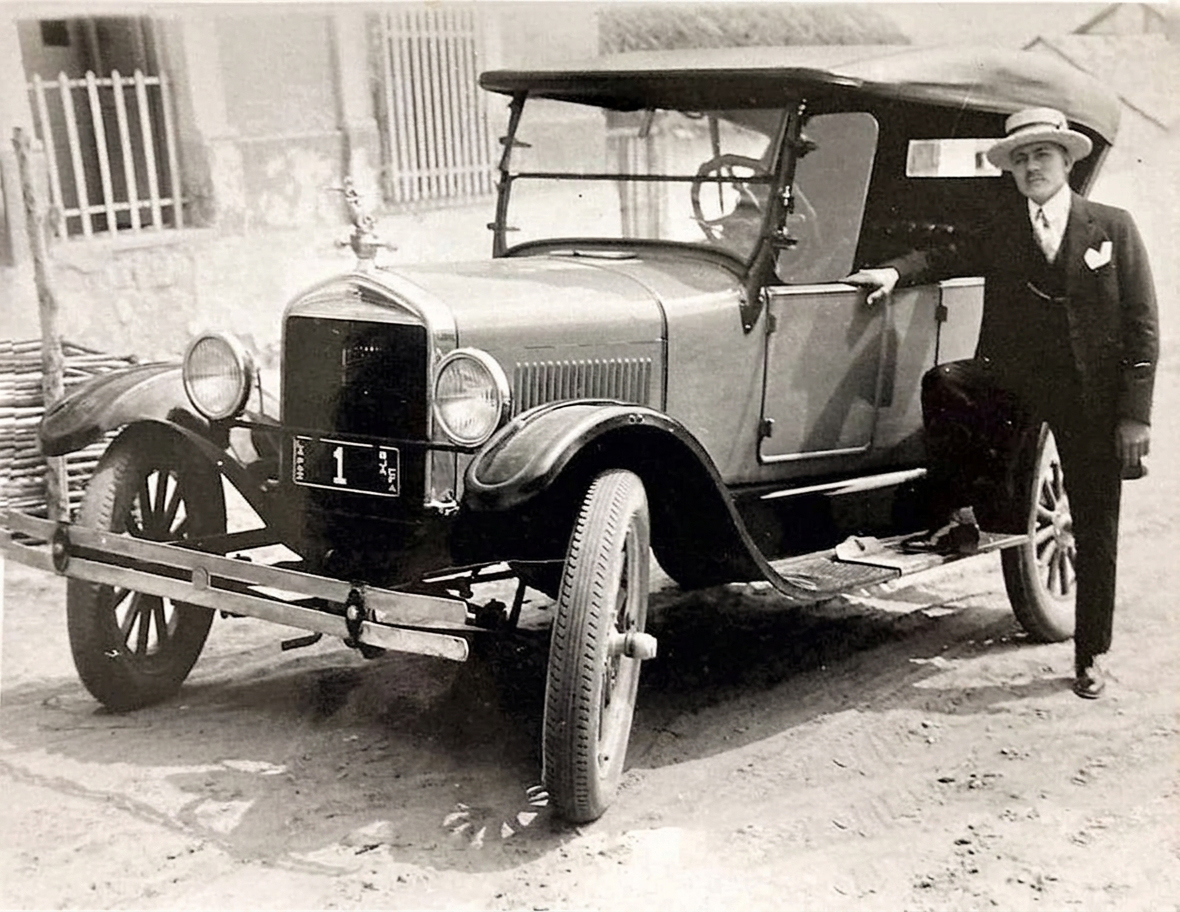
This remarkable photo shows a #1 license plate affixed to the front of a 1927 Ford Model T This car reportedly used as the first taxi in La Paz and was owned by the Mayor, Ramon García Moyron .
The plate appears to be undated, with “LA PAZ” vertically on the the left side and “BAJA” and “CAL” stacked in two columns at the right. The plate appears to resemble the 1925 Baja California terrritory plate, with the year vertical on the left and the legend “Baja” and “Cal” placed side by side vertically on the right. Curiously, there’s no known documented 1926 or 1927 Baja California issue. Does anyone have any answers or theories?
Foto: cortesía | Photo courtesy of:
Aurora Castro de García Soto.
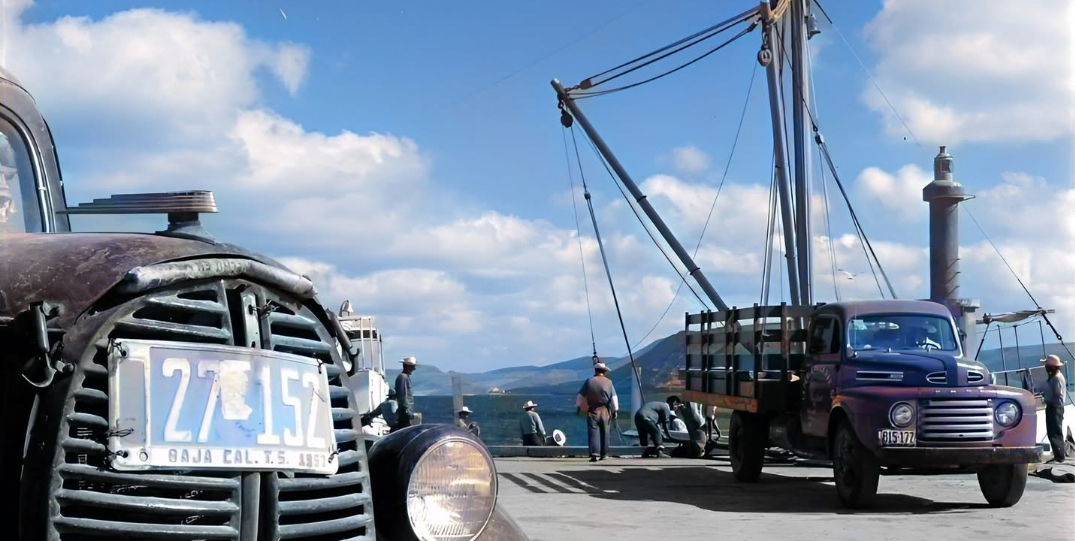
This is the first known example of a Baja California T.S. plate, for Territio Sur designation. Since we’ve seen 1949 and 1950 plates with BC SUR, we’re not sure that designation was used in 1951.
Curiously, the truck has a 5-digit registration, #27-152. This seems like a high number if this represents a sequential registration.