Nayarit

Mexico’s First–and Only– Amateur Radio Plate

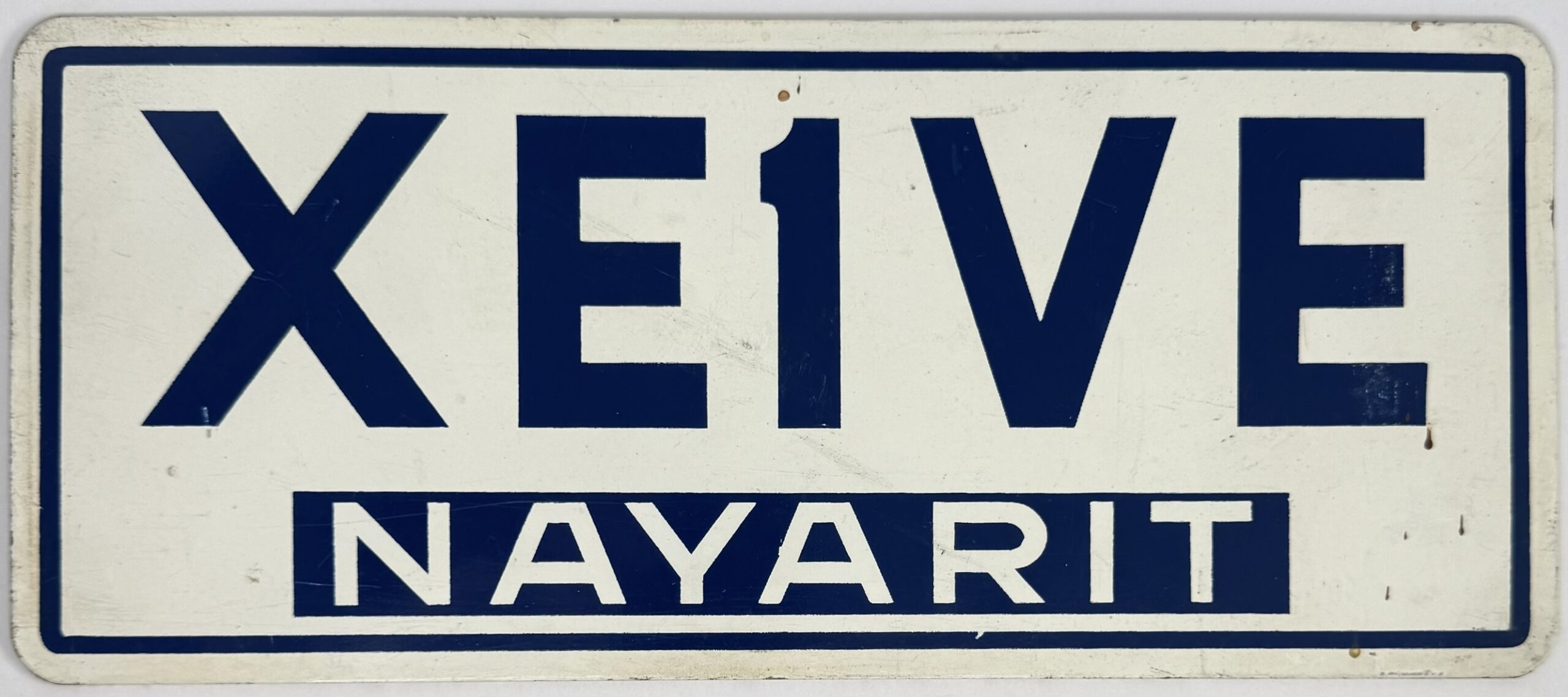
This is one of the world’s first license plates issued to amateur radio operators with their call sign.  The first such plates were issued in the USA, when Michigan experimented with a limited series plate in 1939.  That was dropped after only year, and the next known issues both appeared in 1950: Nayarit in Mexico and Florida in the USA.   But that opened a flood gate, and starting in 1951 for the next 10 years nearly every state in the USA and nearly all of Canada’s provinces issued amateur radio plates.    In Mexico, this 1950 issue may have been one of the first in the world, but to date it has sadly been the last.  Nayarit indeed produced a one-off that stands tall for over 75 years.   Canada’s first amateur radio plate was 1952 Quebec.

1950 Nayarit
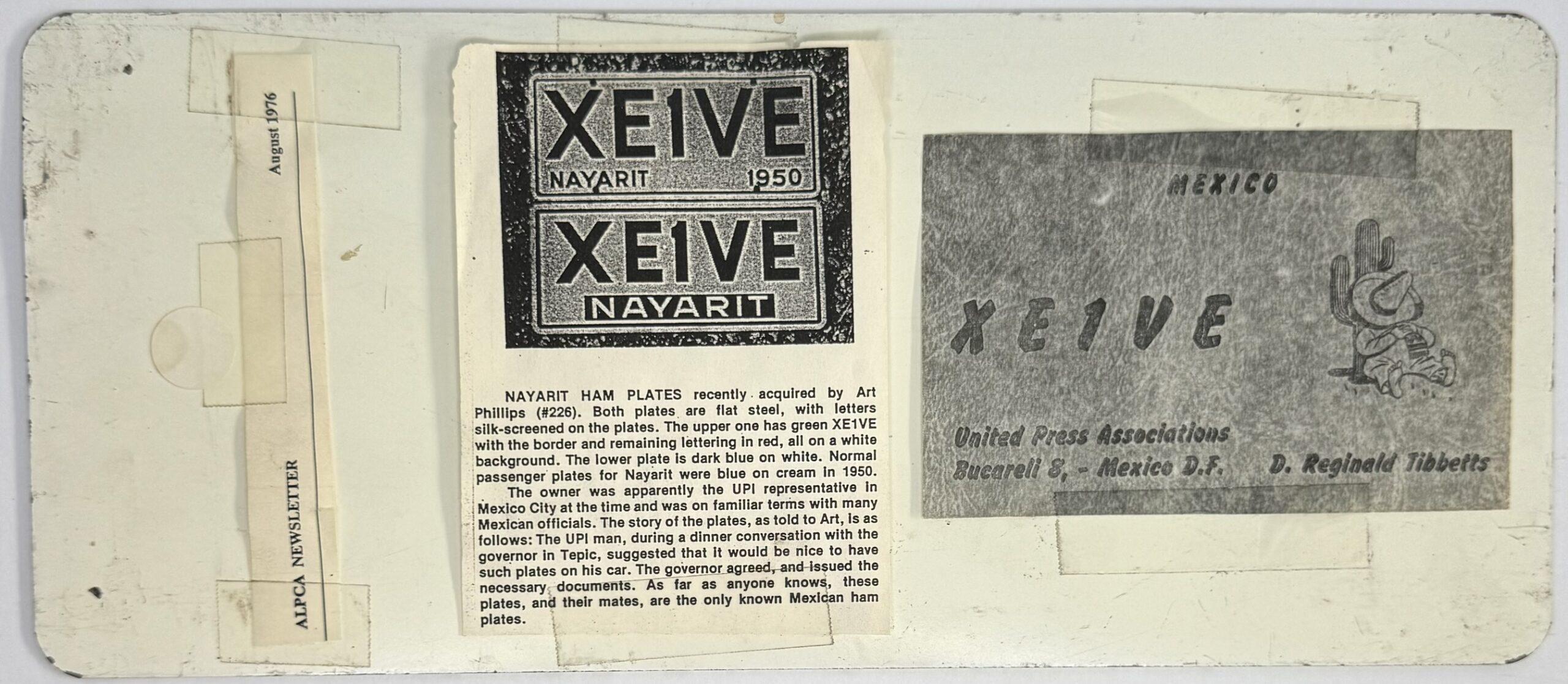
1950 Nayarit XEIVE ham radio pair (ALPCA Newsletter, 1976).
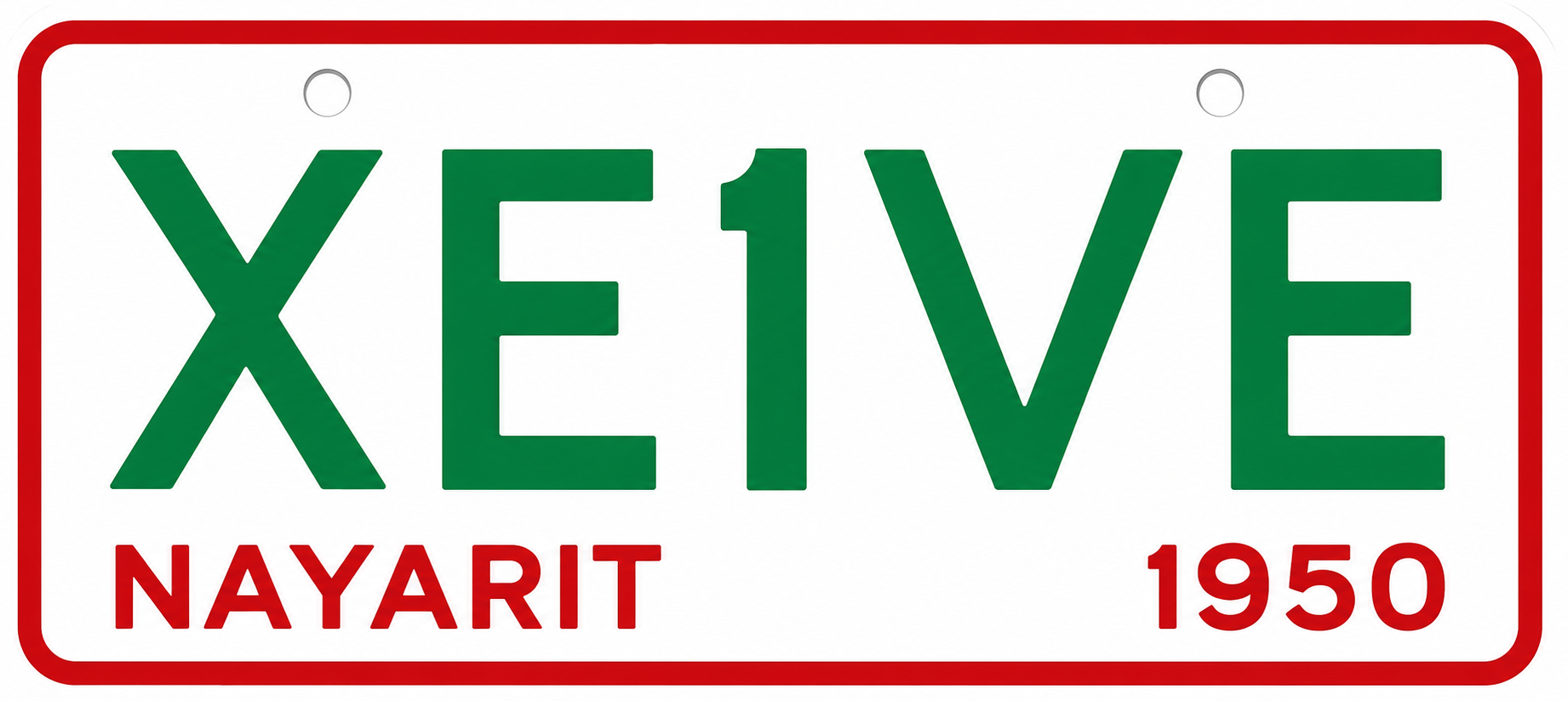
1950 Nayarit amateur radio issue.

From the ALPCA Newsletter (August 1976): “Nayarit ham plates recently acquired by Art Phillips (#226). Both Plates are flat steel, with letters  silk-screened on the plates. The [dated plate] has green XE1VE with the border and remaining lettering in red, all on a white background. The undated] plate is dark blue on white. Normal passenger plates for Nayarit were blue on cream for 1950. The owner was apparently the UPI representative and Mexico City at the time, and was on familiar terms with many Mexican officials. The story of the plates, as told to art, is as follows: the UPI man, during a dinner conversation with the governor in Tepic, suggested that it would be nice to have such plates on his Car. The governor agreed and issued the necessary documents. As far as anyone knows, these plates, and their mattes, are the only known Mexican ham plates.”

These plate raise an interesting chicken vs. egg question.  Why did Mr. Tibbetts, a long time amaterur radio operator since 1939, lobby for license plates in 1950.  While Michigan USA issued the world’s first amateur radio license plates, it was not until 1950 that suddenly both Florida USA and Nayarit, Mexico issued amateur radio plates.  They started the flood gates, and dozens of states followed suit in 1951 and continued rapidly throughout the 1950s.

To give some more context into the originals of these unique plates, it’s helpful to understand some history.  Amateur radio came into being after radio waves (proved to exist by Heinrich Rudolf Hertz in 1888) were adapted into a communication system in the 1890s by the Italian inventor Guglielmo Marconi. Amateur radio operators began in the 1890’s, shortly after Italy’s Marconi invented radio frequency communication.   The first known amateur radio organization was formed at Columbia University in New York in 1908.  In 1912, after the RMS Titanic sank, the United States Congress passed the Radio Act of 1912, which restricted private stations to wavelengths of 200 meters or shorter (1500 kHz or higher).[9] These “short wave” frequencies were generally considered useless at the time, and the number of radio hobbyists in the U.S. is estimated to have dropped by as much as 88%. Other countries followed suit and by 1913 the International Convention for the Safety of Life at Sea was convened and produced a treaty requiring shipboard radio stations to be staffed 24 hours a day. The Radio Act of 1912 also marked the beginning of U.S. federal licensing of amateur radio operators and stations. The origin of the term “ham”, as a synonym for an amateur radio operator, was apparently a taunt by professional telegraphers.

By 1917, World War I had put a stop to amateur radio. In the United States, Congress ordered all amateur radio operators to cease operation and even dismantle their equipment. These restrictions were lifted after World War I ended, and the amateur radio service restarted on October 1, 1919.

Since 1932, the Federacion Mexicana de Radio Experimentadores, A.C. (FMRE) (in English, literally Mexican Federation of Radio Experimenters) is a national non-profit organization for amateur radio enthusiasts in Mexico. 
Federacion Mexicana de Radio Experimental logo.

 Key membership benefits of the organization include QSL bureau services, the promotion and sponsorship of radio contests and operating awards, and an organization dedicated to emergency communications. FMRE promotes amateur radio by organizing classes and technical support to help enthusiasts earn their amateur radio license. Members receive a bimonthly magazine published by the organization, Onda corta. The FMRE also represents the interests of Mexican amateur radio operators before Mexican and international telecommunications regulatory authorities. FMRE is the national member society representing Mexico in the International Amateur Radio Union.
The Man Behind Mexico’s First Amateur Radio Plate

DID YOU KNOW . . . Moraga, California USA was home to a real World War II spy?

D. Reginald Tibbetts, a UC Berkeley engineer and ham radio operator, built a secluded home in Moraga in 1939 equipped with advanced radio technology. During WWII, he worked with U.S. Military Intelligence, intercepting Japanese communications and reportedly received the first news of the Hiroshima bombing.

Tibbetts later transformed an old railroad building into the Moraga Post Office and served as Postmaster. His work on the nuclear project helped make Moraga one of only five U.S. post offices designated to handle materials related to the atomic bomb.  (Credit: Moraga Historical Society for text and two photos below). 

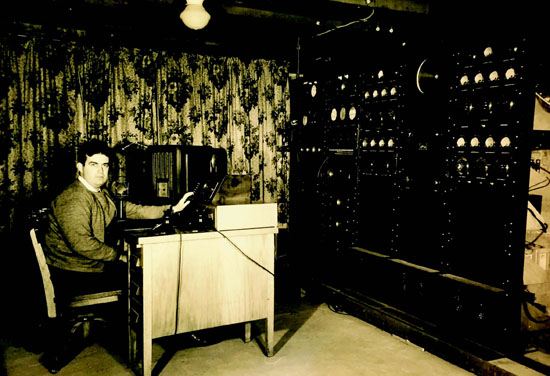
Reginald Tebbitts in 1942 in his radio equipment room.
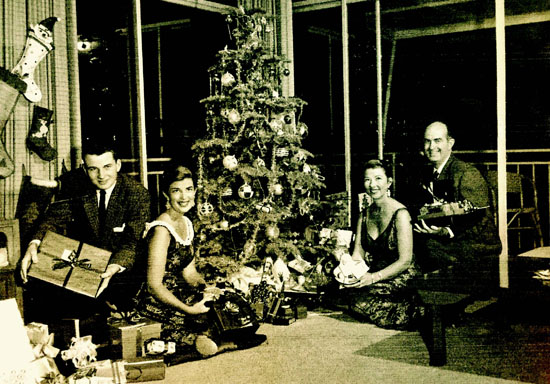
Reginald Tibbetts and family at a special Christmas in Honolulu.
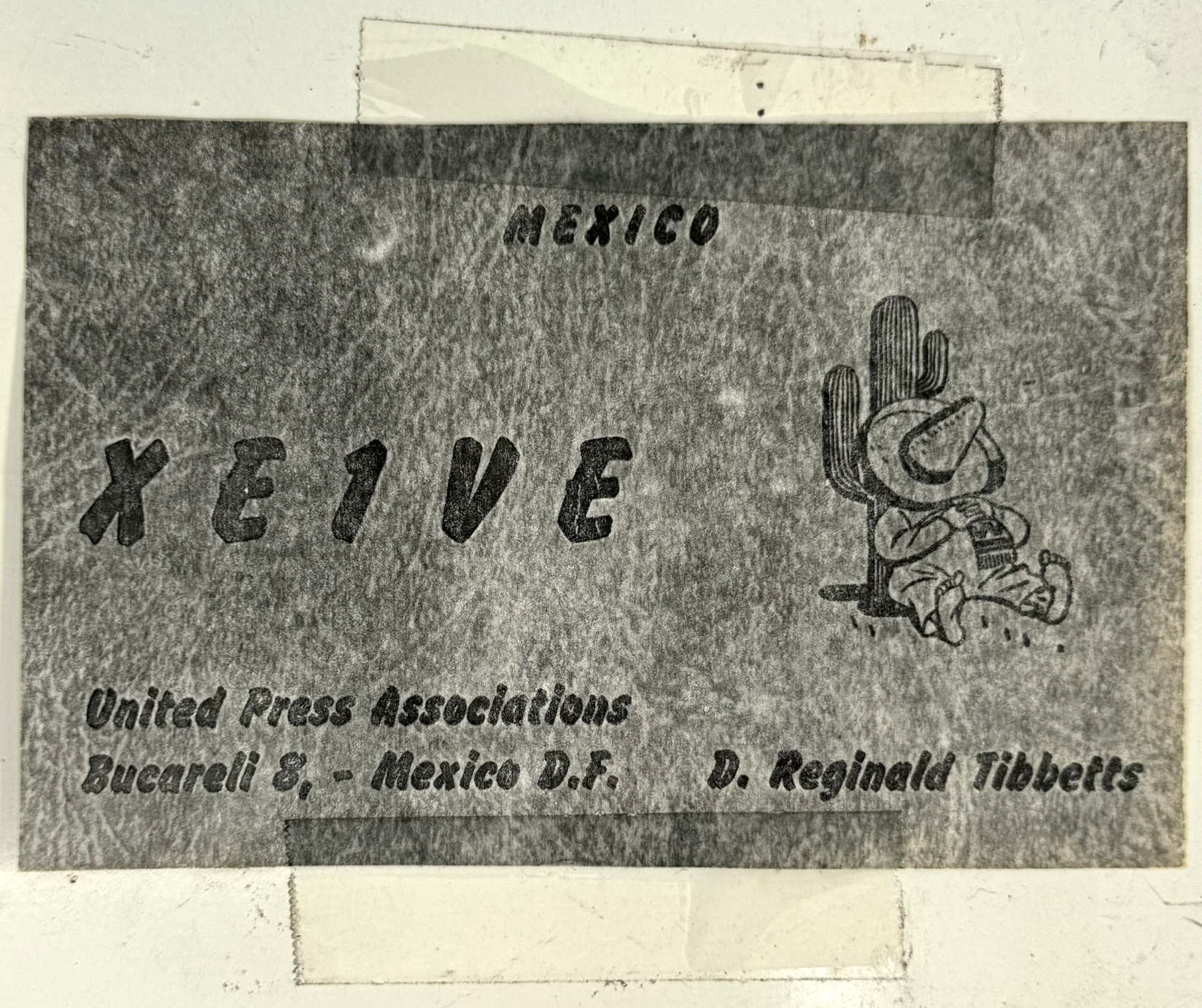
Reginald Tibbett's business card.
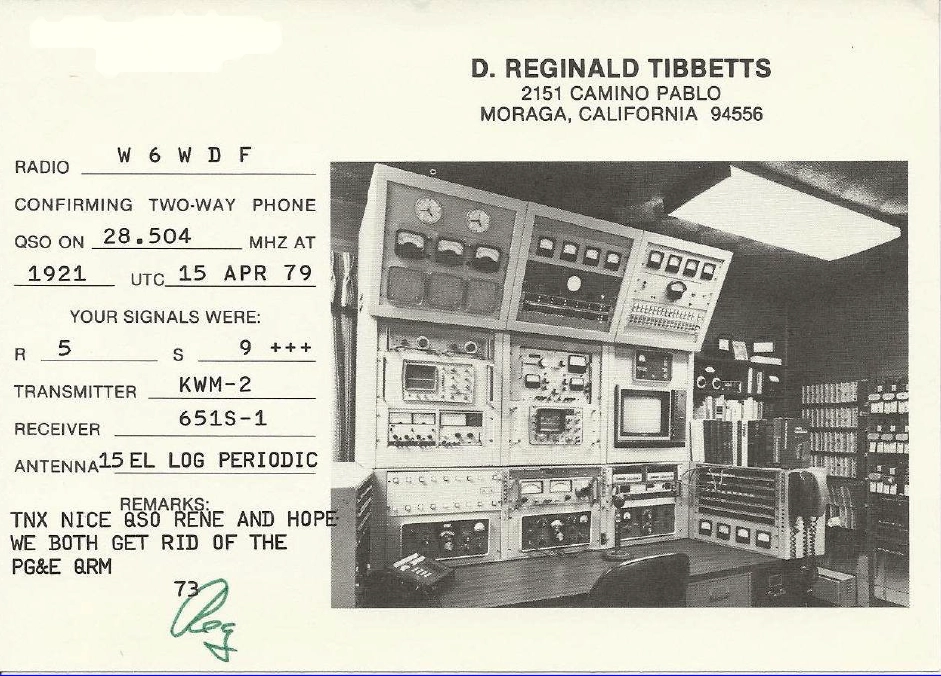
Reginald Tibbetts Ham Radio Card

As shown in the business card above, United Press Associations (UPA) was the original name of United Press International (UPI), an American international news agency founded in 1907 by merging three smaller news syndicates under E. W. Scripps’ leadership Wikipedia. It was formally incorporated as United Press Associations but was widely known as “United Press” or “UP.”

United Press Associations was renamed United Press International in 1958 after absorbing the International News Service.  Headquartered in Boca Raton, Florida USA, the UPA/UPI at one point had over 2,000 employees, 200 news bureaus in 92 countries, and more than 6,000 media subscribers.  They provided newswires, photo, film, and audio services to newspapers, magazines, radio, and TV stations.  It’s likely that Mr. Tibbetts worked for UPA’s Mexico City bureau.  

The following excerpt gives some context about Mr. Tibbetts, the man behind Mexico’s one and only amateur radio license plate.  

“A 76-year-old home sits on the outskirts of Moraga. Grape leaves blossom in its vineyard and the landscaped grounds are a visual treat, but equally important is what is missing.

Gone today is the radio tower used by its original owner. Gone is the underground gasoline tank, the World War II victory garden and the blackout curtains over its windows. Gone is the office and shop housing engineering research and development important to the Allied cause. Gone, too, is an Eagle Scout and Orinda Scoutmaster, amateur radio operator, UC Berkeley electrical engineering graduate, third generation Californian, 57-year Moraga resident, father, former postmaster – all one and the same man – the reclusive D. Reginald Tibbetts.

Elsie Mastick called Tibbetts “our Moraga spy.” Mastick, a Moraga Historical Society member, was friends with Tibbetts’ daughter. “He broke the code,” Mastic said proudly of Tibbetts’ work intercepting and deciphering Japanese transcripts as the two countries moved toward war.  Records show that Tibbetts purchased an 8-acre parcel in Moraga in 1936 and had built his house by 1939. A licensed amateur radio operator, call sign W6ITH, Tibbetts also built a radio tower on site. “It was magnificent,” John LaRue of RedStone Products said admiringly of the “very first class” high frequency radio gear and large log periodic satellite antenna Tibbetts had assembled on site. LaRue, who visited the Moraga acreage, said Tibbetts was one of the first to own a large residential receive-only microwave dish.

At the time, the Federal Communications Commission required satellite dishes to be licensed. Barbara Tibbetts Workinger became an amateur radio operator at her father’s urging, but she has since let her license lapse. Although she remembers a family victory garden filled with tomatoes, it is unclear whether as a child Workinger understood the importance of her father’s work. She did remember “all these famous men” her father knew, including Glenn Seaborg (Atomic Energy Commission chairman throughout the 1960s) and her godfather Ernest Lawrence lounging around her family’s pool.

It was no mere coincidence that Tibbetts was appointed postmaster of Moraga during World War II. It was a move that facilitated the clandestine shipment of equipment he needed to complete his war work – part of which was the development of a Geiger counter used in the early development of the atomic bomb.

Tibbetts was just plain “Reggie” to Ernest Lawrence, said his son Robert Lawrence, MD. The younger Lawrence remembers visiting Tibbetts’ Moraga home with his father “several times a year” as a teen in the mid-1950s. Father and son saw the Tibbetts’ radio room filled with shortwave radio equipment and clocks set for time zones around the world.

Ernest Lawrence was “a big radio nut,” his son explained, having built an entire station while attending the University of South Dakota. “We’d go out several times a year [to Moraga],” the younger Lawrence said. He thought Tibbetts was “very rich,” based on the “neat things and toys” around the home, including Lawrence’s favorite, a motorized electric jeep Tibbetts built for kids. Ernest Lawrence even listened in on an August 1945 shortwave radio communication Tibbetts held with an amateur radio operator in Japan. The resulting nuclear electromagnetic pulse cut off their communications at the precise moment the bomb went off. ‘He [Tibbetts] looked at his watch,’ Robert Lawrence said, ‘and marked the time.'”