Carrera Panamericana

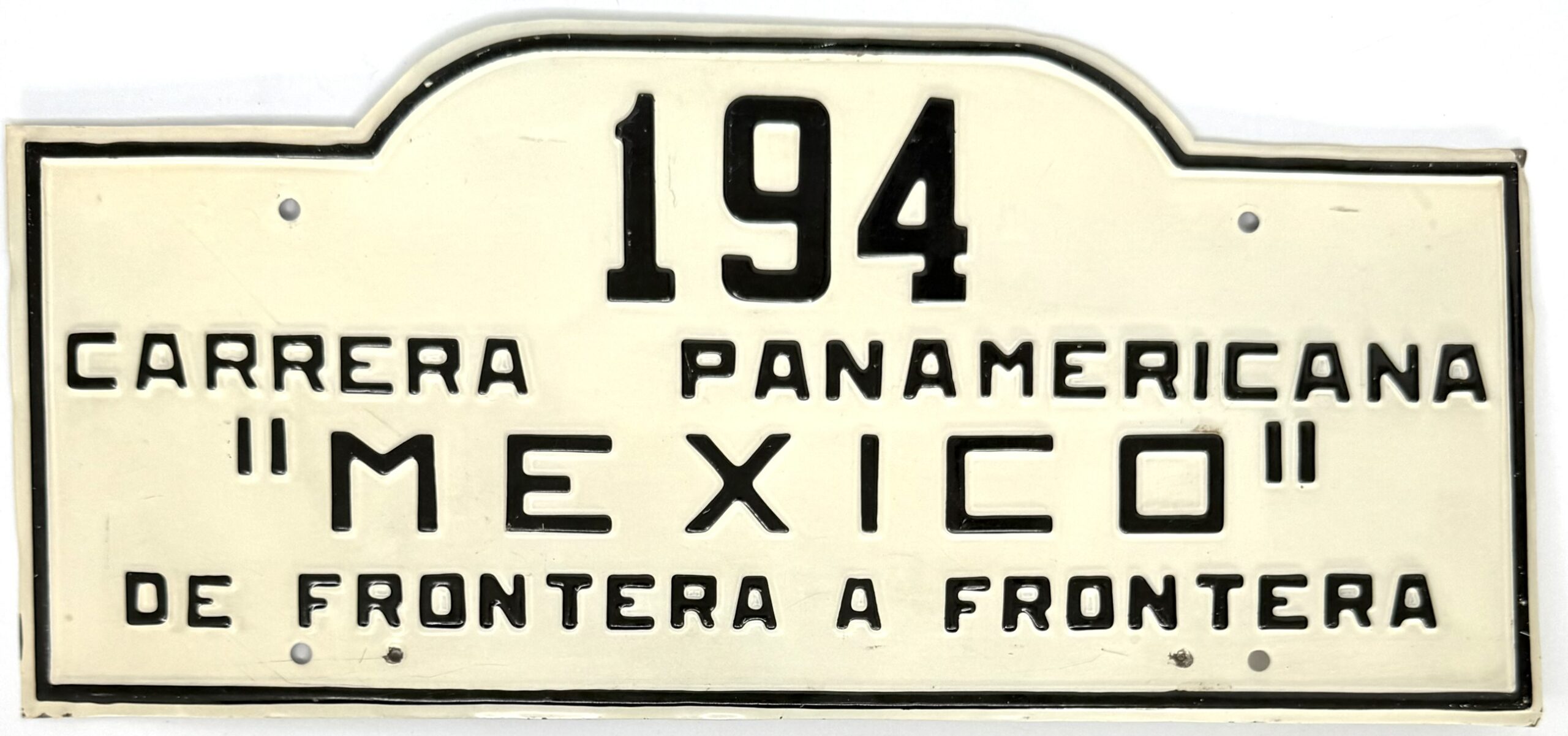
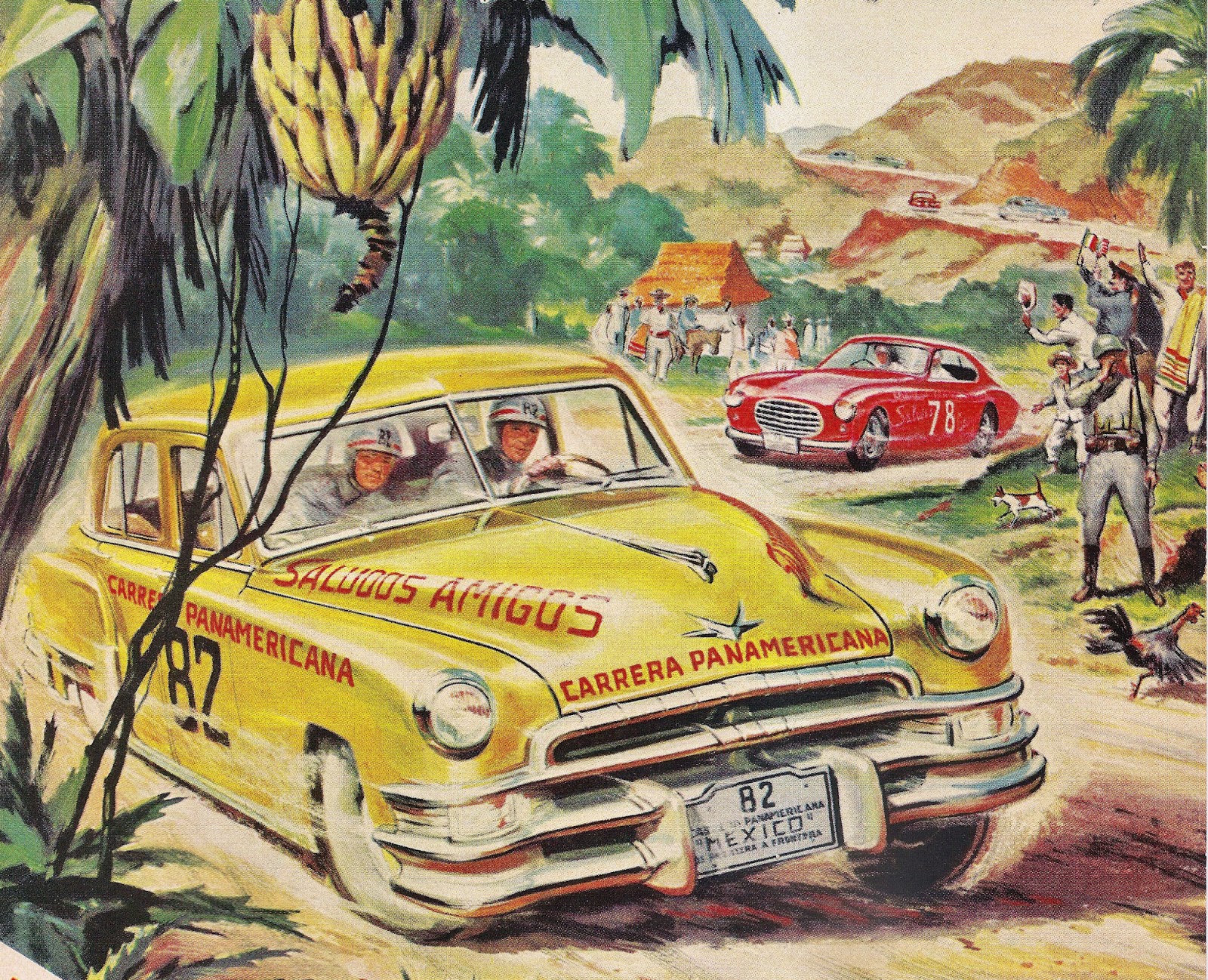
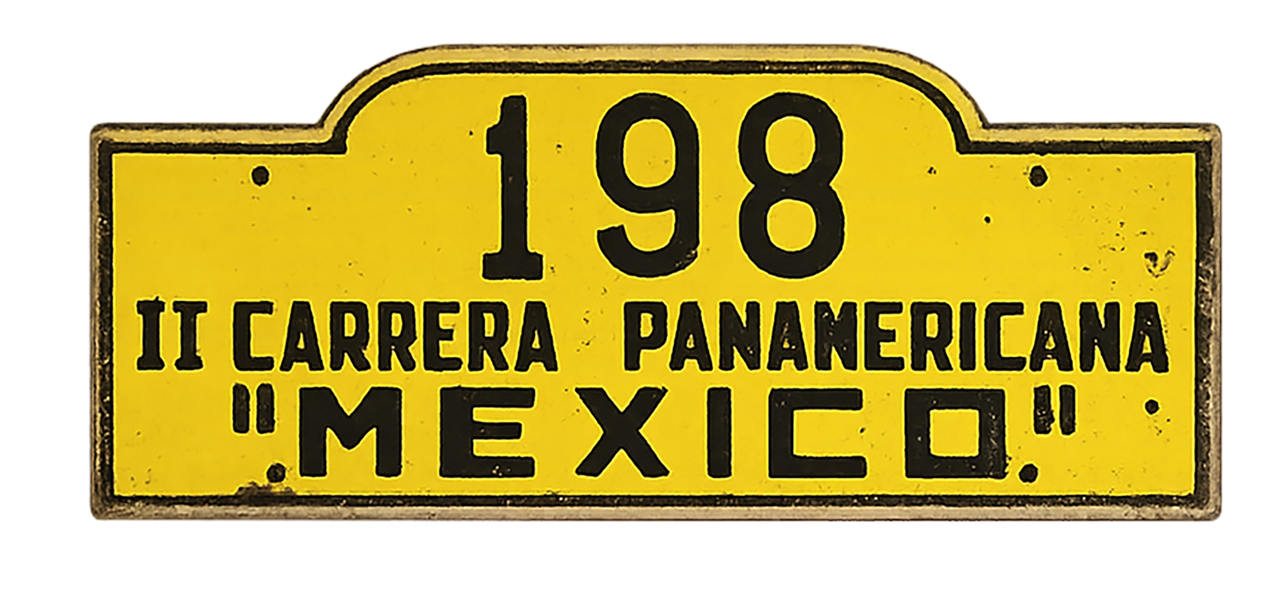
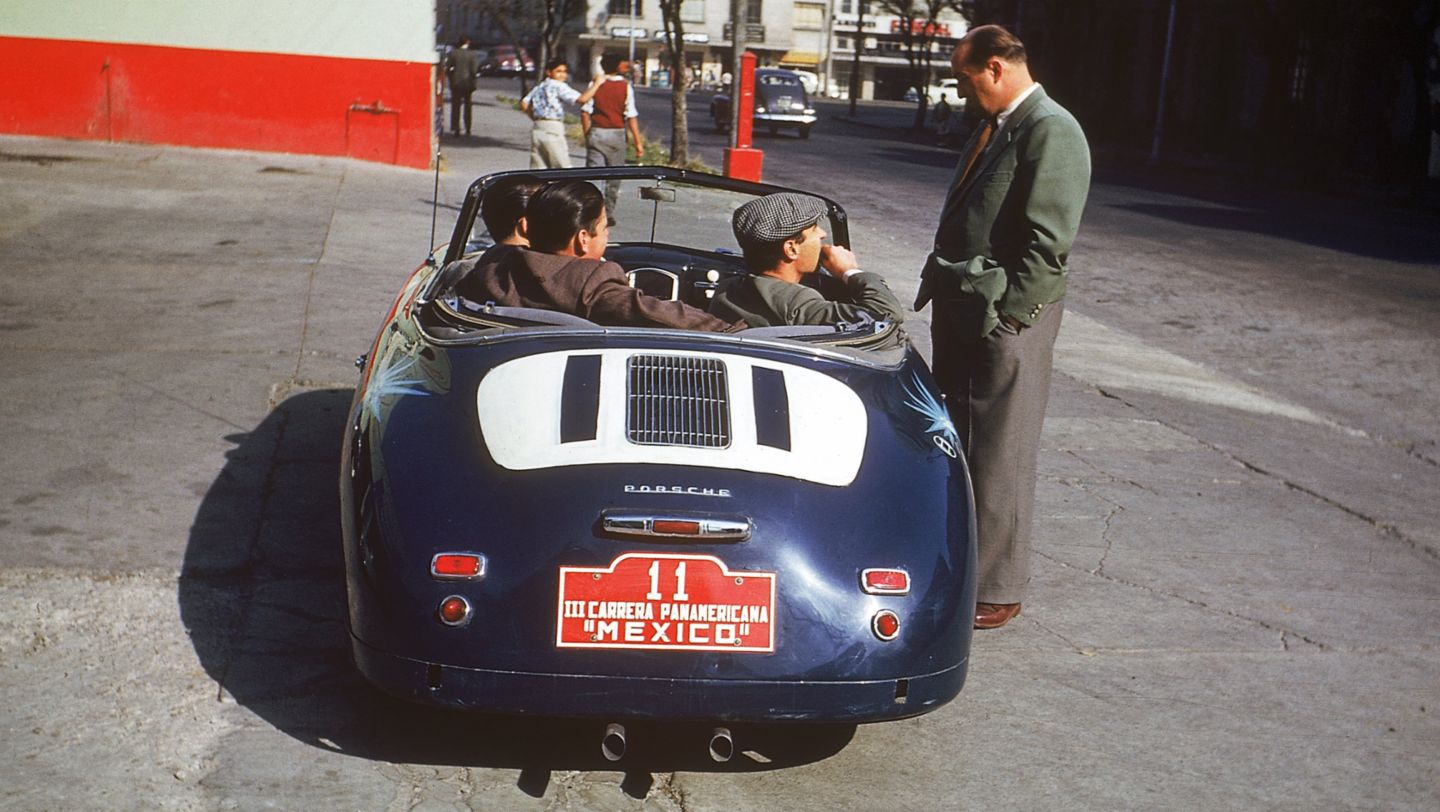
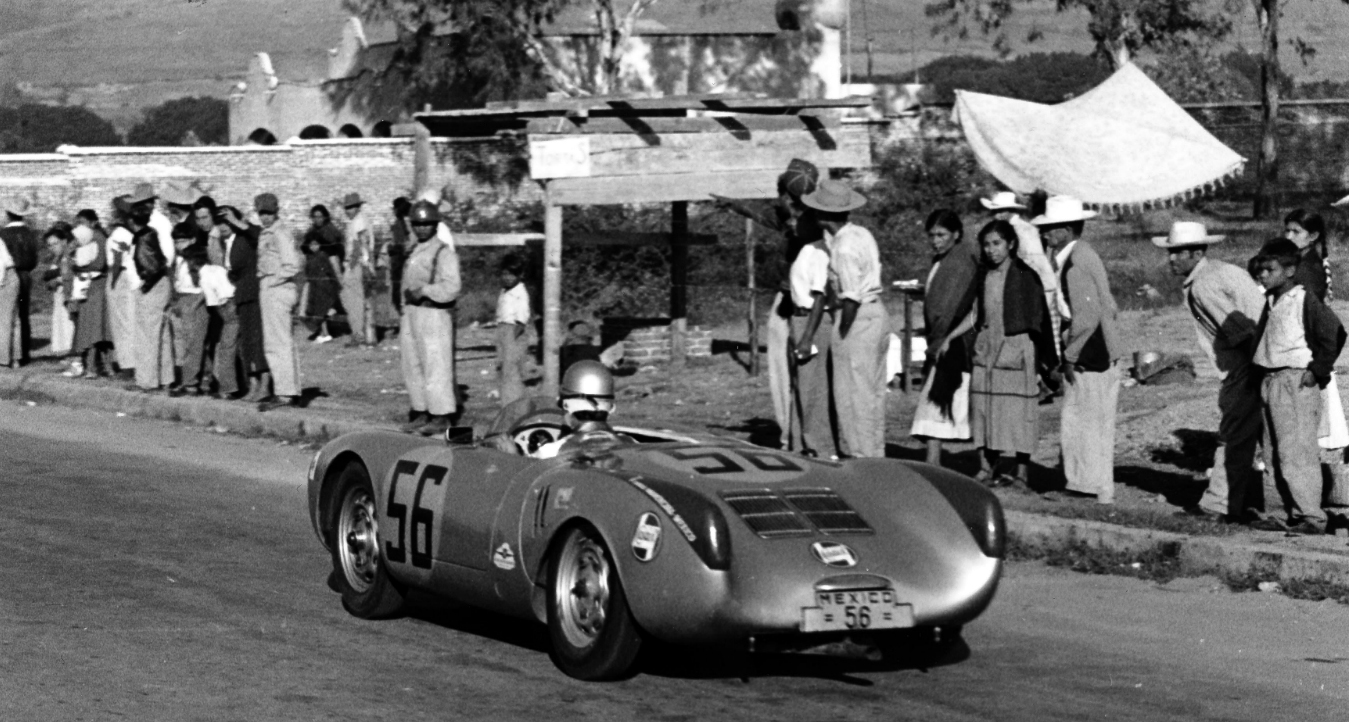
The Carrera Panamericana issued special license plates for all competition cars, with the registration number matching the race car number.   The plates were extra large, inspired by the Monte Carlo and other European race car events of the era.   The plates were embossed steel, heavy and well made.  The issues were:

1950-Carrera I: Black on white.  The only slogan to appear was “De Frontera a Frontera” (Border to Border).

1951-Carrera II. Black on Yellow

1952-Carrera III. White on Red

1953-Carrera IV: Black on White

1954-Carrera V: Black on Yellow

Carrera Panamericana  Mexico Race History

Mexico’s thrilling Carrera Panamericana claimed more lives than it crowned winners during its first five races.  In May, 1950 the first motorsport race was a border to border rally, like Italy’s Mille Miglia and Targa Florio. The pride of Mexico was on display, and the inaugural race attracted drivers from around the world.   Endorsed by the Mexican Government, the event promoted tourism, Mexico’s growing automobile industry and fostered national pride.  But at a cost. 
Considered to be the most dangerous race in the world, the race sadly earned this reputation. From 1950 through 1954, five races were run.   Indeed 5 drivers won the event in this period, but 6 other drivers were killed, along with one spectator. 

Consequently, with the global tragedy at France’s famed LeMans race in 1955 with hundreds of spectators killed in a horrific crash, the Mexican Government shuttered the Carrera Panamericana.   The race would not be run again for 34 years, when the Panamericana was revived.   The famed race continues today.

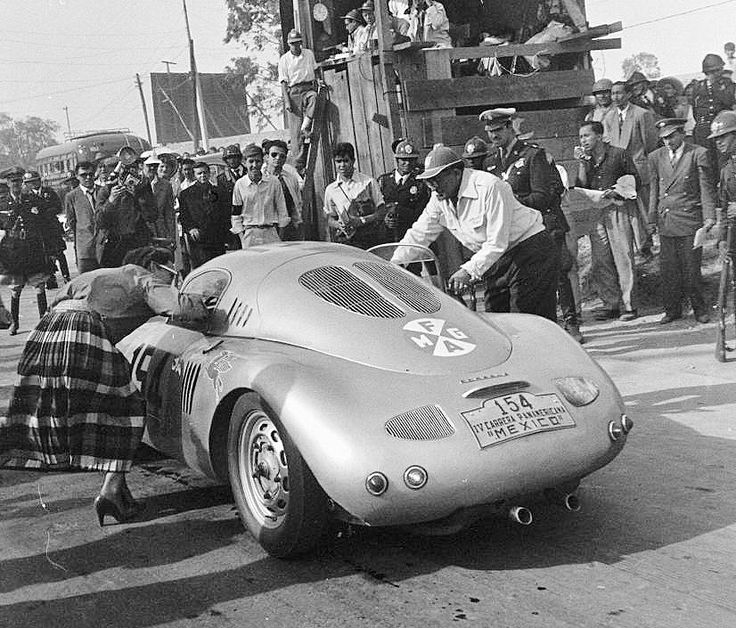
Despite being abandoned for so long after the 1950s, the race would not be immediately forgotten.  For example, the Germany automaker Porsche has multiple class wins in the race, despite their models being small and often quite underpowered (especially against other American and other German opponents). A 550 Spyder won the Small Sports Car category in 1953.

The famed Porsche Carrera model was named after this race, like their Targa model named after the Targa Florio.  In 2009, the company shipped the Panamera, a 4-door touring car with a name inspired by Panamericana. Similarly, the watchmaker Heuer, then known for its motorsport stopwatches, introduced a chronograph called the “Carrera Panamerica” after the 1953 race, which developed into its long-running ‘Carrera’ range.  Similarly, Mercedes-AMG (high performance division of Mercedes-Benz road cars) named a new grille after this race: the Panamericana-Grille can be found on almost all AMG vehicles starting from 2018.
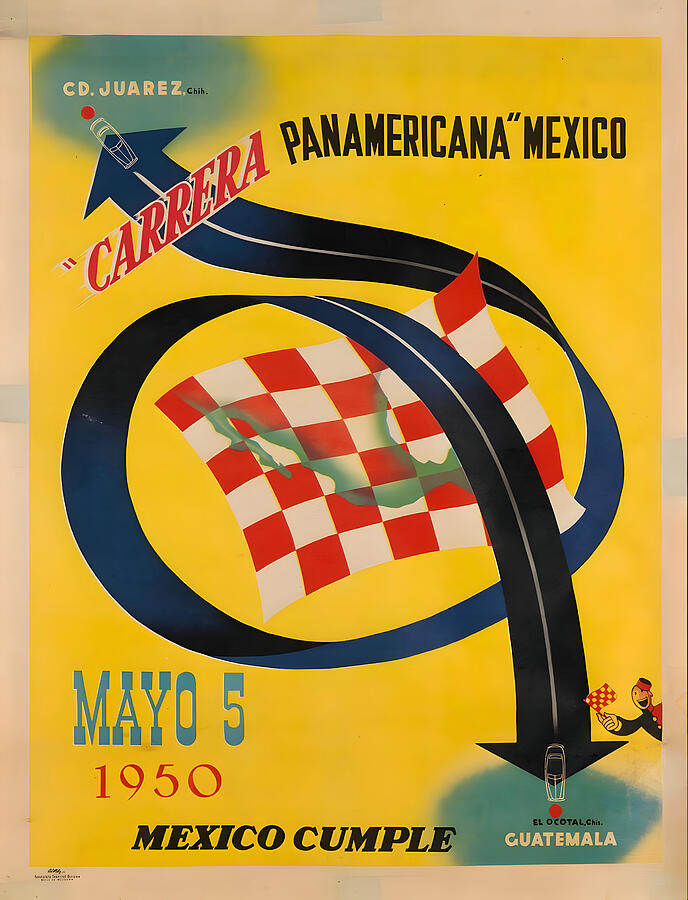
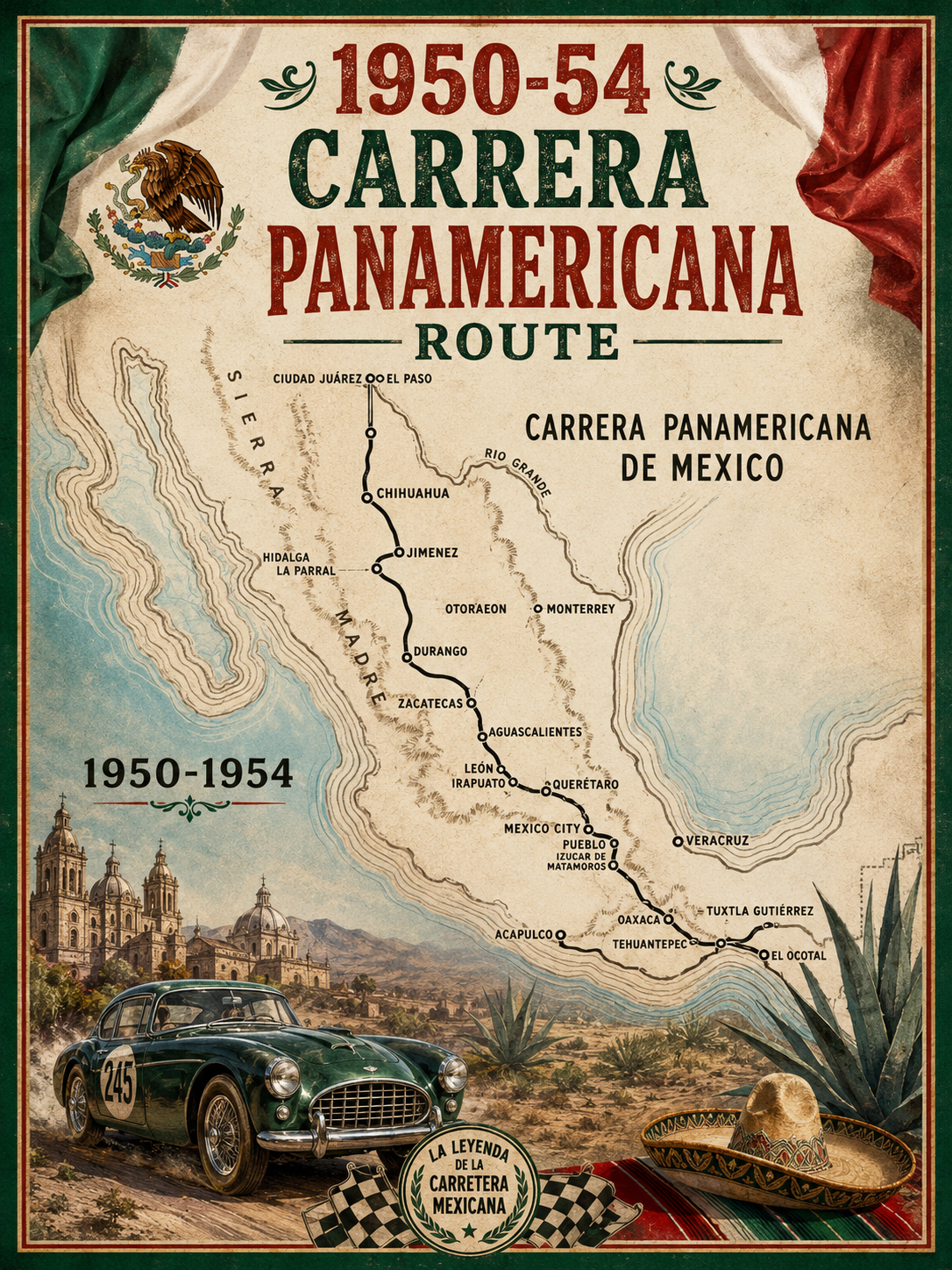
The Inaugural Carrera Panamericana poster showed the route from Ciudad Juarez, Chihuahua on the US border to El Ocotal, Chiapas on the Guatemala border.
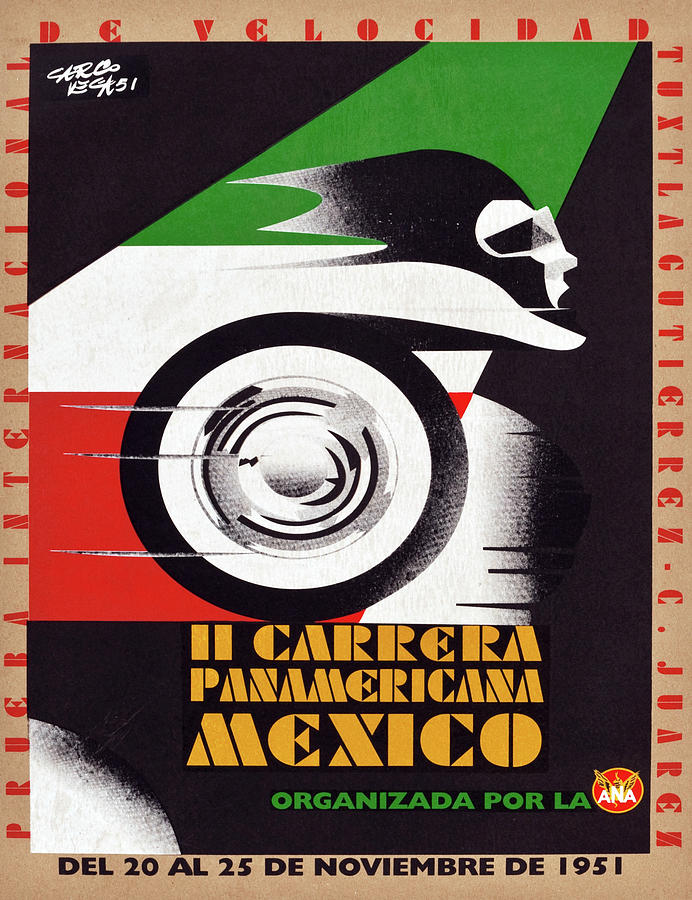
1951 II Carrera Panamericana
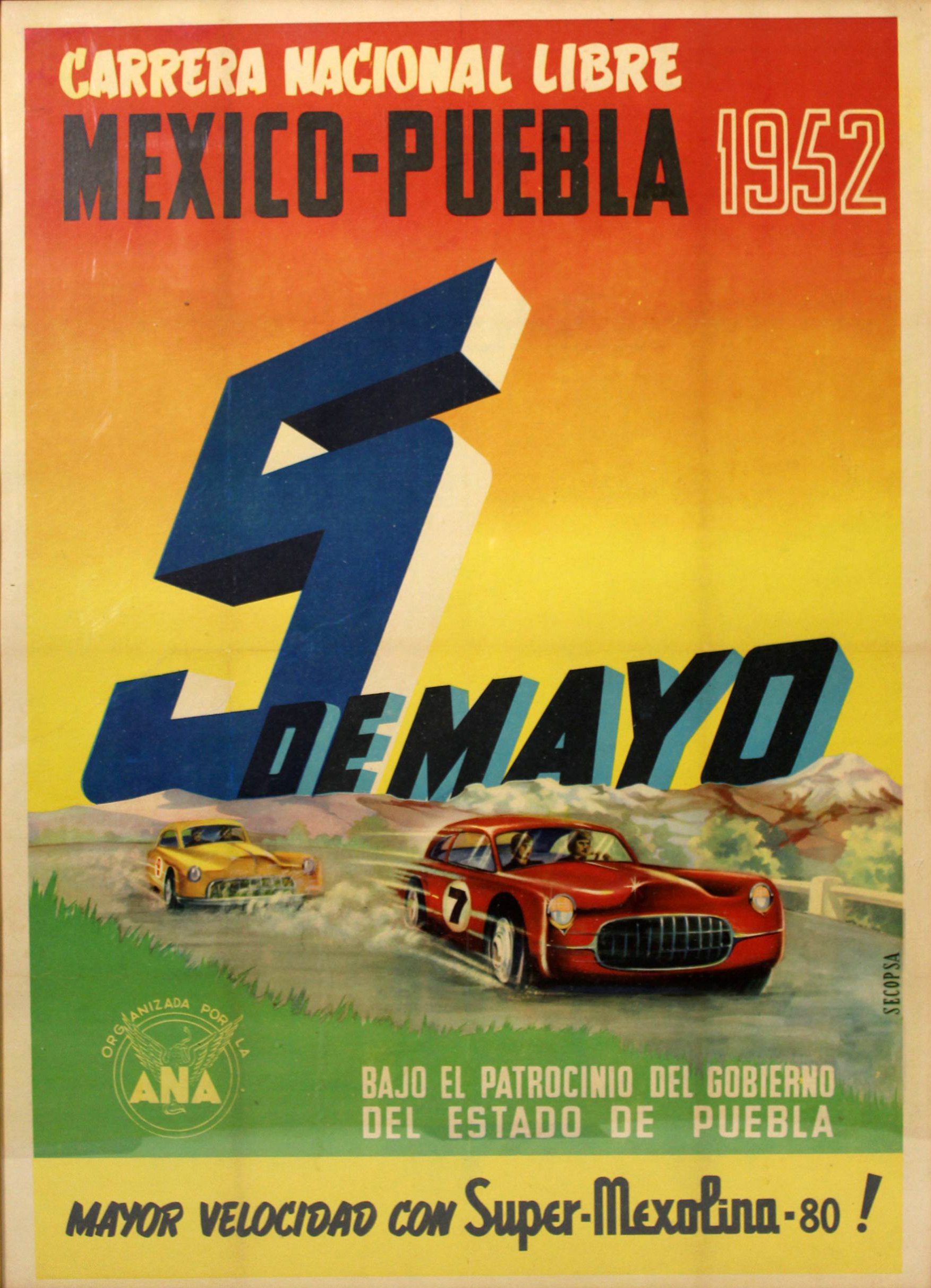
1952 III Carrera Panamericana Highlights
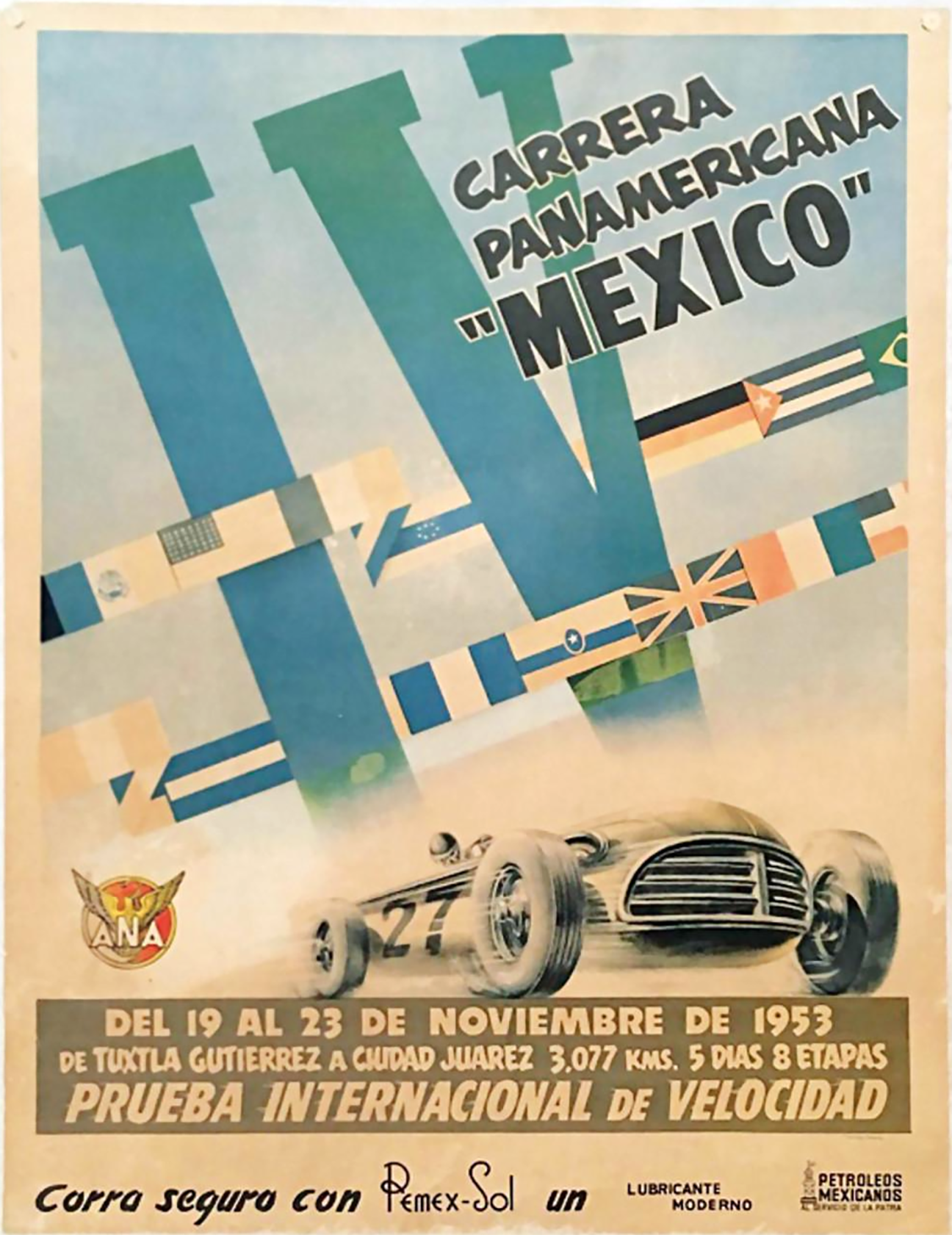
1953 IV Carrera Panamericana
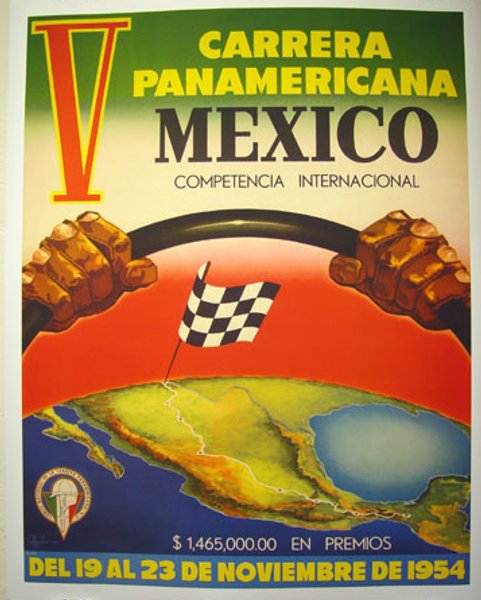
1954 V Carrera Panamericana
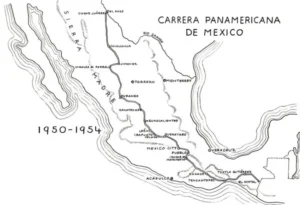
1950-54 Carrera Panamericana Route Map. From Ciudad Juarez, Chihuahua (on the USA border) to El Ocotal, Chiapas (on the Guatemala border).

1950 I Carrera Panamericana Highlights

The first race ran from north to south beginning in Ciudad Juárez, Chihuahua, across the international border from El Paso, Texas, and finishing in Ciudad Cuauhtémoc, Chiapas (formerly known as El Ocotal) on the Guatemala–Mexico border opposite from La Mesilla, Guatemala. The event comprised nine “legs” or stage. At least one leg was run each day for five consecutive days. The elevation changes were significant: from 328 feet (100 m) to 10,482 feet (3,195 m) above sea level, requiring among other modifications the rejetting of carburetors to cope with thinner air. Most of the race was run between 5,000 feet (1,500 m) and 8,000 feet (2,400 m).

1950 Carrera Panamericana first issue #194

The first four places were won by American cars and American drivers. The winner, Hershel McGriff, drove an Oldsmobile 88 at an average speed of 142 km/h (88 mph). The car cost McGriff and his partners only $1,900, when the winner’s purse was 150,000 pesos (around $17,200 U.S. dollars). Though less powerful than its big Lincoln and Cadillac competitors, the car was substantially lighter. This meant that it would eventually pull away from them on the steep, winding course. The car’s light weight gave it another advantage: it was much easier to stop, meaning that McGriff finished the race on his original brake shoes when the big cars were re-shoeing every night. This was important because neither McGriff nor his co-driver were capable of even basic car maintenance. McGriff also noted that the control afforded by his manual gearbox gave him a significant advantage the last day on the gravel roads in Chiapas, when he finally passed the Cadillac leading the race. The final miles to the finish were run without oil due to bottoming out the oil pans leaving the engine smoking and rattling to the checkered flag. The best placed European car was an Alfa Romeo sedan driven by Italian driver, Felice Bonetto. The race, however, set its bloody and dangerous reputation right from the start: 4 people (3 competitors, 1 spectator) were killed during this event.

Motor Trend magazine celebrated the Carerra Panamericana with this cover illustrartion. The cover artwork features a 1950 Carrera plate with the slogan.

1950 Newsreel Footage

Original grainy footage shows the first Carrera Panamericana race with stock cars winding through Mexican small towns from Chihuahua to Chiapas. 

Credit: YouTube Iberofon

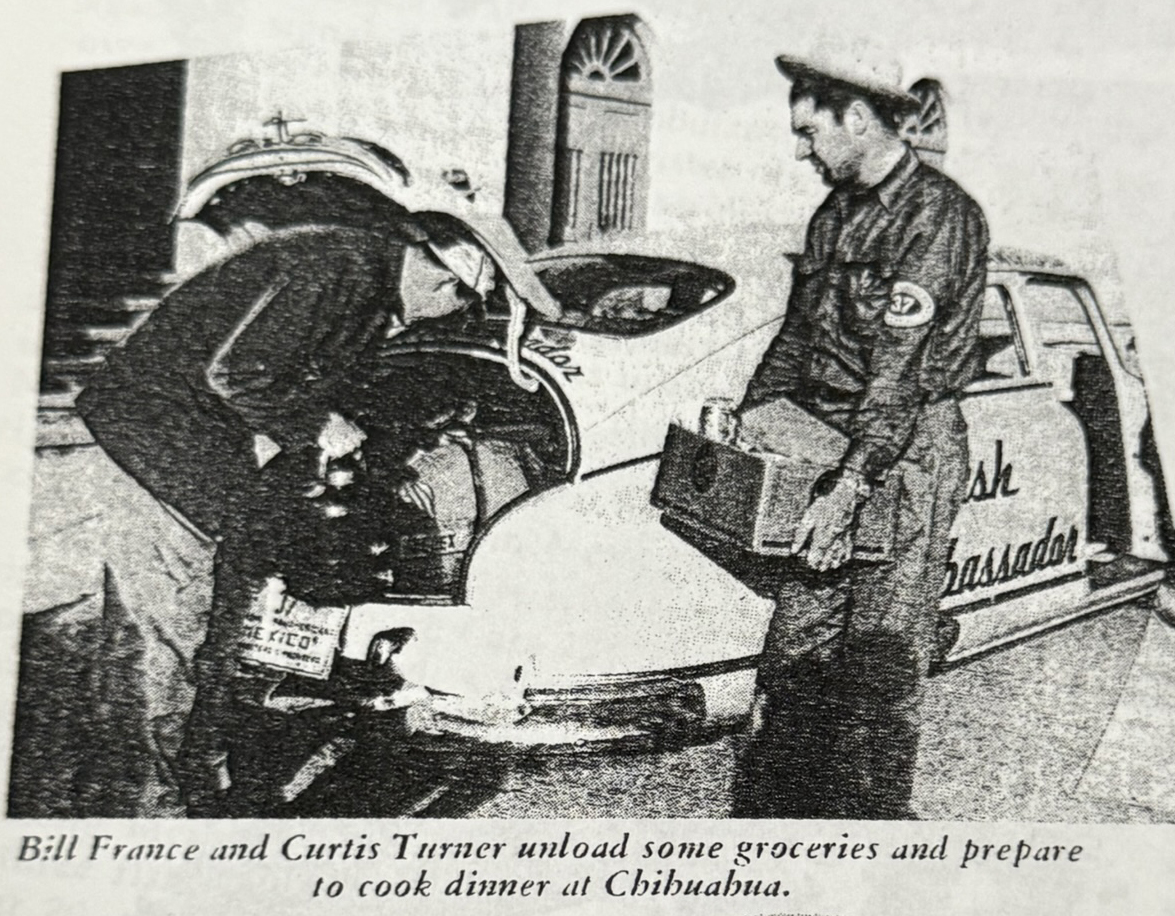
Panamericana 37

1951 II Carrera Panamericana Highlights

1951 II Carrera Panamericana #198

1952 III Carrera Panamericana Highlights

1952 III Carrera Americana

1953 IV Carrera Panamericana Highlights

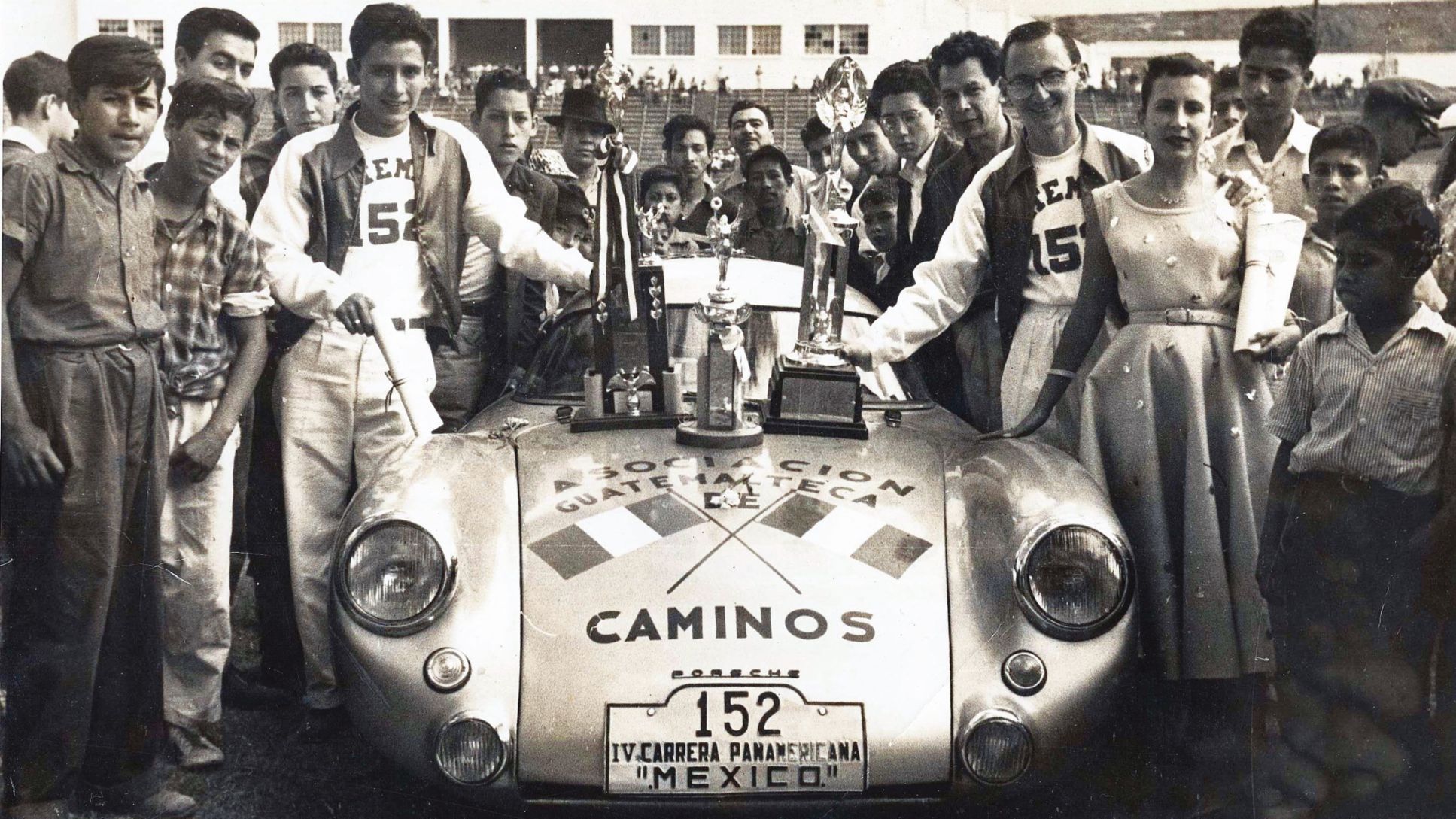
1953 IV Carrera Panamericana, #152

Big smiles from the Guatemalan race team for Porsche #152 in the 1953 race.  The car carries the pride of the Asociacion Guatemalteca de Caminos, or the Guatemalan Roads Association.  We presume the drivers are holding the tropies and wearing their Guatemalteca 152 shirts.

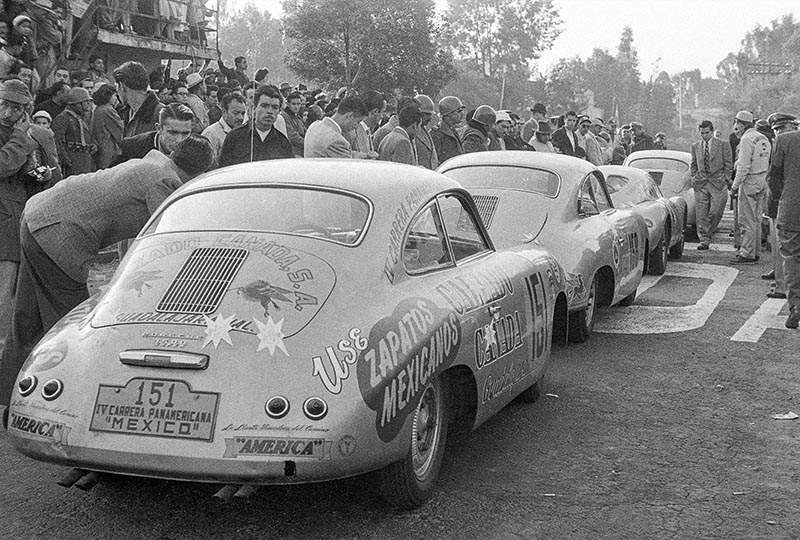
In 1952, the IV annual carrera featured a lighweight Porsche from Canada. Zado Canada, S.A. was the entrant and the team appeared to promote “Use Zapatos Mexicanos”, or Wear Mexican shoes.  This was an important event, and a suit and tie was the outfit for the day.

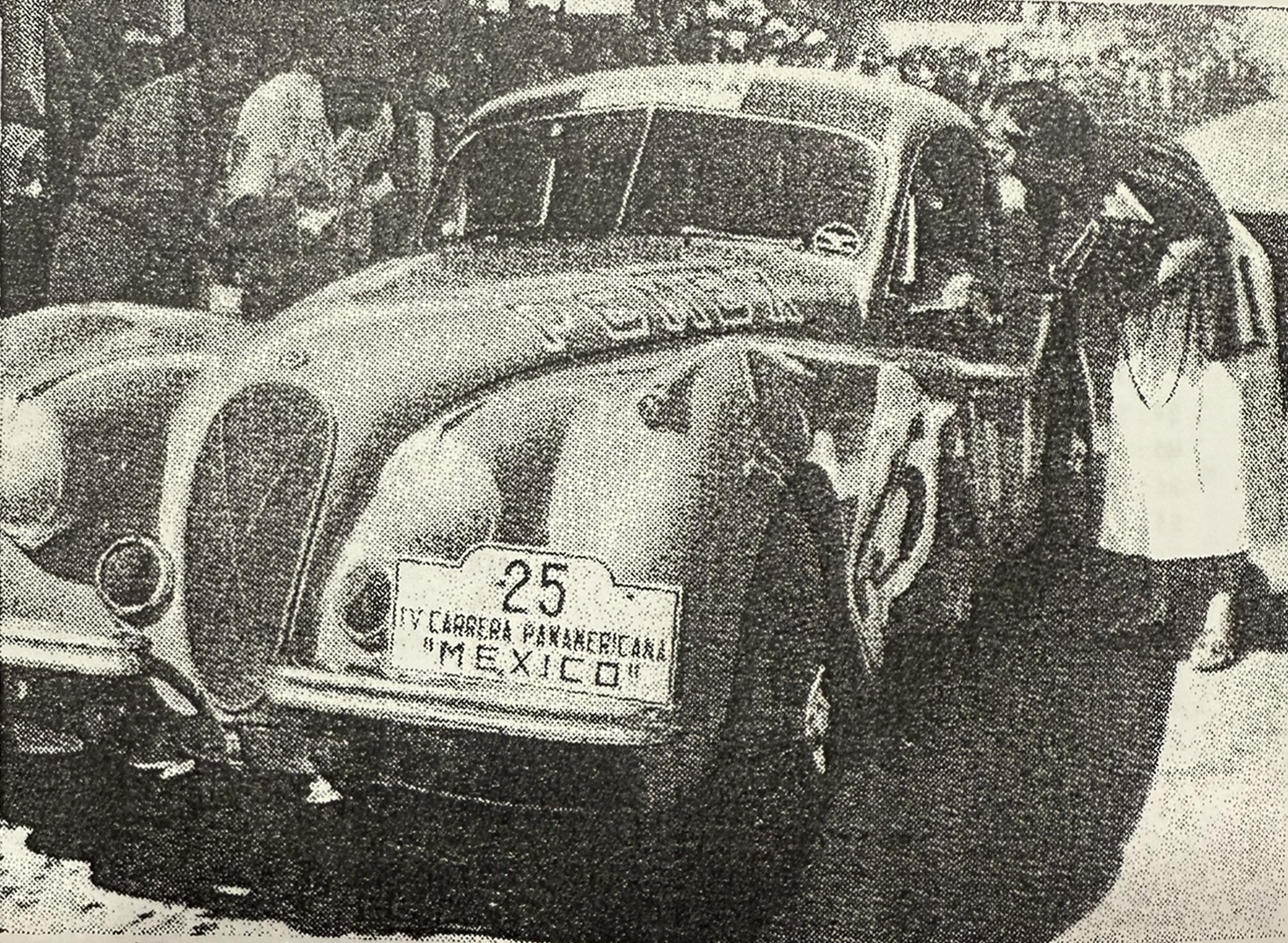
Panamericana 25
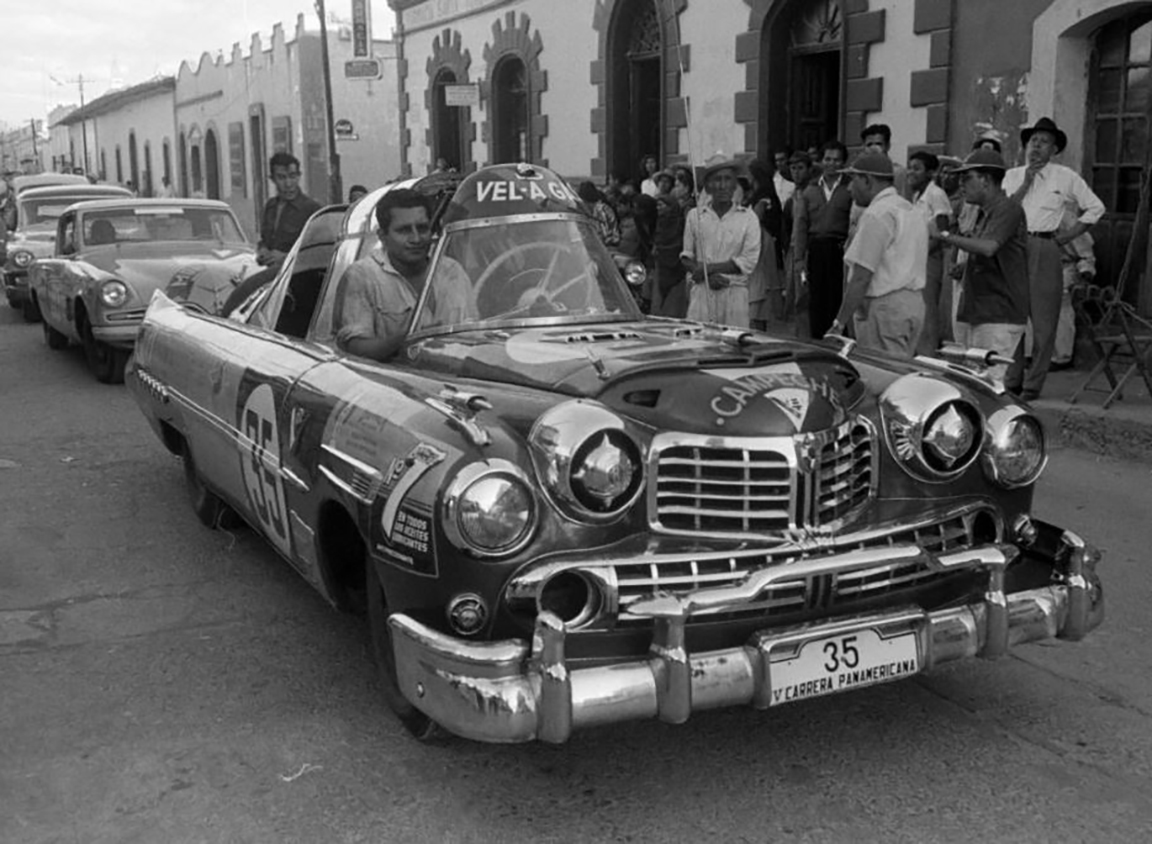
1954 IV Carrera Panamericana, #35
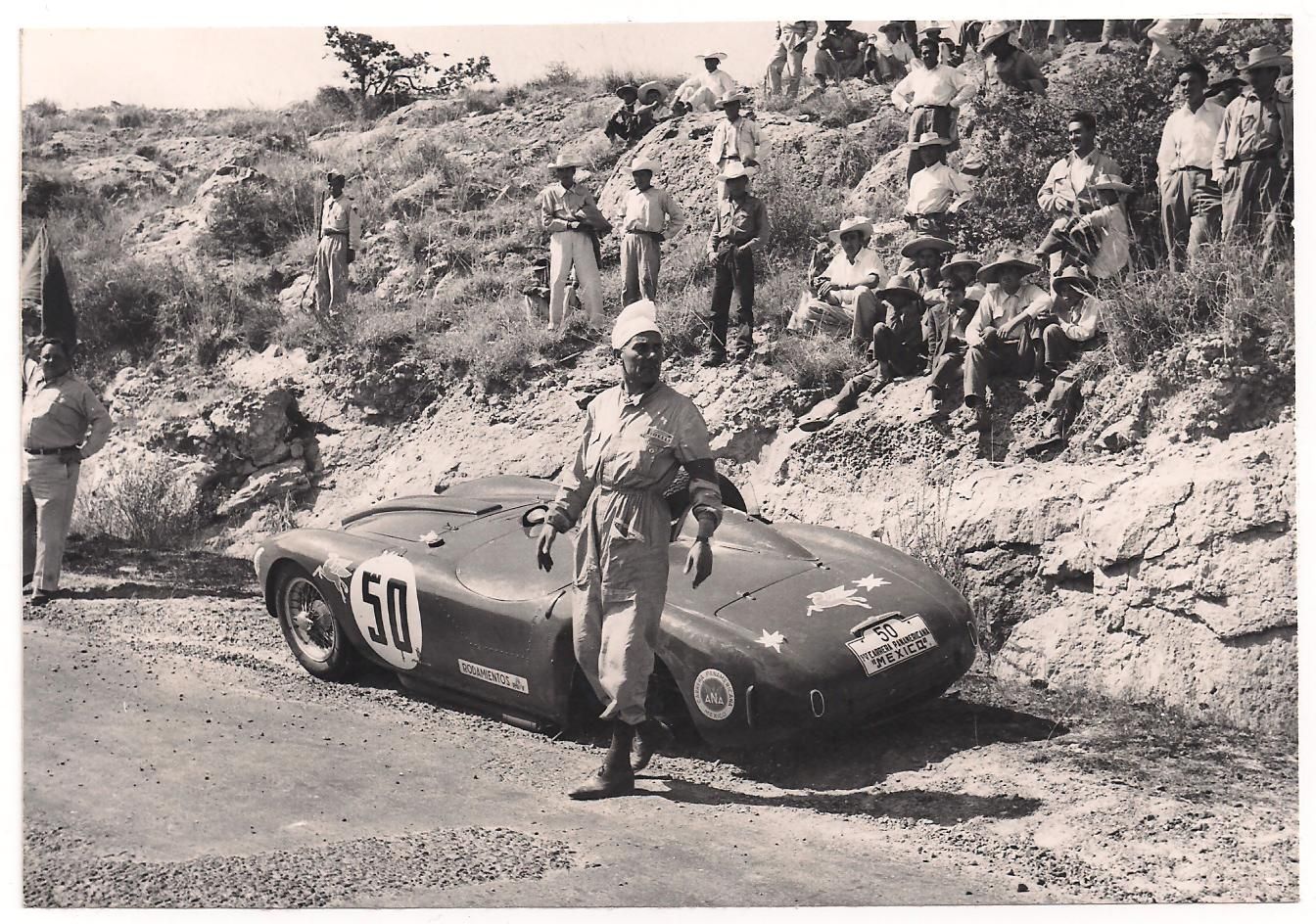
Panamericana 50

1954 V Carrera Panamericana Highlights

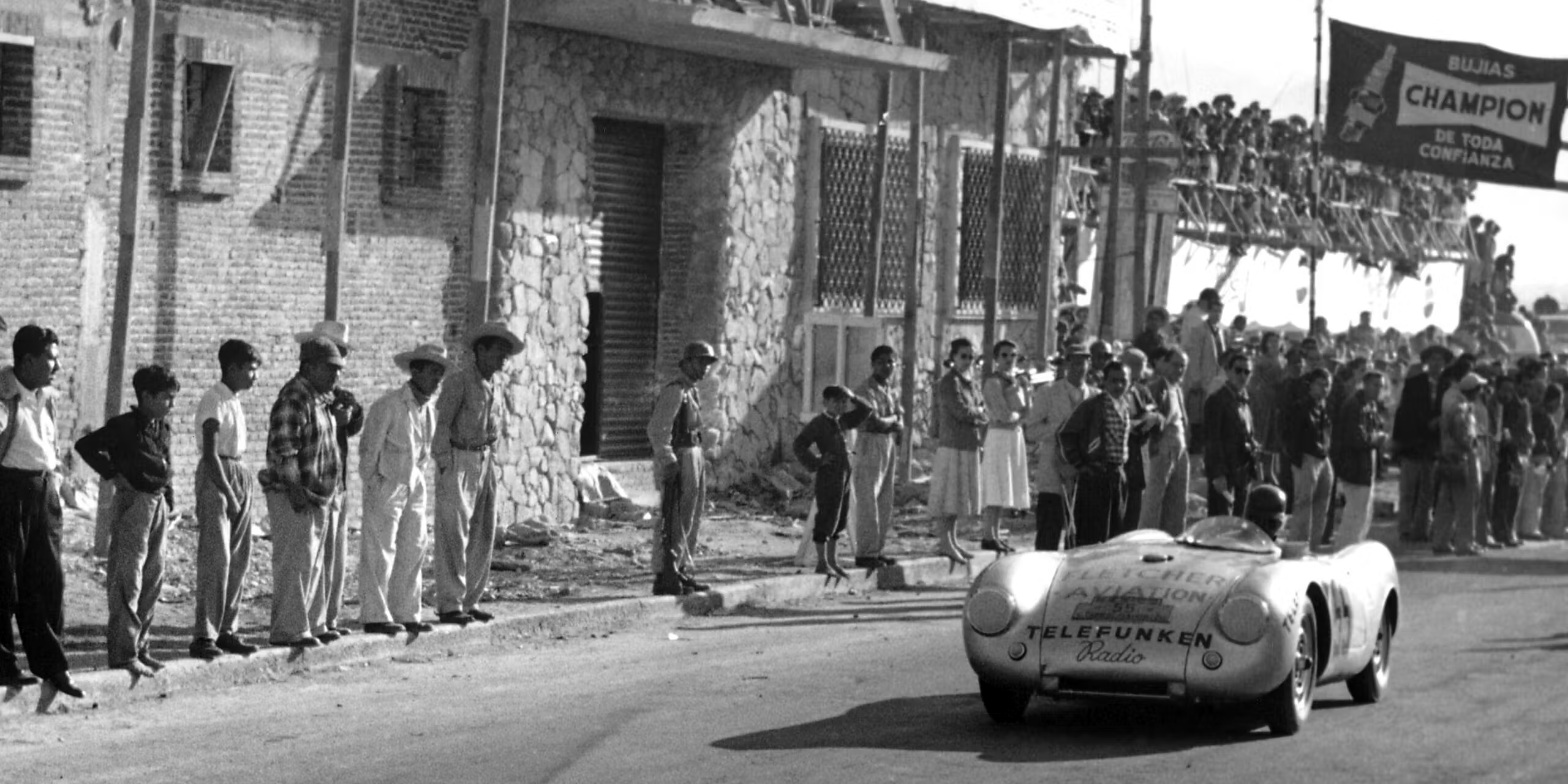
1954 V Carerra Panamericana, #55
1954 V Carerra Panamericana, #56