Sonora

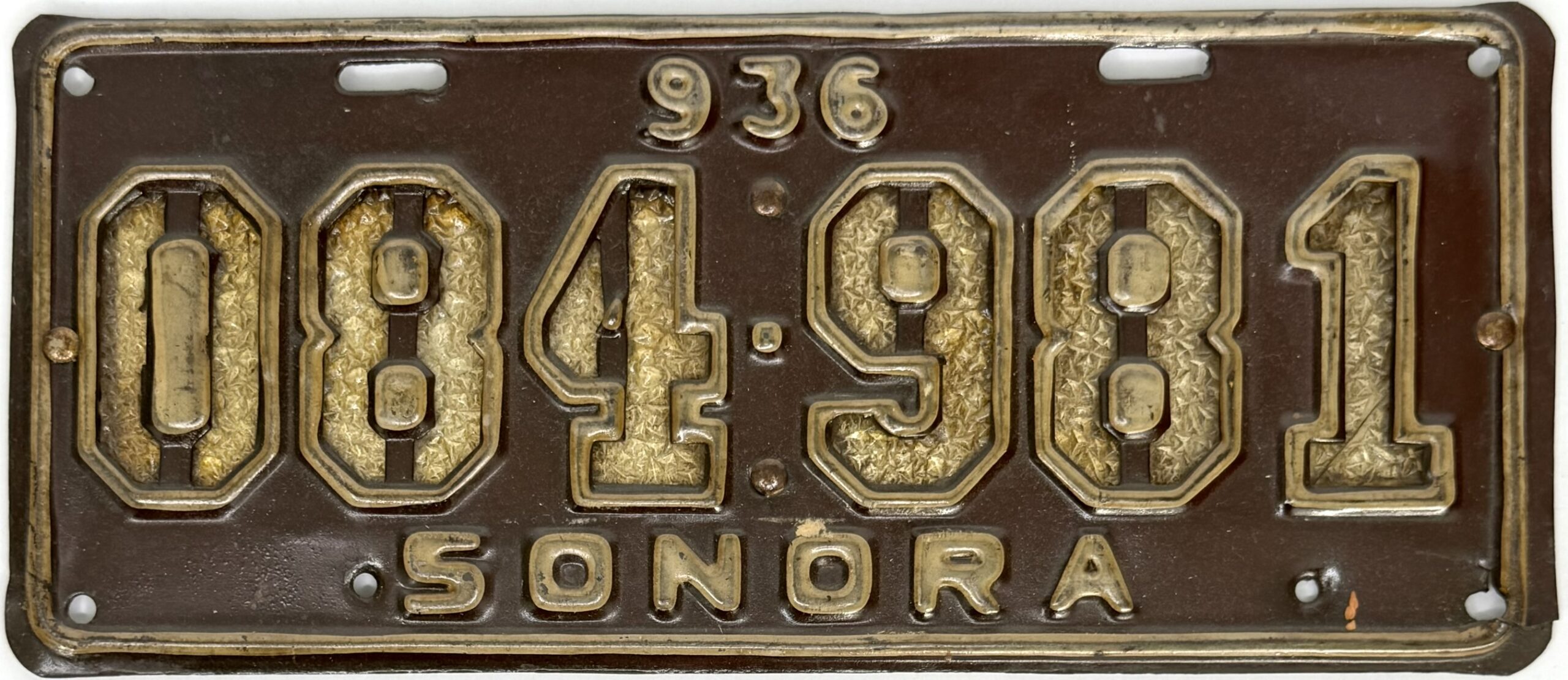
1936 Sonora Reflectorized

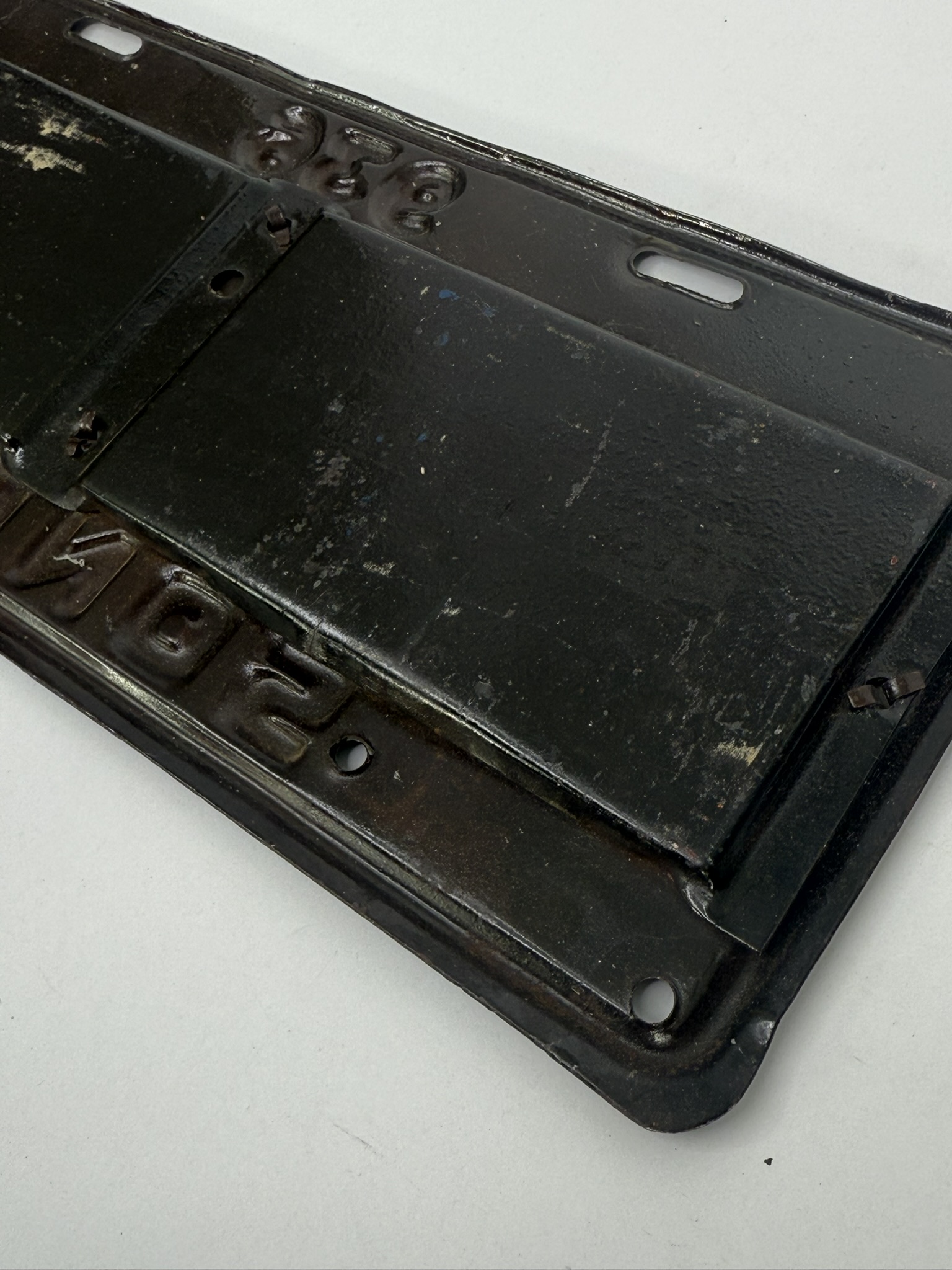
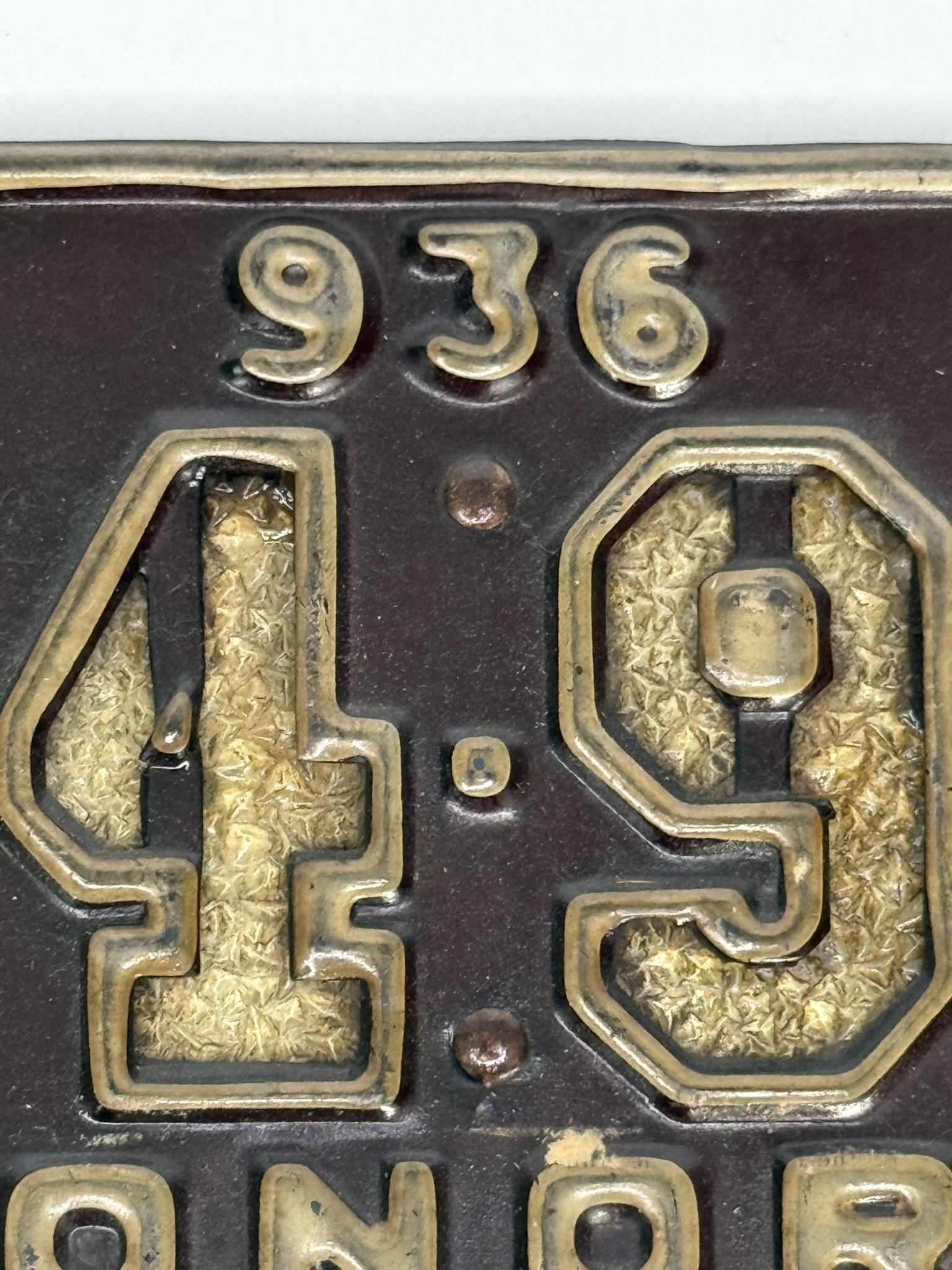
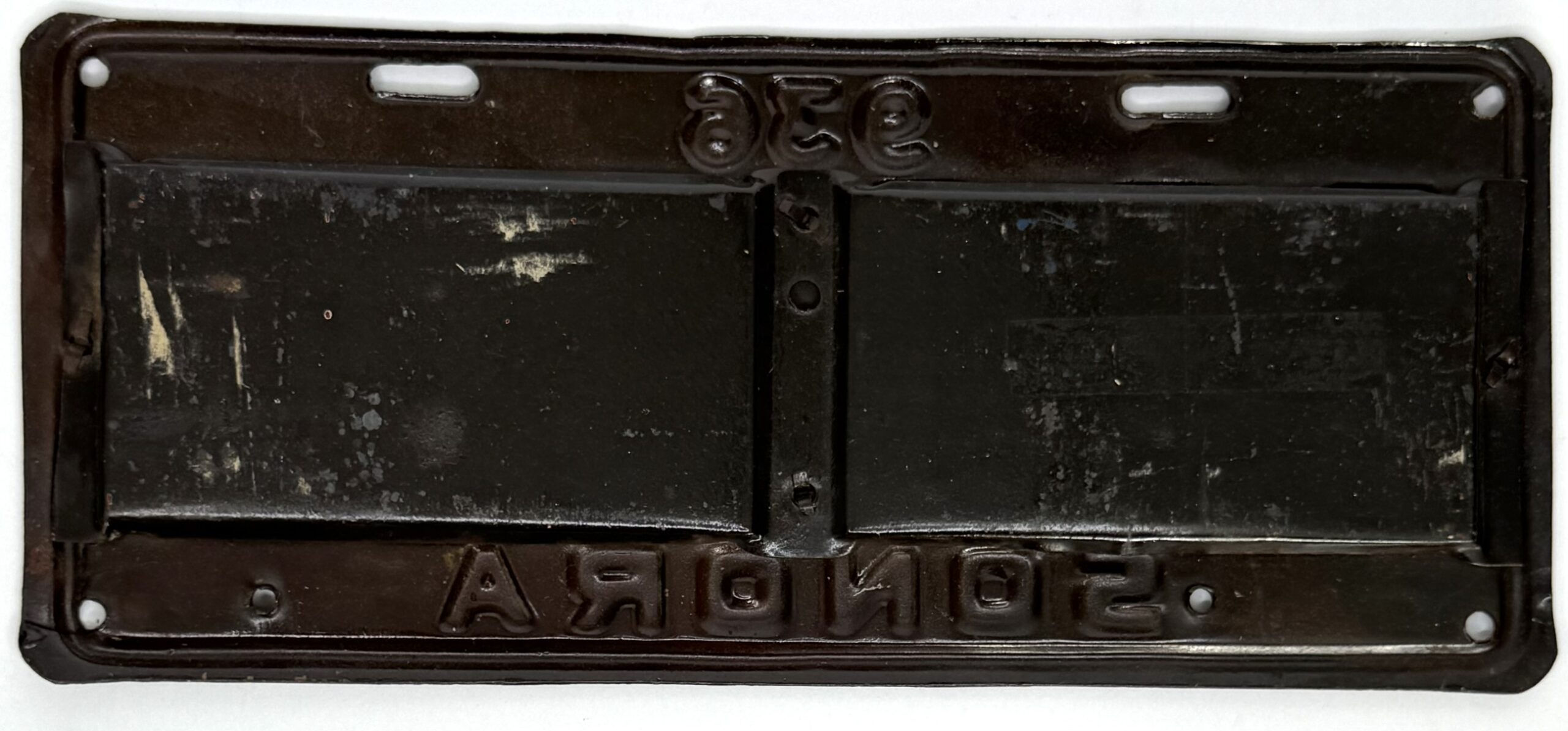
Another extraordinary example of Mexico’s remarkable experiment with advanced license plate design technolgy and road safety.  This complex regisation has a normal embossed rectangular license plate, but in this case the registration numbers are cut out as a stencil.  Great care was done to preserve some standalone elements in the numbers, like the dot in the center of the “4” and the “9”.  Then th plate had a steel box compartment riveted to the plate to allow for the separate glass bead sheet to be inserted behind the stencilled openings. 

In 1936, most but not all Mexico states created this design, but there are several distinct types of manufacture

Type 1: Taller rectangular plate with “1936” date (some with yellow Pat. Pending decal)

Type 2: Shorter rectangular plate with “936” date. 

Type 3: No new reflectorized plate. Instead, a small vertical “1936” tab used over 1935 plate.  

1936 Sonora
1936 Sonora
1936 Sonora. 3-D view to show the raised compartment on the reverse of the plate, designed to hold the glass bead insert to
Close-up on the stencilled cutouts in front to allow the glass bead insert behind to provide reflectorization, resulting in safer driving, especially at night.

Mexico Border Oficial Plates

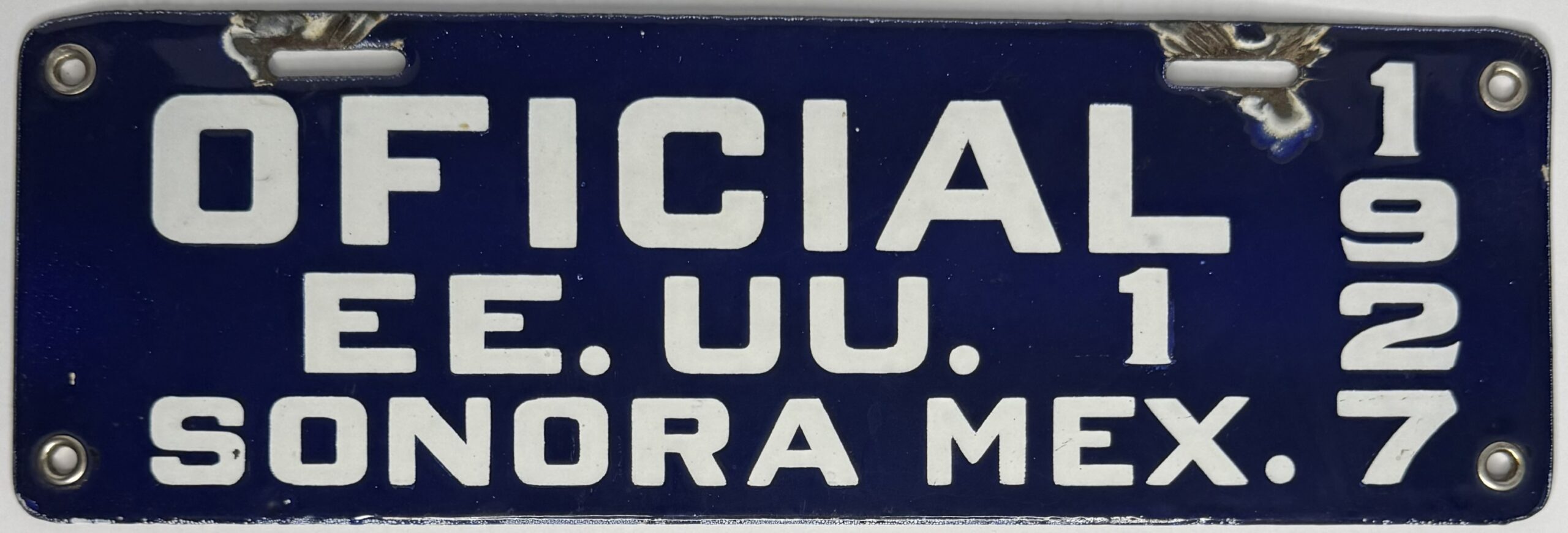
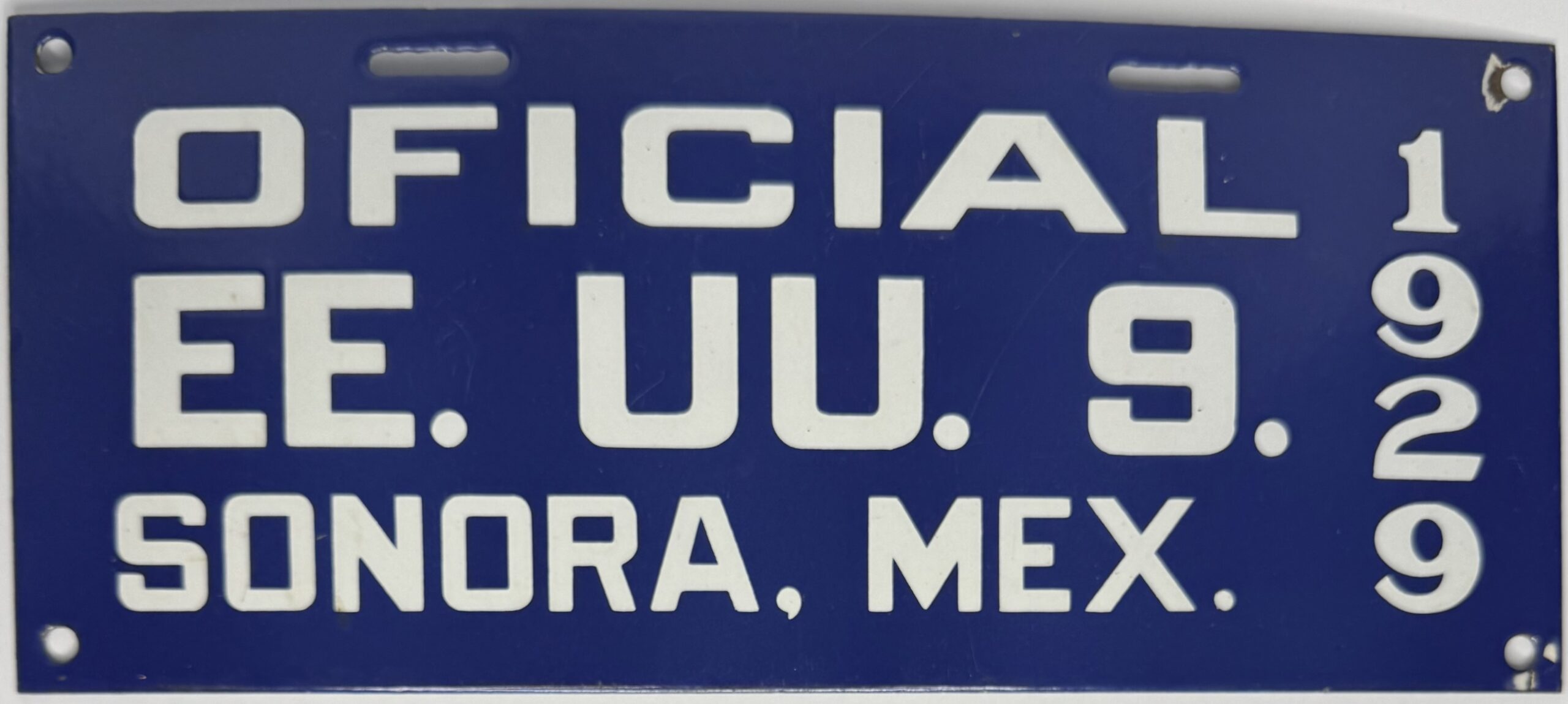
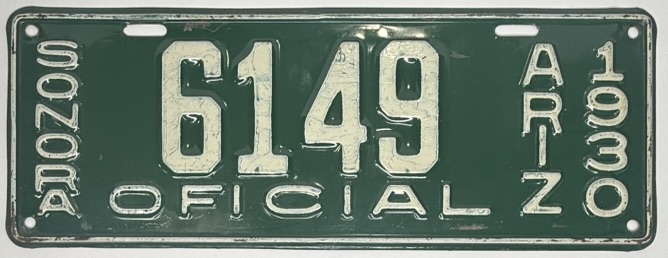
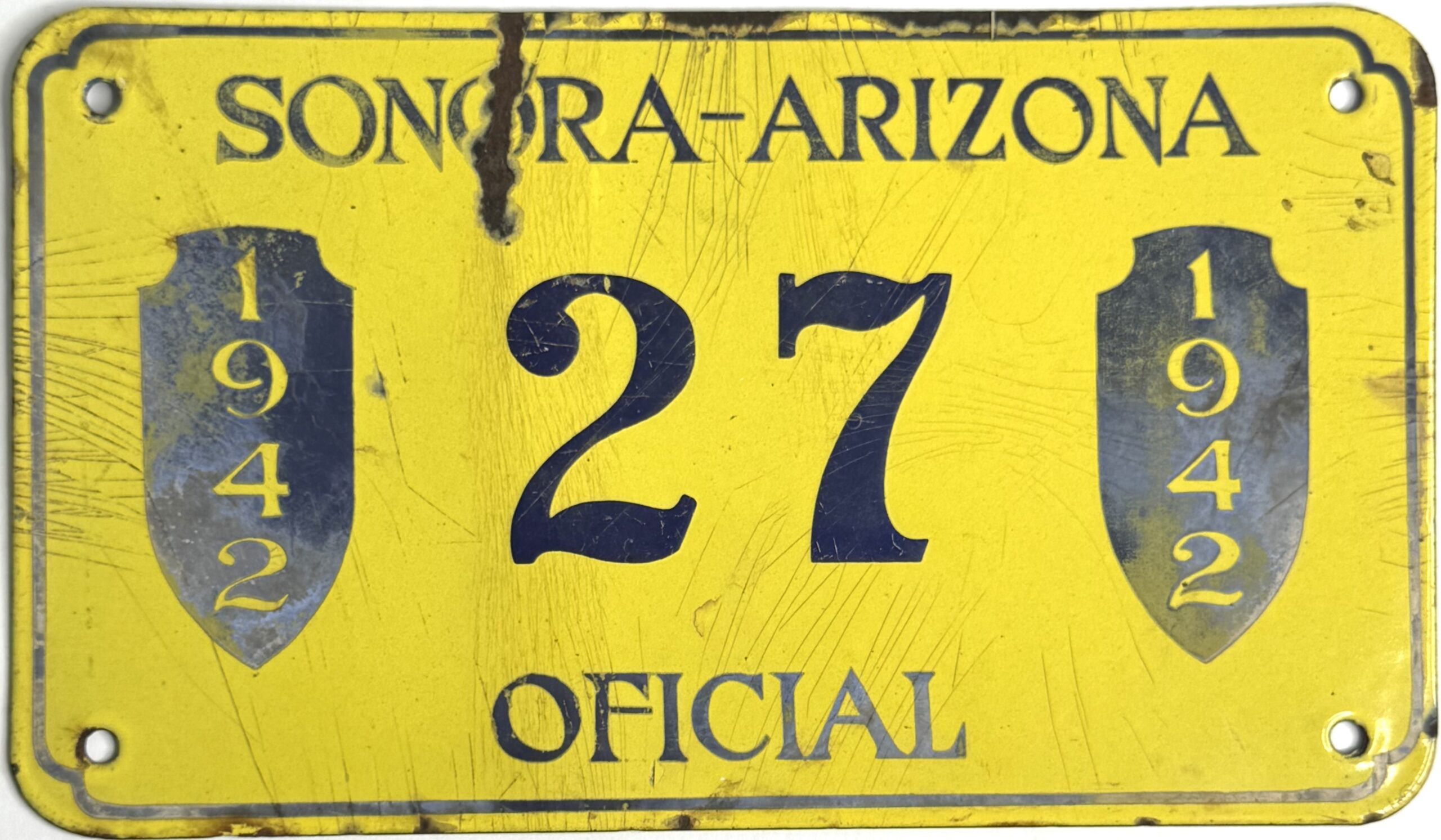
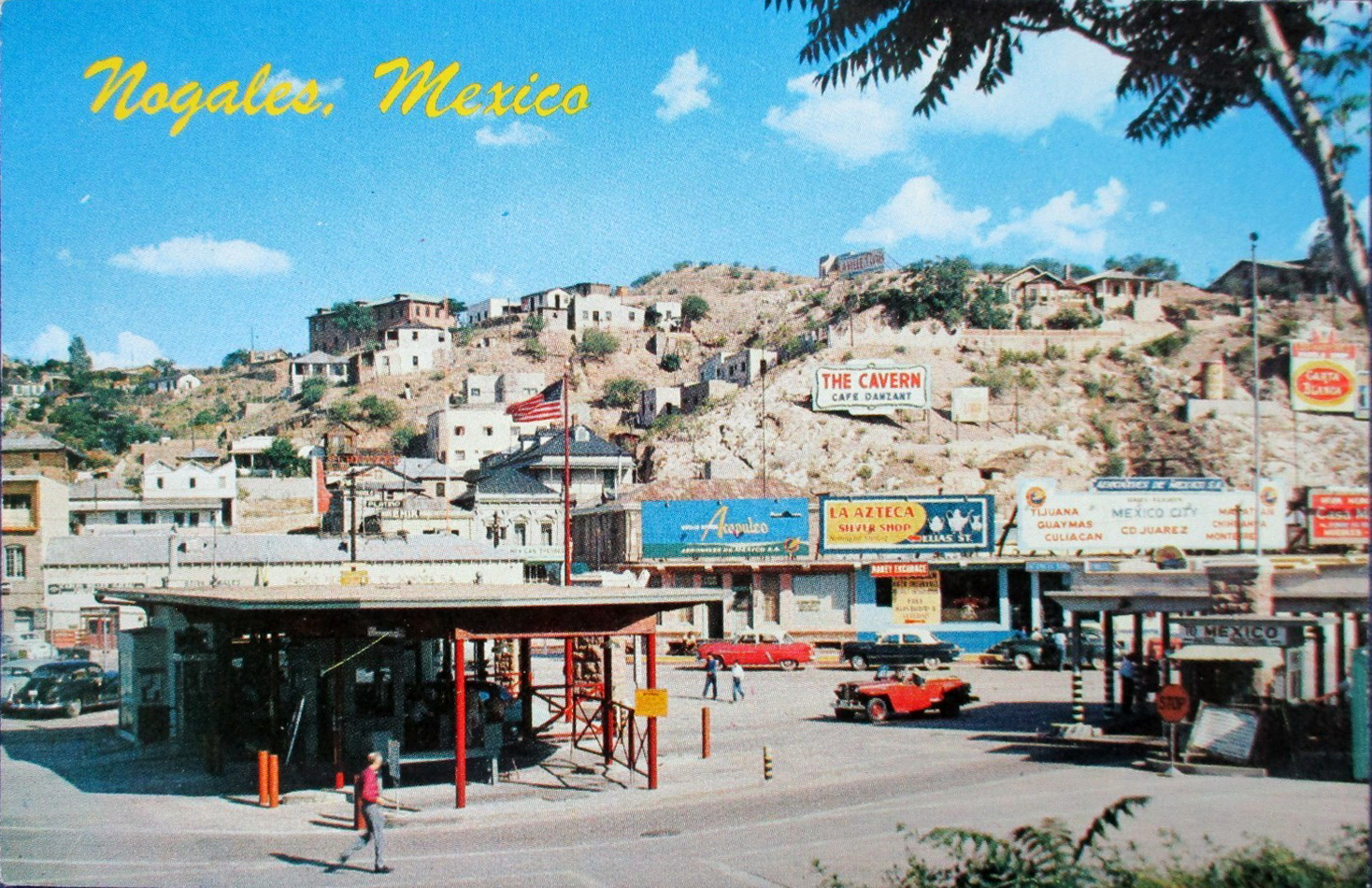
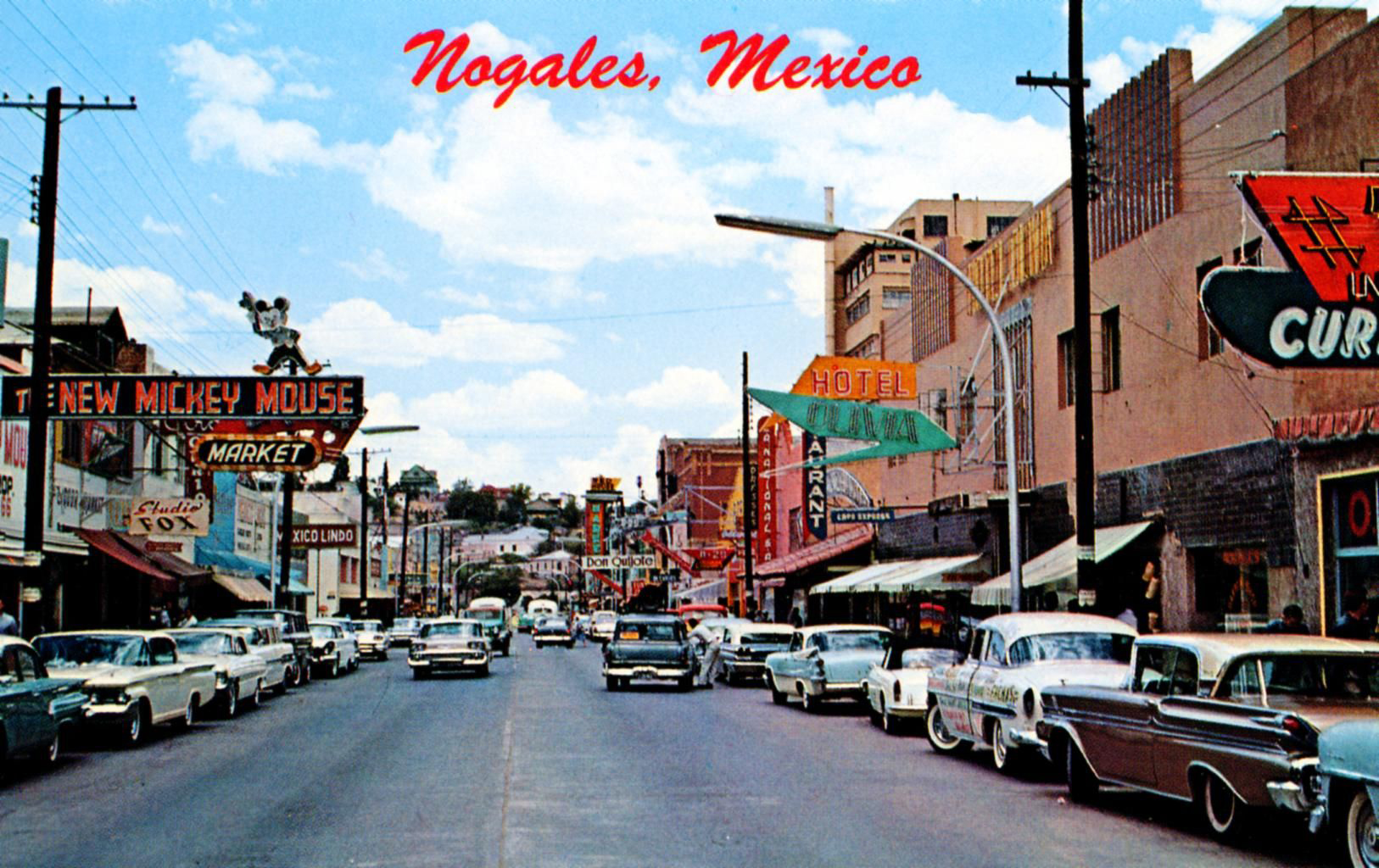
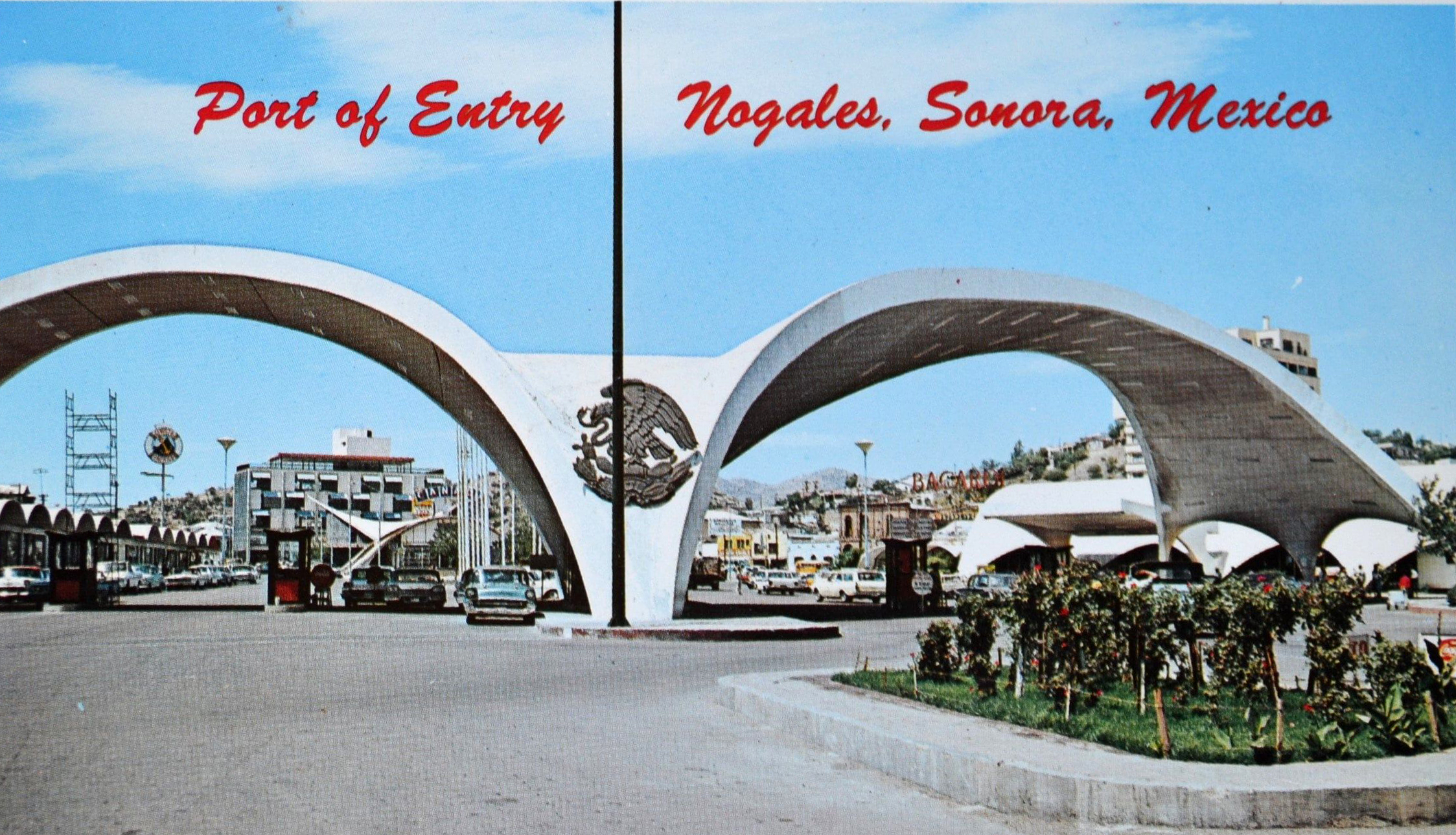
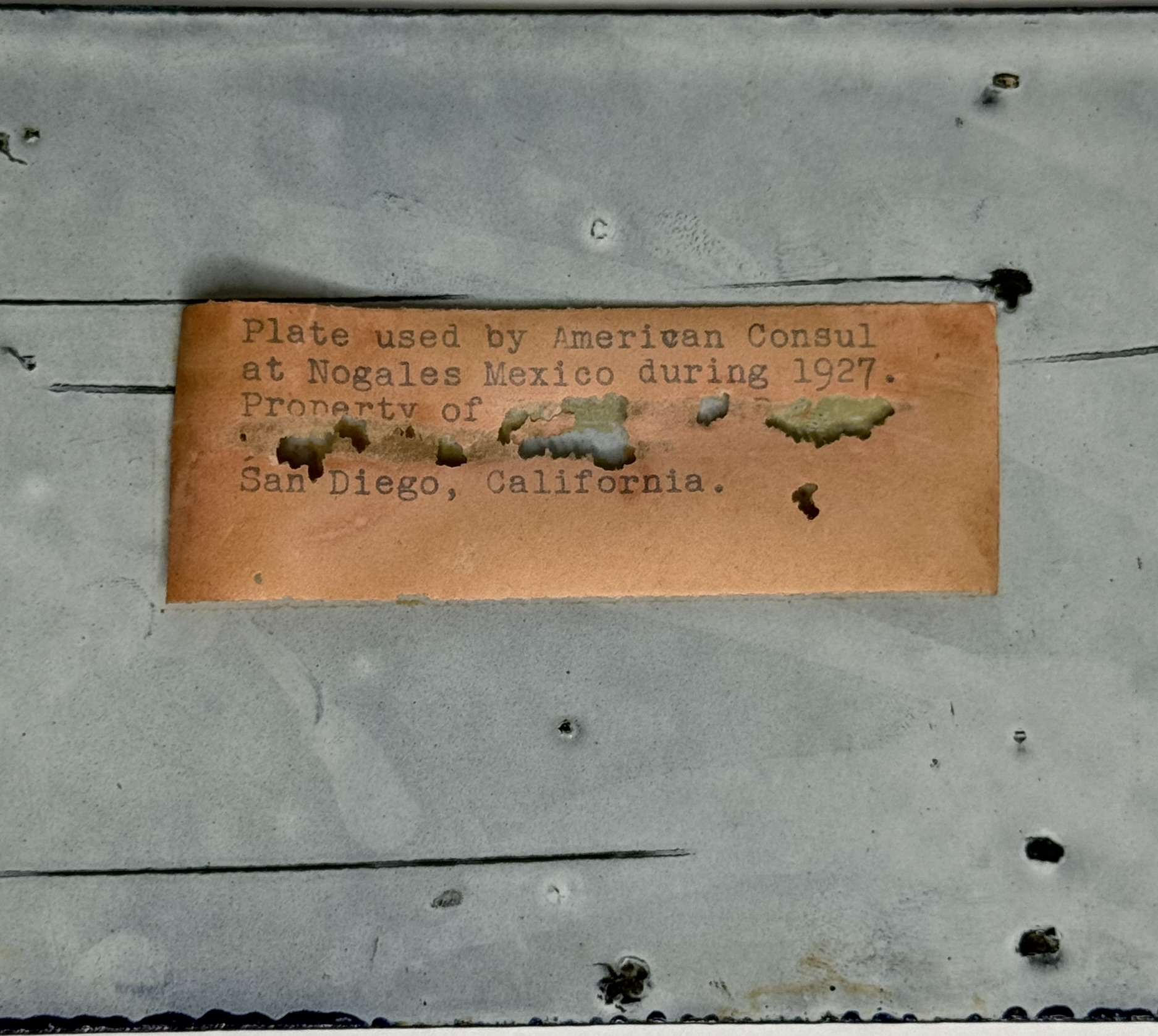
Sonora shares a long border with Arizona (and a small section with New Mexico USA).  The twin cities of Nogales, one north and the other south of the border has long been the home of border operations and the majority of cross border traffic between the two nations.  Starting as early as 1927 (shown here) and issued through 1959, there were a wide variety of binational plates issues by both Sonora and Arizona, presumable for consular staff and other government officials. 

1927 Sonora Oficial. EE.UU.
1929 Sonora. Oficial EE.UU. #9
Reverse of 1927 Sonora EE.UU. plate. Presumably issued to Armand Jessup in San Diego
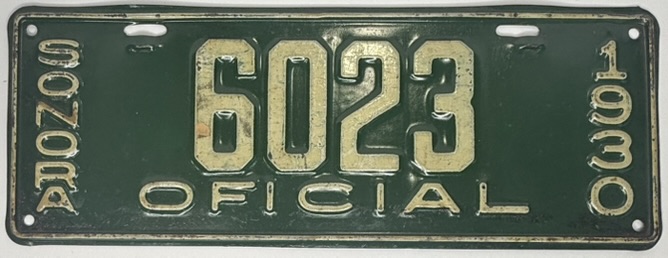
1930 Sonora Oficial #6023
1930 Sonora Arizona Oficial
Sonora-Arizona porcelain border oficial issue.
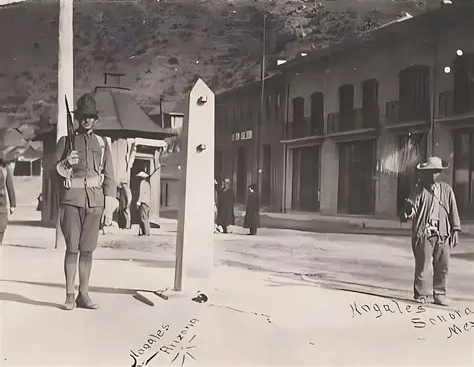
1913 Sonora-Arizona border marker in Nogales.
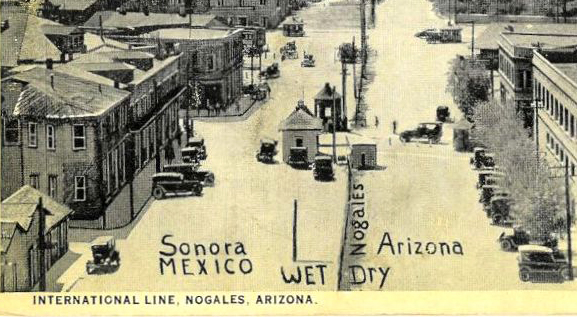
1920s Nogales, clearly during the U.S. Government "Prohibition" on alcohol sales and consumption, hence "dry". In Mexico, spirits continued to be legal, hence "wet".
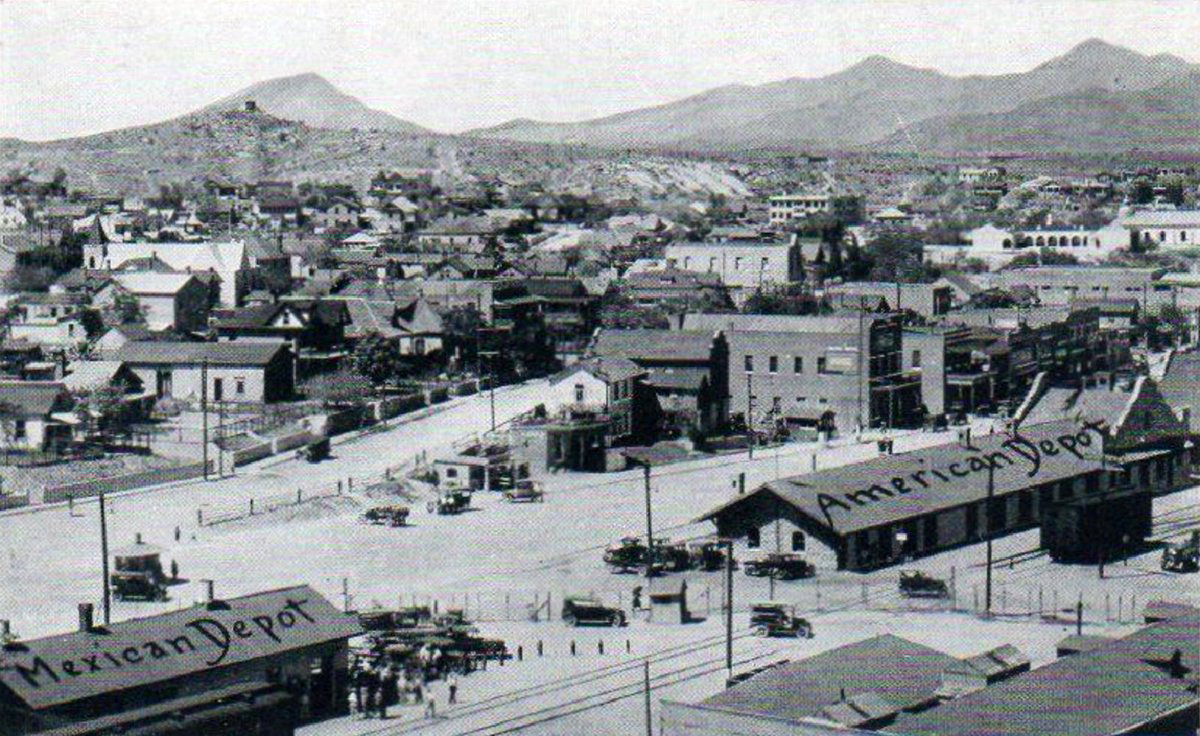
In the early 1900s, each Nogales had their own train depot on their side of the Sonora-Arizona border.
Nogales Border
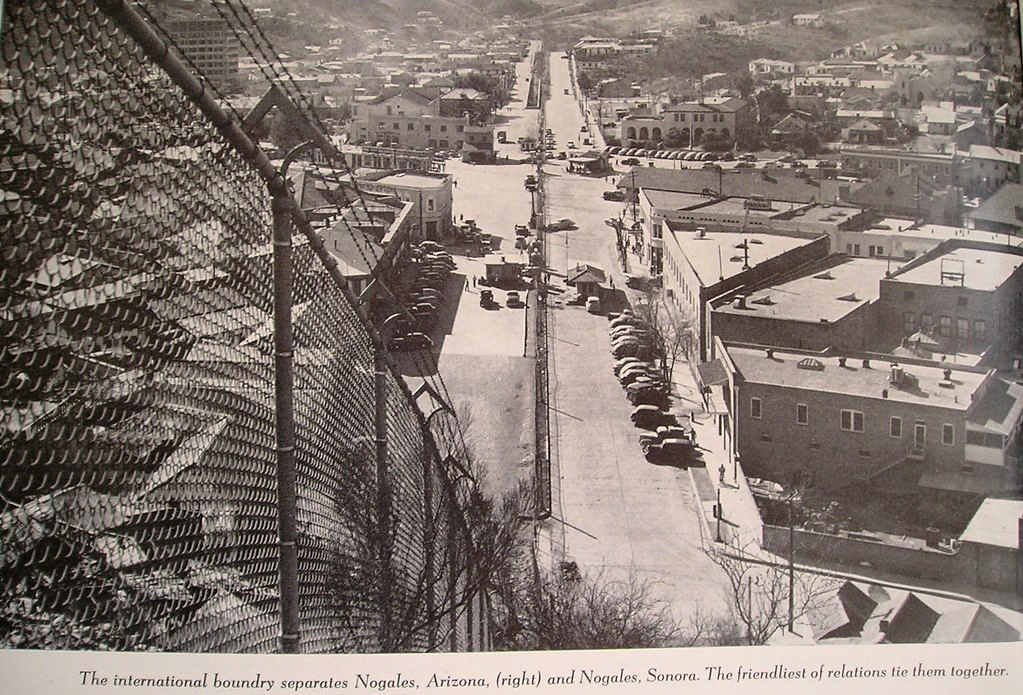
Nogales border during the late 1940s
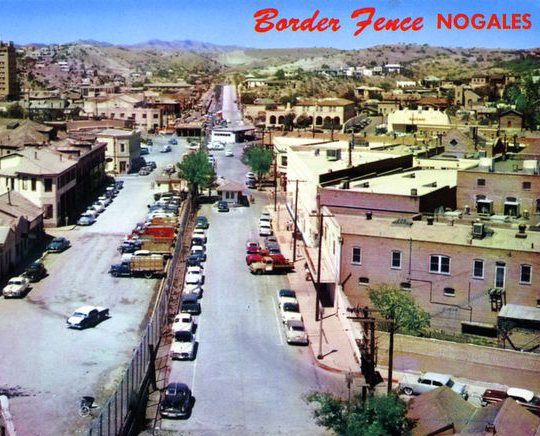
Busy 1960s street in Nogales, Sonora.
Nogales Port of Entry into Mexico.