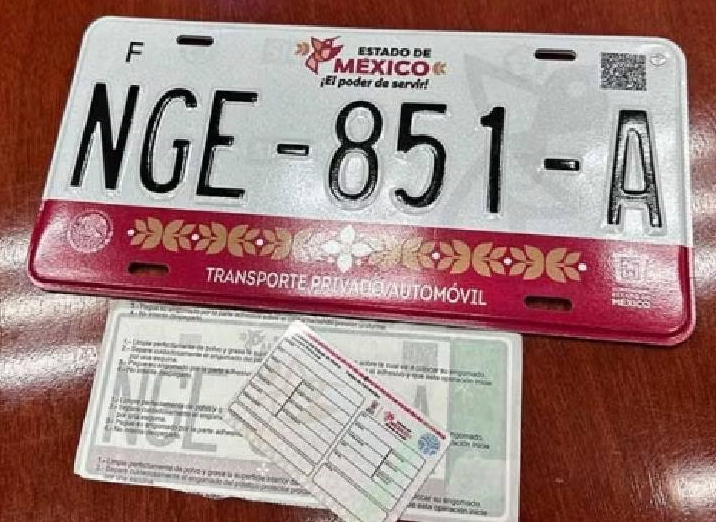
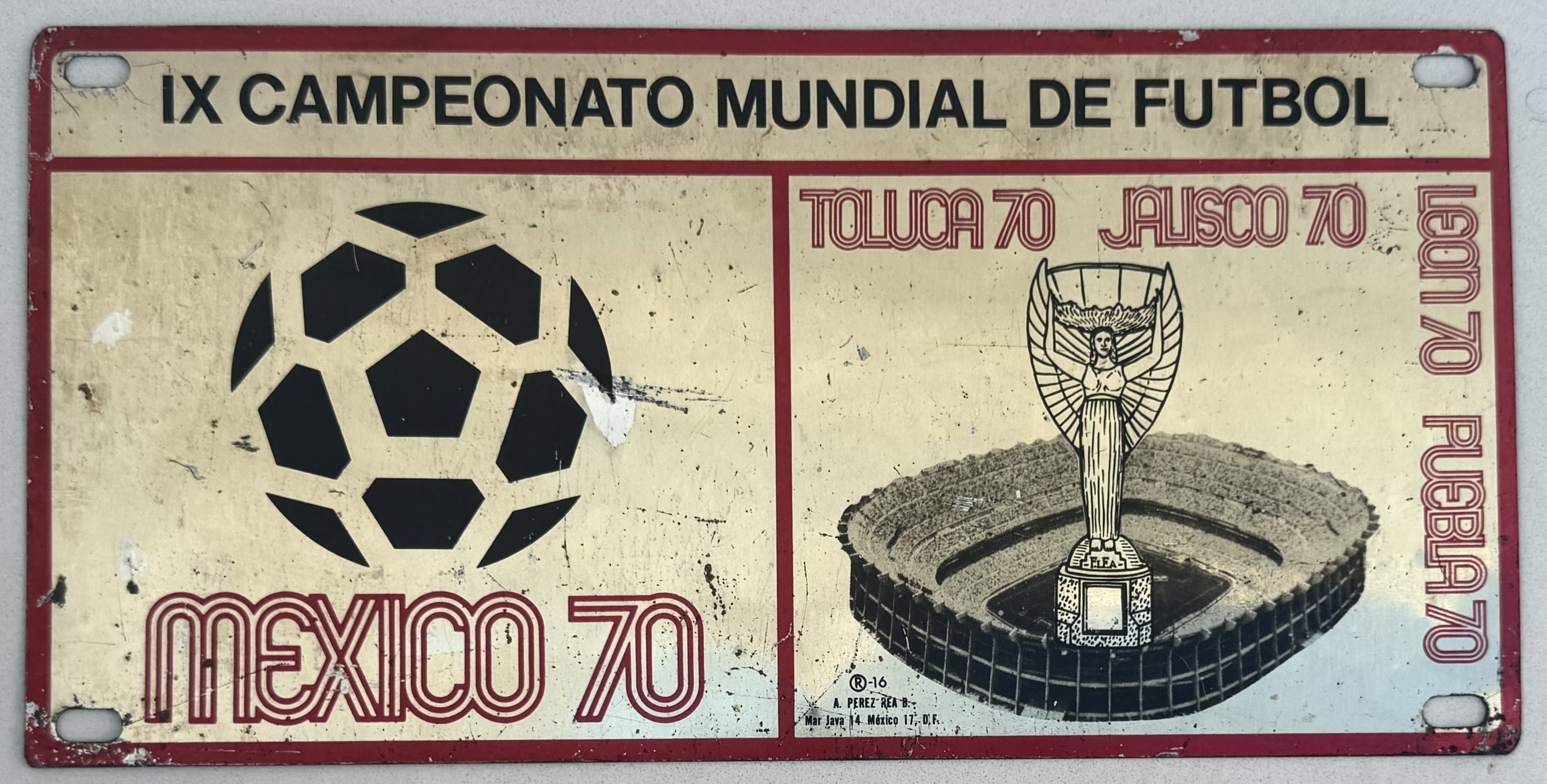
This commemorative booster plate celebrated the first time that Mexico hosted a World Cup tournament. The 1970 World Cup was the ninth edition of FIFA’s quadrennial international football championship for men’s senior national teams. Held from 31 May to 21 June in Mexico, it was the first time hosted in North America, and the first held outside Europe and South America.
In addition to Estadio Azteca in Mexico City, matches were held, as you can see on the booster plate, in four other venues: Toluca (Estado de Mexico), Jalisco, Leon (Guanajuato), and Puebla hosted matches. Teams representing 75 nations from all six populated continents entered the competition, and its qualification rounds began in May 1968. From this long process, fourteen teams qualified to join host nation Mexico and defending champions England in a 16-team final tournament. El Salvador, Israel and Morocco made their debut appearances at the final stage.
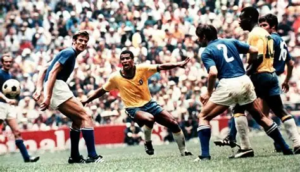
In the final, Brazil won 4–1 against Italy, another FIFA two-time champion. Brazil also overcame another two-time champion and South American champions Uruguay, by 3–1 in the semi-final. England, the defending FIFA champions, lost to Brazil in the group stage and were later eliminated by West Germany in the quarter-finals.
The win gave Brazil their third World Cup title, which allowed them to permanently keep the Jules Rimet Trophy, and a new trophy was introduced in 1974. The victorious team, led by Carlos Alberto and featuring players such as Pelé, Gérson, Jairzinho, Rivellino and Tostão, is often cited as the greatest football team of all time. They achieved a perfect record of wins in all six games in the finals, as well as winning all their qualifying fixtures.
Despite the altitude and high temperature, the finals featured attacking football which created an average goals per game record not since bettered by any subsequent World Cup Finals. With advancements in satellite communications, the 1970 Finals attracted a new record television audience for the FIFA World Cup as games were broadcast live around the world and, in a few cases, in color for the first time.