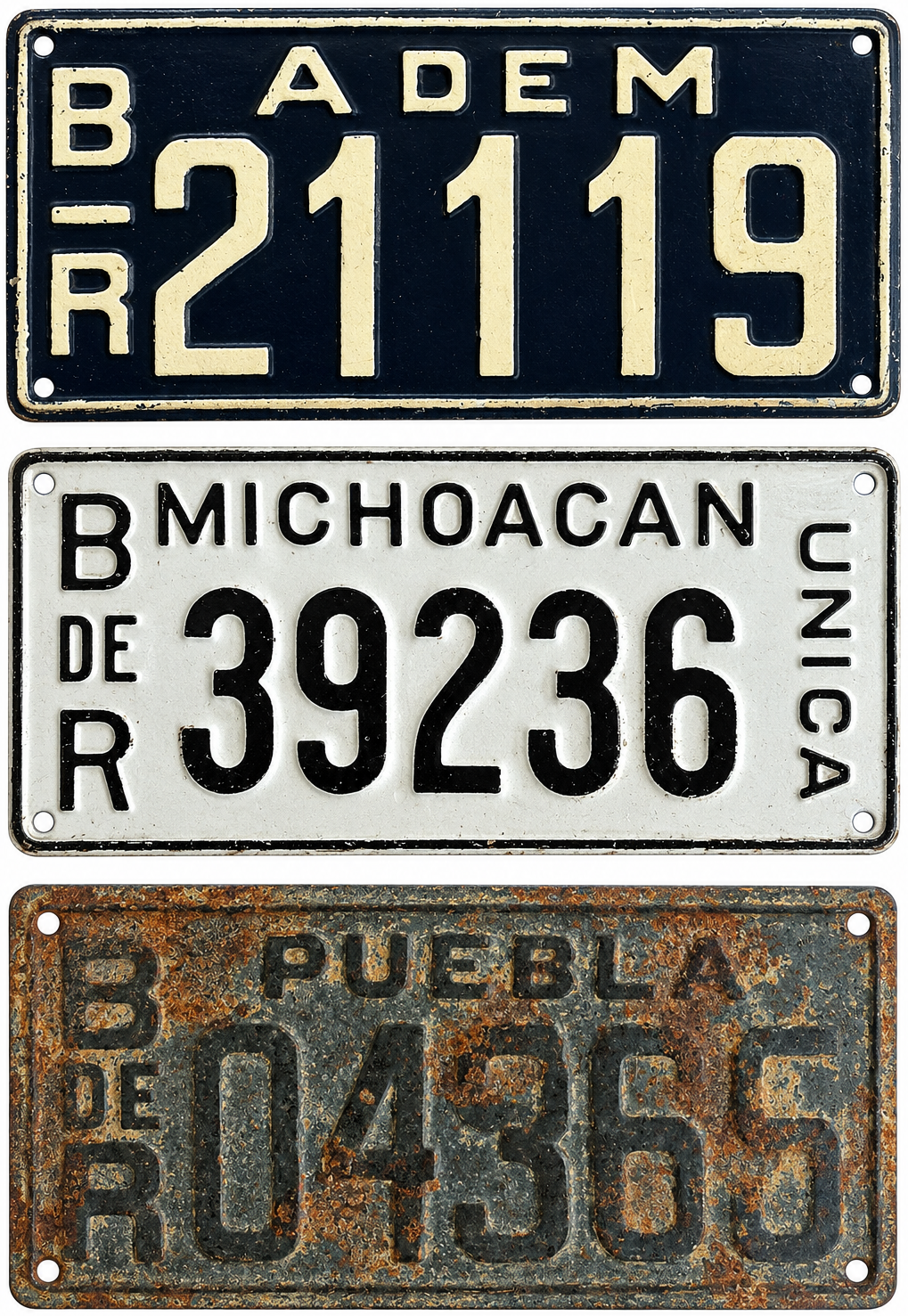
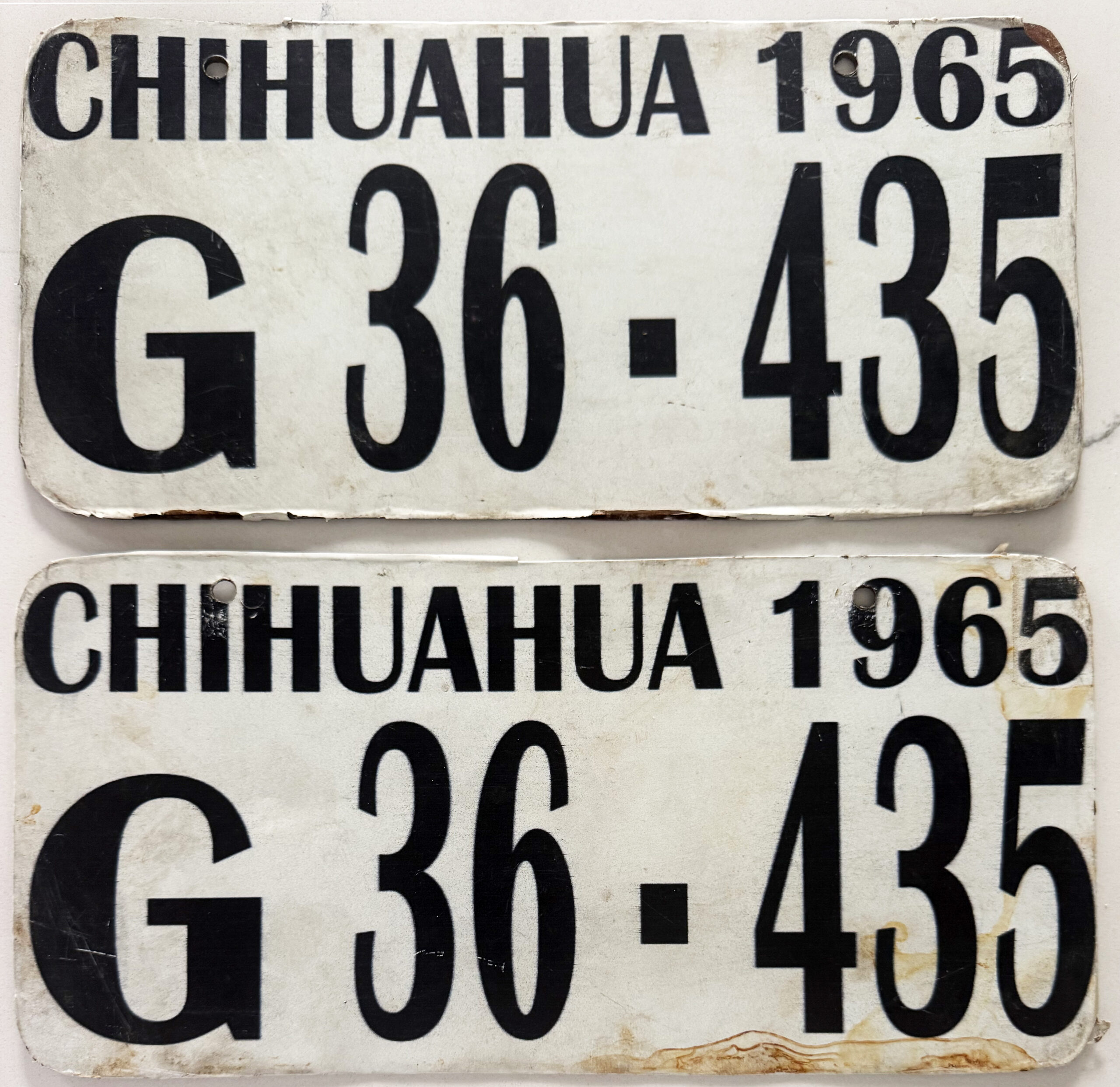
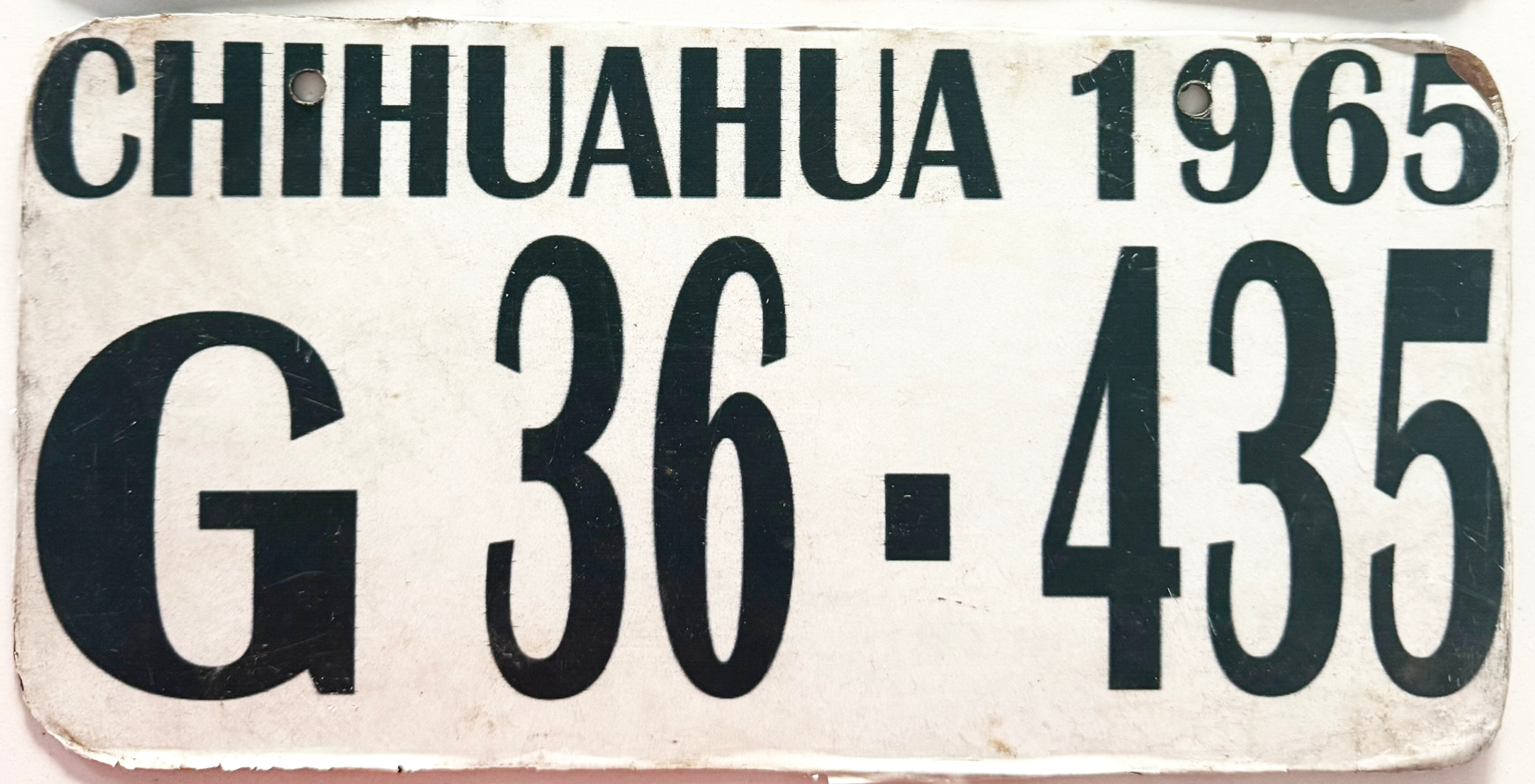
This 1965 Chihuahua pair is a mystery. But does the answer to its origins somehow involve Mexico President Gustavo Diaz Ordaz and American President Lyndon Johnson?
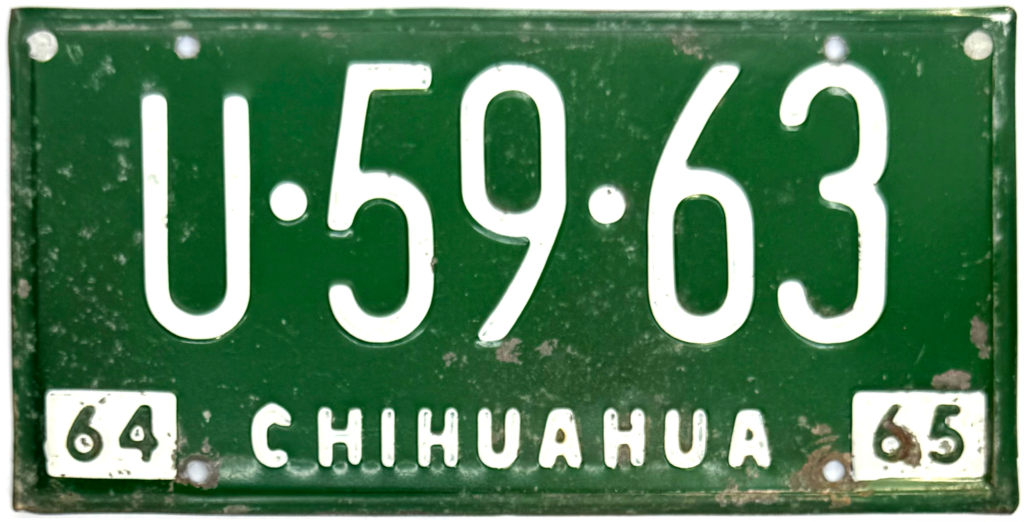
To start, the plates are thin metal with screened black stencil lettering. The odd thing is that these plates do not resemble 1965 Chihuahua plates at all, which were white on dark green for passenger and other colors for non-passenger plates. There are no black on white plates for 1965 (though that color combination was used for the 1966/67 biennial issue). The numbering sequence looks correct, but the “G” letter prefix was used by Guanajuato while Chihuahua used the letter “U”.
So, what is the origin of these plates found in Mexico City? Some possible theories include:
1. A movie or television show prop plate created by a production company. But that seems doubtful as there is no historical accuracy to the design.
2. Perhaps nothing at all—someone’s personal project with no official use.
3. A replacement plate of some type? But again, the numbering sequence is not correct for Chihuahua.
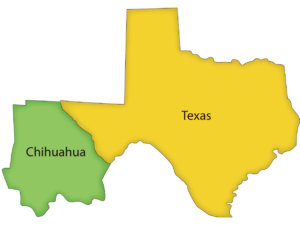
4. Or, are these plates related to the famous El Chamizal dispute, regarding the land border between the United States (at El Paso, Texas) and Mexico (at Cuidad Juarez, Chihuahua) where the shifting path of the Rio Grande River kept moving the border between the two countries over many years?
We believe that this last theory is the most plausible for a number of factors, but welcome other collector and researcher opinions and evidence. To set the stage, let’s first look at the historical context.
The river that divides the two countries at their center is called Rio Bravo (or Rio Bravo del Norte) in Mexico and Rio Grande in the USA. The length of this river creates the southern border of Texas and the northern borders Chihuahua, Coahuila, Nuevo Leon and Tamaulipas states.
In 1961, America’s new President John F. President confronted the growing Cold War crisis as it knocked on its door from nearby Cuba. Recognizing the long simmering border dispute with Mexico at El Paso and Cuidad Juarez, Kennedy proposed settling the territorial dispute in an area called El Chamizal.
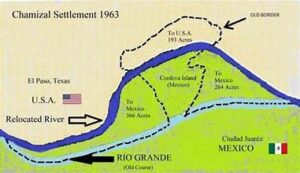
Negotiations were finalized in 1963, and the Chamizal Treaty which was ratified in 1964. The settlement marked 630 acres in South El Paso, Texas as “El Chamizal” and promised to return this acreage to Cd. Juárez. But it didn’t happen right away.
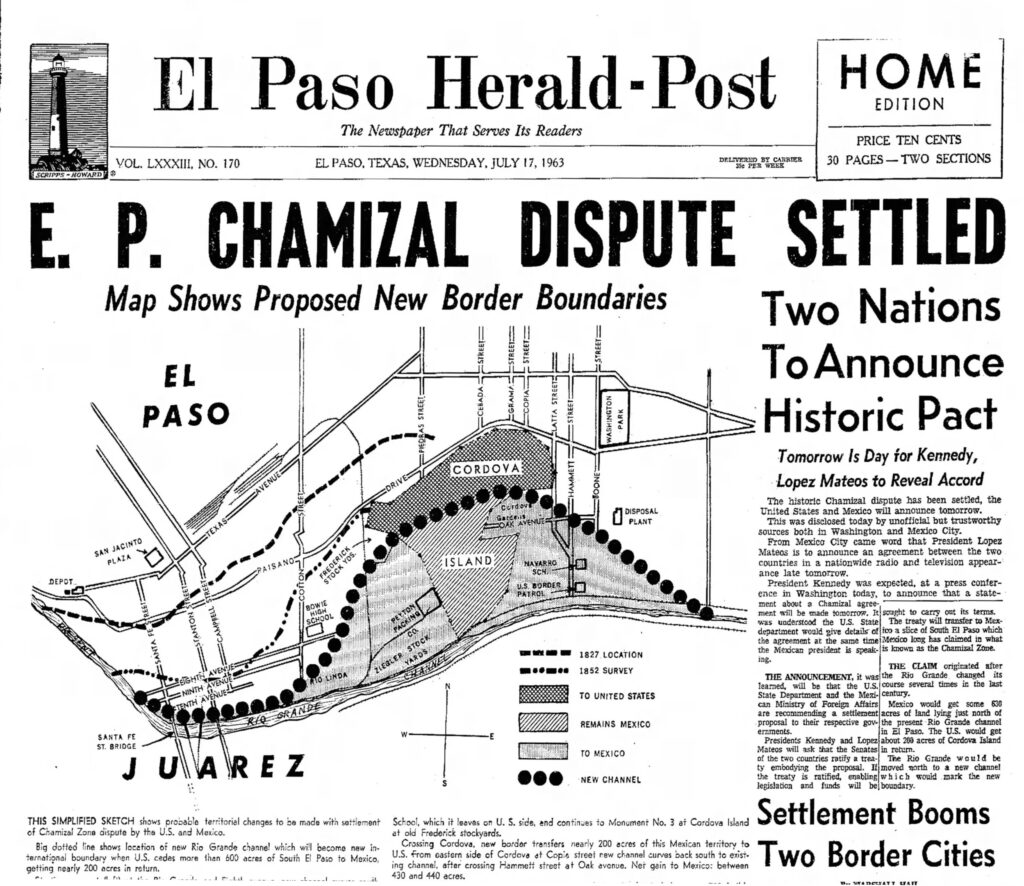
The dispute was formally settled on January 14, 1964, when the United States and Mexico ratified this treaty that generally followed the 1911 arbitration recommendations. The agreement awarded to Mexico 366 acres of the Chamizal area and 264 acres east of the adjacent Cordova Island. Although no payments were made between the two governments, the United States received compensation from a private Mexican bank for 382 structures included in the transfer. The United States also received 193 acres of Cordova Island from Mexico, and the two nations agreed to share equally in the cost of re-channeling the river. In 1964, Presidents Adolfo Lopez Matero and Lyndon B. Johnson met at the border to end the dispute. On September 17, 1963, the U.S. Congress introduced the Mexican & American Chamizal Convention Act of 1964, which finally settled the matter.
As part of the treaty, more than 5,600 El Paso residents were also displaced from their homes within the 630 acres ceded to Mexico. Many of these residents were American citizens. The IBC and the U.S. federal government worked together to evict and relocate these residents from the 630 acres, which included five residential areas of South El Paso known as: Rio Linda, Cotton Mill, Cordova Gardens, El Jardin, and the last two southern blocks of Segundo Barrio. Although many residents organized to resist their displacement, they were unsuccessful. As part of the Chamizal Relocation Project, residents who owned their homes were given fair-market value. Tenants, however, were simply evicted.
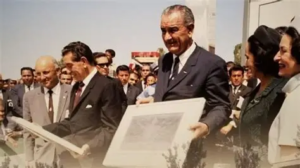
The Chamizal Zone was officially ceded and became incorporated into the Republic of Mexico on October 28, 1967. The occasion was marked by an official ceremony attended by US President Lyndon Baines Johnson, the Texan who succeeded Kennedy. The Chamizal Treaty brought about the first time the United States gave inhabited land back to Mexico.
Ok now back to these mysterious 1965 Chihuahua plates. Keep in mind that it took nearly six years from when Kennedy first proposed a treaty for the land to be officially handed over with the joint presidential proclamations.
During this time, license plates played an interesting political and propaganda role. While the origins of these other plates are just as mysterious, we know that there are finely made plates marked “Cuidad Juarez NPI” for 1963 (white on dark blue) and another for 1964 (white on butterscotch). The NPI stands for No Paga Impuestos (No Taxes).
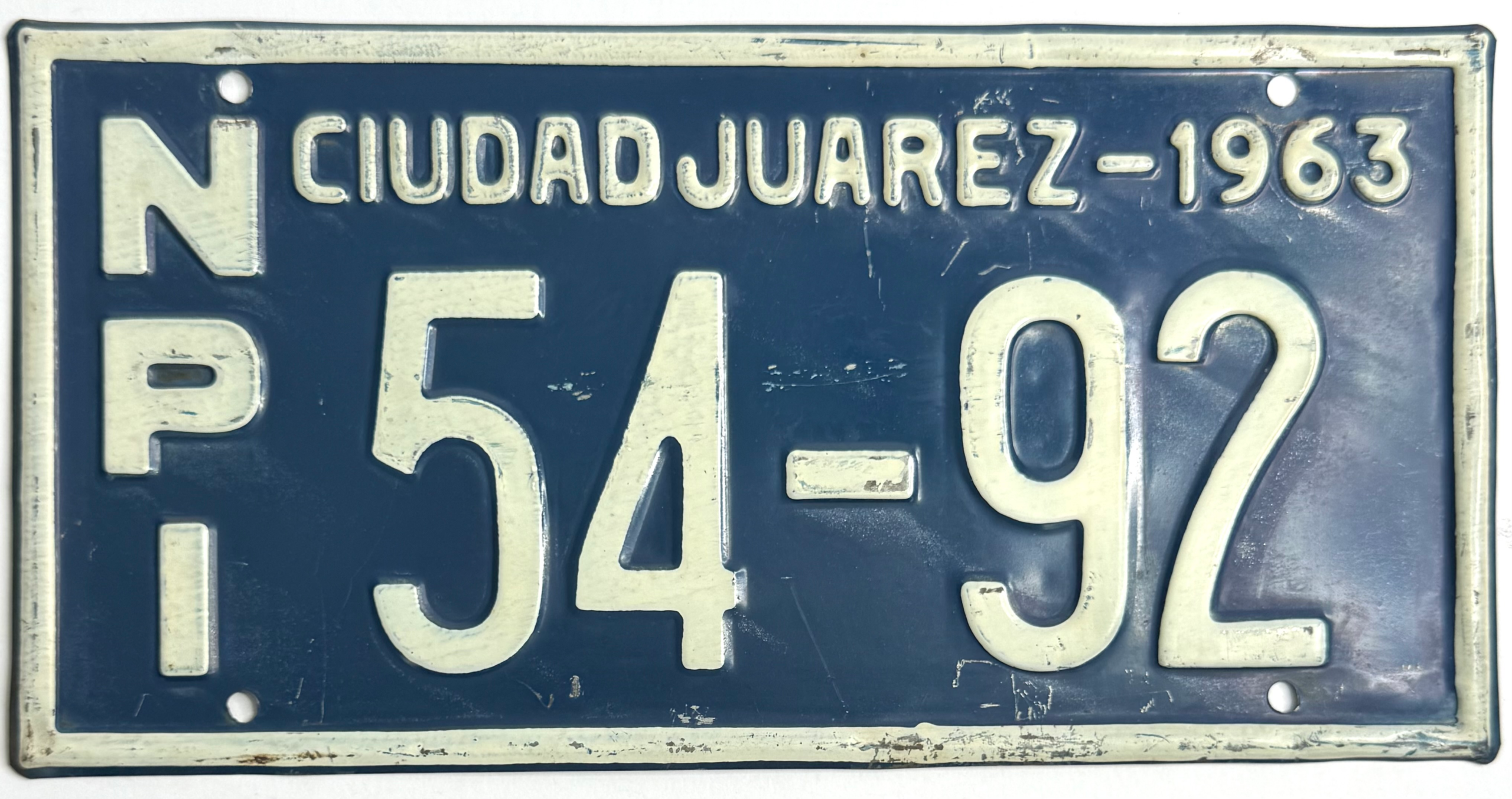
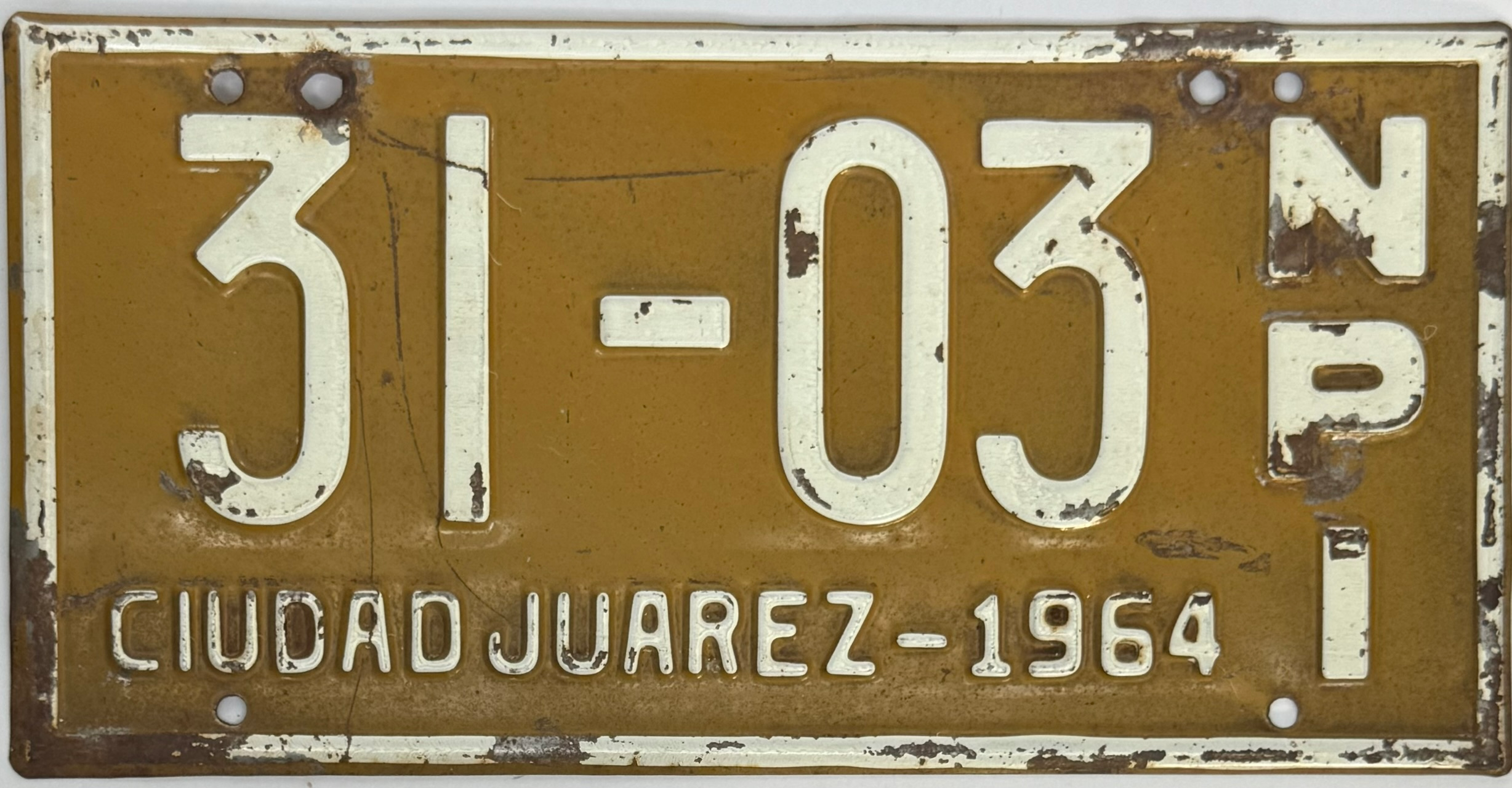
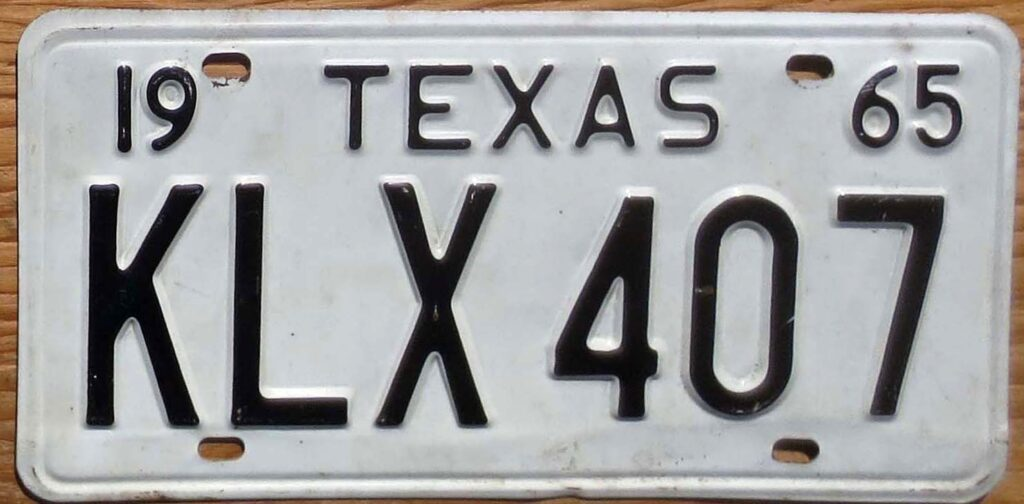
For 1965, there is white on maroon Chihuahua NPI plate known. Are these 1965 Chihuahua plates another example of protest plates? While these plates do not look anything like Chihuahua plates, they closely resemble 1965 Texas USA plates. Texas plates are black on white that year, with the legend at the top. Could the “G” here represent the Rio Grande river? Were they used by a displaced resident? A Texan protesting that they are now forced to live in Chihuahua?
What do you think?